

How Rekambo chimpanzees demonstrate a number of ground breaking behaviours never seen before in animals.
Articles on Animal behaviour
Displaying 121 - 140 of 252 articles
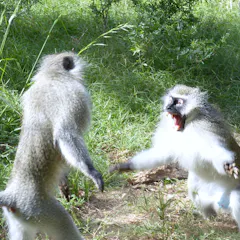
Why social interaction isn’t always a good thing for primates, especially for individuals with a fever.

The ocean is naturally noisy. Here’s what all the buzz is about.

Orangutan mothers use a range of techniques to teach their offspring up the age of five - but their tolerance for sharing their food only lasts so long.
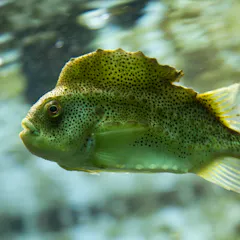
Personality profiling reveals hidden behaviour of cleaner fish used to control parasites in salmon aquaculture.
Male mosquitoes gather around humans, likely in an attempt to mate with blood-sucking females.
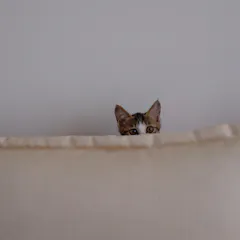
Many Victorians claim their cat or dog was acting strangely before yesterday’s earthquake. And while there’s no real evidence animals can predict a quake, they may be more sensitive to very tiny ones.
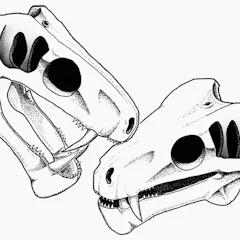
Finding a fossil tooth embedded in bone is always great news for palaeontologists, as it is the gateway to some otherwise out-of-reach understanding of the behaviour of extinct animals.

During mating season, a male turtle-headed sea snake will often lose sight of the female before mating can happen. The female may be metres away, but the male won’t ever find her again.

Dogs that have grown used to being around humans all the time might suffer from separation anxiety.
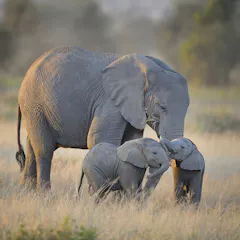
Some lay their eggs and leave, others carry their young for a year in a pouch: in nature, maternal care comes in many forms.
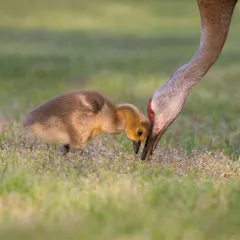
Biologists are puzzled by evidence of animals that care for those from other social groups or even species.
You share the same drug habits, the same age-related memory problems and are similarly impatient when forced to wait for food.

Red squirrels are solitary by nature, but research has found that they benefit from familiarity with other squirrels.
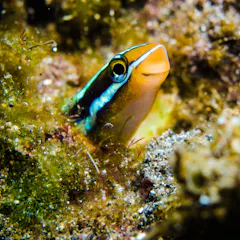
Even the most mutually-beneficial evolutionary relationship can turn sour.

Different animals have different ways of showing they’re happy. Their behaviours aren’t as straightforward as you might think.
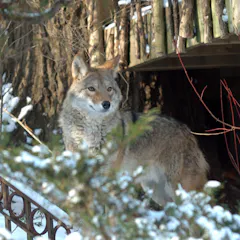
Lethal methods and relocation aren’t effective, sustainable or humane approaches to human-wildlife conflicts.

New research shows how tamarin monkeys transfer new types of food to their young.

Patting, shoeing, grooming, feeding, and even putting them in a stable - the list of seemingly benign human interactions that can confuse or upset horses is surprisingly long. On the eve of the official Horse’s Birthday, we explain why.
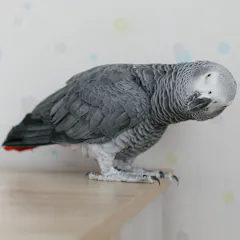
Some animals demonstrate an ability for mathematics that reflects a more sophisticated understanding of language.
Top contributors
-

Associate Professor, School of Animal and Veterinary Science, Adelaide University
-
Senior Lecturer in Animal Science, Nottingham Trent University
-
Professor, School of Veterinary Science, University of Sydney
-
Principal Lecturer in Wildlife Conservation, Nottingham Trent University
-
Professor of Wildlife Conservation, University of Salford
-
Lecturer in Wildlife Conservation
-
Asso. Professor in Anthropology, University College London, UCL
-
Research fellow, Environmental Futures Research Institute, Griffith University; Estación Biológica de Doñana (EBD-CSIC)
-
Royal Society Dorothy Hodgkin Research Fellow, University of Exeter
-
Researcher, School of Animal and Veterinary Science, Adelaide University
-
Associate Professor, Centre for Ecology and Conservation, University of Exeter
-
Reader in Biology, University of St Andrews
-
Postdoctoral Researcher in Veterinary Science, University of Sydney
-
Lecturer in Animal Behaviour and Welfare, School of Psychology, Queen's University Belfast
-
Senior Lecturer, Sydney School of Veterinary Science, University of Sydney