

Unfortunately, a rhetoric has developed within public discourse that cats are manipulative, vengeful, uncaring or even psychotic. But it’s unlikely they’ve deliberately peed on your rug to annoy you.
Articles on Animal behaviour
Displaying 81 - 100 of 252 articles
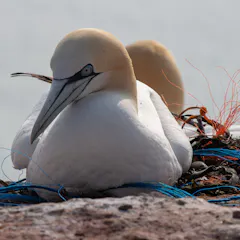
It appears to be widespread among all sorts of different birds.
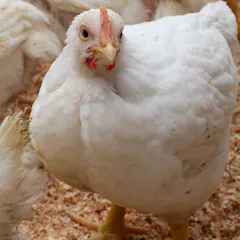
Tracking data suggests individual chickens have very different movement patterns.

Artificial light is making it harder for male glow-worms to find bioluminescent females.

If you think relationships between male and female animals are simple, it’s time to have a rethink.

Our experiments with the critically endangered Bail myna showed some birds are bolder than others.

Researchers tracked 2,300 wild mammals during the strict 2020 lockdowns and found they moved 73% further than in the previous year.
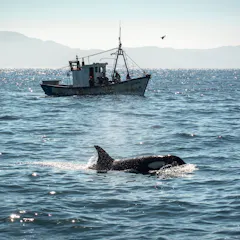
Orcas appear to be imitating the behaviour of one in particular by damaging sailboat rudders.
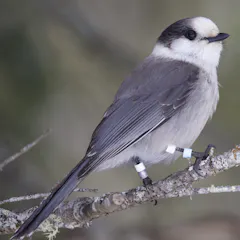
Canada jays who are able to expel their siblings from the nest and home territory have better chances of survival.

Companion dogs respond to their environments and their owners’ sense of well-being. When owners are stressed and anxious, dogs can exhibit undesirable behaviours.

Chimpanzees have been the focus of primate research for decades. But their close cousins, the bonobos, can offer us important insights into human nature too.

Signalling theory tells us lots about the way paid-for verification has disrupted the blue tick system.

Lockdown stopped many puppies developing the social skills they need to navigate the human world with confidence.

Cat owners need to know the right moment to step in. Here’s how to tell.
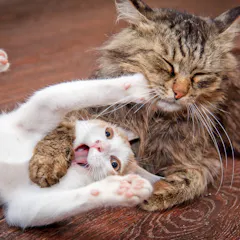
In a home with more than one cat, feline wrestling can be a common sight. But how do we know when it’s becoming a problem?

Studying fossil dung offers another avenue for scientists trying to recreate ancient landscapes.

Noisy oceans are having a significant impact on marine life.

Dogs have paw preferences, just like humans.
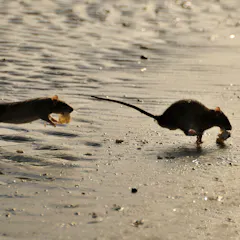
Rats are disrupting the flow of nutrients towards the sea on many tropical islands – this has consequences for fish behaviour and the wider ecosystem.
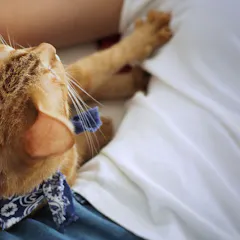
Kneading is typical kitten behaviour but may be retained into adulthood because it can help communicate messages.
Top contributors
-

Associate Professor, School of Animal and Veterinary Science, Adelaide University
-
Senior Lecturer in Animal Science, Nottingham Trent University
-
Professor, School of Veterinary Science, University of Sydney
-
Principal Lecturer in Wildlife Conservation, Nottingham Trent University
-
Professor of Wildlife Conservation, University of Salford
-
Lecturer in Wildlife Conservation
-
Asso. Professor in Anthropology, University College London, UCL
-
Research fellow, Environmental Futures Research Institute, Griffith University; Estación Biológica de Doñana (EBD-CSIC)
-
Royal Society Dorothy Hodgkin Research Fellow, University of Exeter
-
Researcher, School of Animal and Veterinary Science, Adelaide University
-
Associate Professor, Centre for Ecology and Conservation, University of Exeter
-
Reader in Biology, University of St Andrews
-
Postdoctoral Researcher in Veterinary Science, University of Sydney
-
Lecturer in Animal Behaviour and Welfare, School of Psychology, Queen's University Belfast
-
Senior Lecturer, Sydney School of Veterinary Science, University of Sydney