
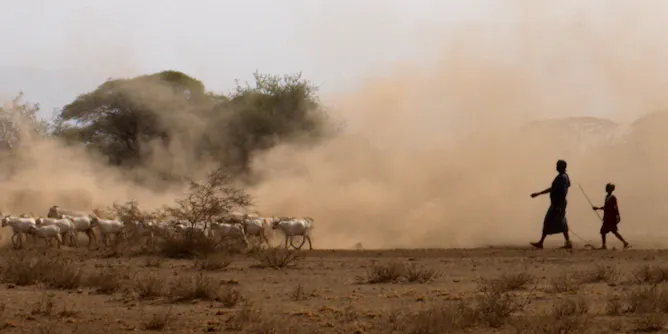
Pastoralism is a central part of many Africans’ identity. But how and when did this way of life get started on the continent? Ancient DNA can reveal how herding populations spread.
Articles on Ancient DNA
Displaying 61 - 73 of 73 articles

DNA found in chewing gum from 10,000 years ago is helping scientists learn about prehistoric humans.

Ancient DNA allows scientists to learn directly from the remains of people from the past. As this new field takes off, researchers are figuring out how to ethically work with ancient samples and each other.
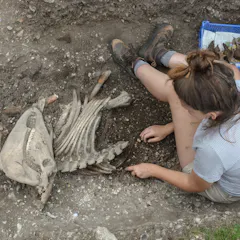
Let’s worry about the future of Brexit, not its prehistory.
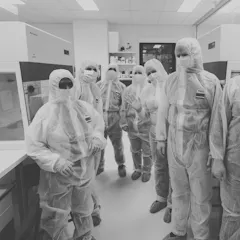
Museums around the world hold remains of Aboriginal people that were often taken without permission and in the absence of accurate records. New DNA methods may help return these items to country.
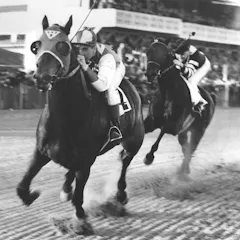
The US went crazy for Seabiscuit when he won his famous 1938 match race against War Admiral. Now researchers are investigating the thoroughbred’s DNA to see what made him such an unlikely success.
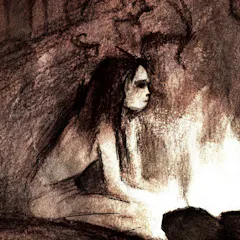
Ancient DNA in a 50,000+ year old bone tells us that two species of early humans did produce offspring together.
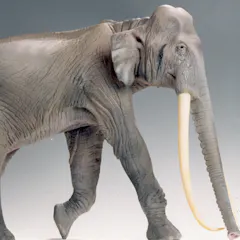
DNA studies reveal that African elephants belong to a very successful and widespread family.
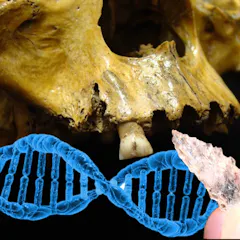
Archaeology is not only about stones and bones: it is mainly about the people of the past. DNA is one way to get from the stones and the bones to the people and their stories.
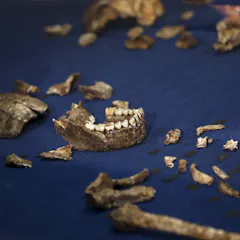
A rush of ancient DNA projects in Africa has presented the curators of archaeological skeletons with ethical issues because research requires the destruction of human bone.
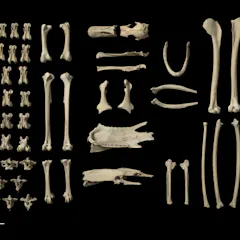
New research reveals that New Zealand once had its own species of black swan, the Poūwa.
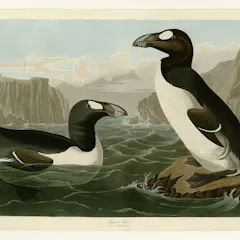
Scientists turn detective to find out what happened to the last specimens of an extinct bird.
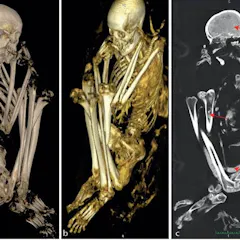
Modern techniques such as CT scanning and ancient DNA analysis have allowed scientists to discover a great deal about a mummy found in a shallow grave in Botswana.
Top contributors
-

Associate Professor in Ancient DNA, University of Otago
-
Associate Professor of Anthropology, Rice University
-
Curator of Human Evolution of the Cleveland Museum of Natural History and Research Assistant Professor of Anthropology, Stony Brook University (The State University of New York)
-
Postdoctoral Fellow, Department of Zoology, University of Otago
-
Mathematician and Ancient DNA Researcher, Adelaide University
-
Postdoctoral Research Fellow in Geology and Geophysics, University of Utah
-
Professor in Molecular Archaeology, Department of Archaeology and Classical Studies, Stockholm University
-
Associate Professor of Archaeology, Griffith University
-
Research scientist, Griffith University
-
Professor of Genetics and of Human Evolutionary Biology, Harvard University
-
Professor with Research Focus in Stone Age Archaeology, Palaeo-Research Institute, University of Johannesburg
-
Senior research fellow, Queensland University of Technology
-
Postdoctoral Researcher, Swansea University
-
Associate Professor of Population and Statistical Genetics, Hebrew University of Jerusalem
-
Postdoctoral Research Fellow, Genetics, School of Archaeology, University of Oxford