

Two Denisovan leg bones from Taiwan came from tall individuals. But we can’t generalise to a whole species just yet.
Articles on Denisovans
Displaying 1 - 20 of 25 articles

The discovery points to a long evolutionary history in north Africa, much earlier than modern Homo sapiens.
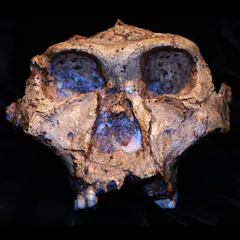
Researchers have extracted 2-million-year-old protein remains from Paranthropus robustus teeth to reveal biological sex and genetic variability.
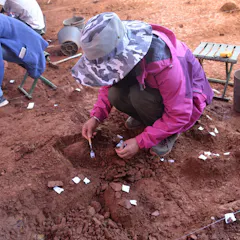
Discovery in China of tools called Quina scrapers suggests the people of East Asia were as inventive and flexible with technology during the Middle Paleolithic era as those in other parts of the world.

The discovery of a finger bone in a cave in Siberia some 15 years ago kicked off a race to unravel the mysteries of an entirely new group of humanoids.
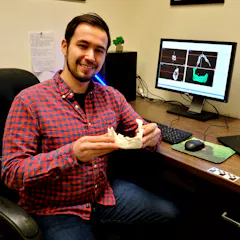
Scientists had figured a fossil found in Spain more than a century ago was from a Neandertal. But a new analysis suggests it could be from a lost lineage of our species, Homo sapiens.

This whirlwind tour of social history describes how infectious diseases have shaped humanity at every stage. It suggests reducing inequality will give us our best chance of surviving future plagues.

Humanity carries traces of other populations in our DNA – and a new study shows how one of these ancestors has influenced the immune systems of modern Papuans.
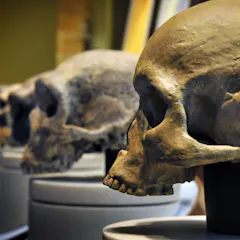
Ancient DNA helps reveal the tangled branches of the human family tree. Not only did our ancestors live alongside other human species, they mated with them, too.
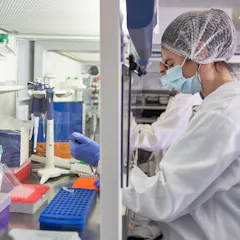
Thousands of ancient genomes have been sequenced to date. A Nobel Prize highlights tremendous opportunities for aDNA, as well as challenges related to rapid growth, equity and misinformation.
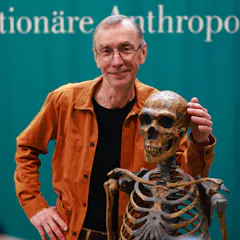
The Nobel Prize in physiology or medicine for 2022 has been awarded to Svante Pääbo, whose discoveries have been pivotal to the way we understand our evolutionary history.

The mysterious Denisovans left DNA traces in populations across Southeast Asia and Australasia, but until now no physical signs of their presence outside Eurasia had been found.

Our research has also uncovered major long-term changes in ancient animal populations at Denisova Cave, and has provided the first direct evidence of Homo sapiens having lived there.

The ancestors of modern-day people living on Southeast Asian islands likely interbred with a prehistoric species called Denisovans - raising the possibility of fresh and intriguing fossil discoveries.
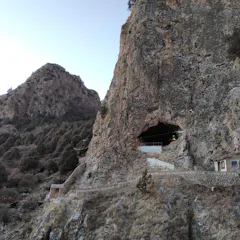
Early humans called Denisovans lived in a remote mountain cave between 100,000 and 60,000 years ago, and possibly longer still, raising intriguing questions about their relationship to modern humans.
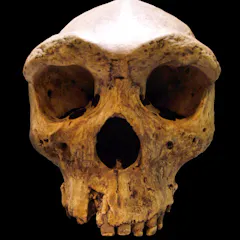
Early humans in Africa may have interbred with a ghost population that likely split from the ancestors of humans and Neanderthals between 360,000 and 1.02 million years ago.
20 years ago, who could predict how much more researchers would know today about the human past – let alone what they could learn from a thimble of dirt, a scrape of dental plaque, or satellites in space.

300,000 years ago, there were lots of different species of human. Now it’s only us – and we’re probably the reason why.

Denisova Cave in Siberia has a rich fossil history of early humans - and deposits of droppings from hyenas, wolves and even bears, according to a new analysis of the cave’s dirt floor.

New research outlines how the ancestors of modern humans interbred with several archaic human groups on the passage from Africa to Australia.
Top contributors
-

Professor, University of Wollongong
-
Director, ARC Centre of Excellence for Australian Biodiversity and Heritage (CABAH), University of Wollongong
-
Associate Professor of Anthropology, Rice University
-
Professor, Environmental Futures Research Centre, School of Science, University of Wollongong
-
Senior Research Associate in Translational Genomics, University of Oxford
-
Research associate, Adelaide University
-
Associate Professor and Director, Flinders Microarchaeology Laboratory, Flinders University
-
Curator of Human Evolution of the Cleveland Museum of Natural History and Research Assistant Professor of Anthropology, Stony Brook University (The State University of New York)
-
Senior Lecturer in Human Genetics, The University of Melbourne
-
Honorary Associate Professor, UNSW
-
Post-doctoral researcher, The University of Melbourne
-
Professor, School of Natural Sciences, Macquarie University
-
Professor in Geochronology and Geochemistry, Southern Cross University
-
Professor at the Lewis-Sigler Institute for Integrative Genomics, Princeton University
-
PhD candidate, University of Wollongong