
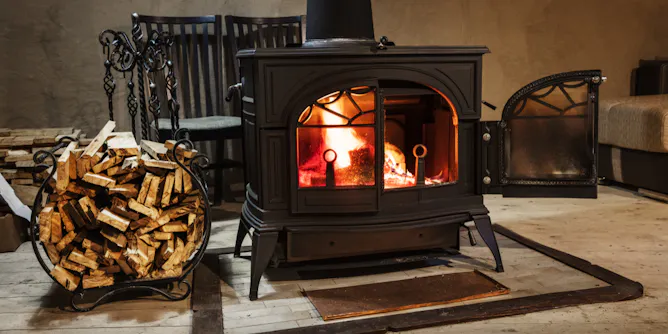
The UK wants cleaner air. But its rules are stuck in the age of smog.
Articles on Air quality
Displaying 21 - 40 of 152 articles

Between 2003 and 2022, clouds over the North Atlantic and Northeast Pacific became less reflective, allowing more sunlight to reach the ocean surface and causing sea surface temperatures to rise.
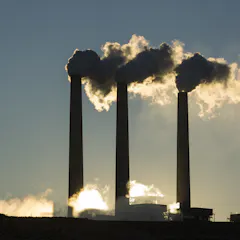
As soon as the 2018-2019 shutdown began, coal-fired power plants started emitting more particulate matter pollution. And when the inspections resumed, the levels dropped back to normal.

Unchecked airborne infections cost billions in lost health and productivity each year – likely more than the cost of better ventilation to clean up indoor air.
Analysis of the air quality data available for southwest Memphis finds that pollution has long been quite bad, but the turbines powering an xAI data center have not made it much worse.

As wildfire smoke becomes a frequent summer hazard across large parts of the US, knowing the risk at the neighborhood scale matters for human health.
Researchers have analysed UK-wide trends for three major pollutants.

Factors like your health status and how hard you exercise can help gauge the risk of wildfire smoke exposure.
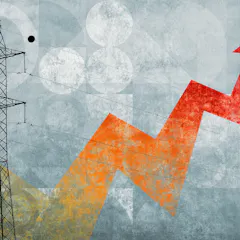
Some technologies could rapidly cut emissions, while others do little to fight climate change. The House bill favors the latter while nixing support for the former.

The Harmattan is linked to a range of conditions that affect the skin and mucous membranes of humans and animals.

Clean air has become one of America’s best investments, returning $10 for every $1 spent on regulations, by one estimate.
Small air sensors that harness the power of AI could transform pollution monitoring.

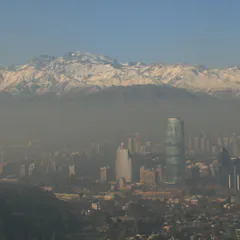
Don’t just blame the city’s cars, factories and building sites. Mountains and weather patterns make it particularly hard for pollution to escape.
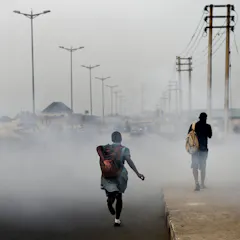
The impact of air pollution on African populations is under-researched due to limited air quality data and health studies.
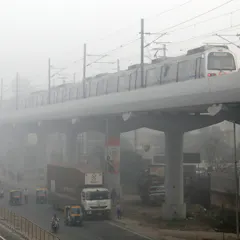
The world’s second largest city is one of its most polluted.

Much, if not all, long COVID appears to be driven by the virus persisting in the body. Formal proof remains elusive but here’s what the science shows.

Environmental consciousness means people are less likely to cook using firewood.

‘Forever chemicals’ can be detected almost anywhere using the right analytical equipment. This raises concerns about the health effects of current exposure levels.
For many of us, COVID has become just a bad memory, despite its lasting and mixed legacies. While the media have largely lost interest in COVID, and people are now rather blase about it, the disease is still taking a toll.

Ventilation systems pump polluted air from our homes – which contains particulate matter and methane – into the environment.
Top contributors
-

Associate Professor, University of Pretoria
-
Professor of Civil and Environmental Engineering, Rice University
-
Professor of Atmospheric Chemistry at the National Centre for Atmospheric Science, University of York
-
Professor of Chemical and Biochemical Engineering, University of Iowa
-
Professor of Mechanical Engineering, University of Colorado Boulder
-
Associate Professor of Chemical Engineering, The University of Melbourne
-
Senior Research Fellow, Woolcock Institute of Medical Research, Macquarie University and the South West Sydney Clinical School, UNSW Sydney. Affiliate, Centre for Safe Air., UNSW
-
Adjunct academic, mycology, Flinders University
-
Professor, University of Pretoria
-
Honorary Professor, School of Natural Sciences, Macquarie University
-
University of Iowa Distinguished Chair, Professor of Environmental Health, University of Iowa
-
Adjunct Professor of Architecture, University of Technology Sydney
-
Professor of Atmospheric Science, University of Birmingham
-
Professor, Faculty of Health Sciences, Simon Fraser University
-
Assistant Professor, Faculty of Health Sciences, Simon Fraser University