

Factories that process crops and agricultural products need training and support to help them face climate risks.
Articles on Agriculture + Land
Displaying 21 - 40 of 138 articles

Africa’s wildlife laws still follow a 1933 colonial conservation model that excludes communities and fails to protect wildlife. It’s time to do away with it.
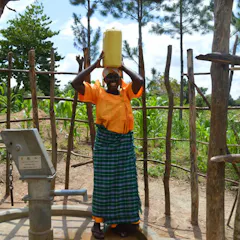
Solutions for food systems exist; scaling them is where the challenge lies.

From roadside plots to community gardens, urban farmers in Alexandra township, South Africa are growing food, earning income and coping with climate change.
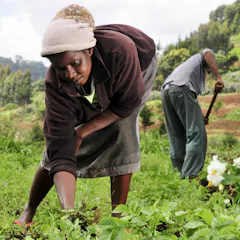
The increasing control of rural agricultural land by urban residents has implications for rural people and spaces.
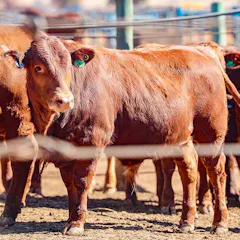
Access to global markets will continue to decrease if the disease is not brought under control.

Climate change is threatening sheep farming in South Africa’s Drakensberg. Farmers are adapting but need mountain infrastructure, better climate warnings and vets.
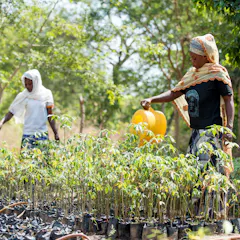
Ghana’s community conservation areas protect forests and wildlife while supporting rural livelihoods, but weak laws and funding threaten their future.
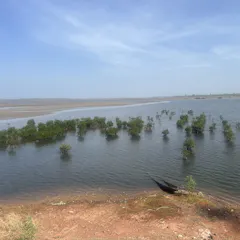
Nature-based solutions like mangrove restoration are key to climate action, but weak monitoring can overstate carbon storage, creating ‘ghost carbon’.

AI tools for farming can play a role. But they need to be properly tailored for African and developing nations’ context.

Ethiopian communities are cheaply filling destructive gullies with soil, stones and branches and replanting them to stop erosion and restore farmland.
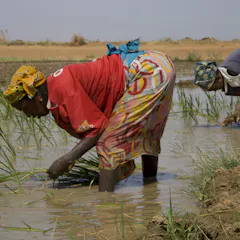
Science can only change the world when societies decide to give it the means to do so.
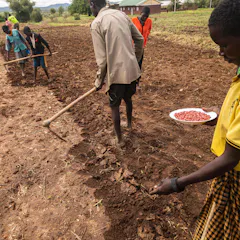
Figuring out how climate change will cause plant disease and pests to spread across Africa’s Great Lakes farms is critical for future food supplies.
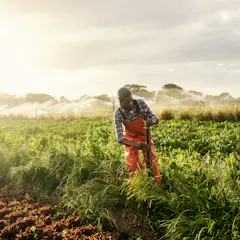
Thousands of hectares of communal land set aside for smallholder farmers’ use in South Africa are lying fallow because of collapsed government irrigation systems.
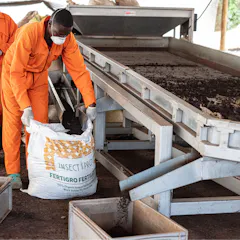
African food systems import 80% of the fertiliser they need. With Iran as a major producer, supplies are now limited and farming with less fertiliser is important.
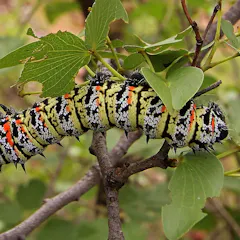
Mopane worms are an important source of food security and cash income for some rural households.
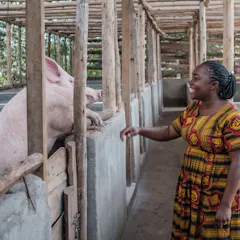
It’s possible to work with and change social norms about suitable work for women.
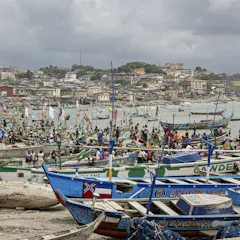
As ocean uses expand, it will be necessary to reduce disputes because they disrupt the environmental sustainability and equity central to a blue economy.
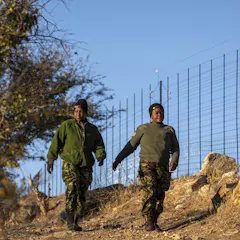
Nature reserve fences can protect wildlife and people, but they also break up natural landscapes, restrict animal movement, and affect nearby communities.
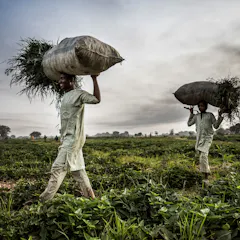
When conflict leads to abandoned fields, lost livestock, or altered investment decisions, it undermines food security and development.
Top contributors
-

Senior Fellow, Department of Agricultural Economics, Stellenbosch University
-
Senior Lecturer at Oyo State College of Agriculture and Technology, Igboora, Nigeria and Extraordinary Senior Lecturer at Indigenous Knowledge Systems Centre, North-West University, Mafikeng, South Africa, North-West University
-
Ass. Professor, University of Maryland Eastern Shore; North-West University
-
Professor of Climate Change, Food Systems and Health and Director of The Lancet Countdown in Africa, London School of Hygiene & Tropical Medicine
-
Research Active Lecturer, Discipline of Psychology, Charles Darwin University, Charles Darwin University
-
Senior Research Fellow & Malawi Country Program Leader, International Food Policy Research Institute (IFPRI)
-
Professor and DSTI/NRF SARChI Bio-economy Research Chair, University of Cape Town
-
Economist at the Centre for Competition, Regulation and Economic Development, University of Johannesburg
-
Senior Researcher, Associate Professor: Economic Management Sciences, University of Pretoria
-
Research entomologist, Department of Conservation Ecology and Entomology, Stellenbosch University
-
Senior Researcher, Agricultural Research Council - Animal Production, University of KwaZulu-Natal
-
Teaching Assistant Professor, University of Pittsburg and Visiting Associate Professor, The University of Osaka, University of Pittsburgh
-
Senior Researcher and Statistician, University of Hohenheim
-
Research Fellow, International Food Policy Research Institute (IFPRI)
-
PhD Candidate, University of Memphis