
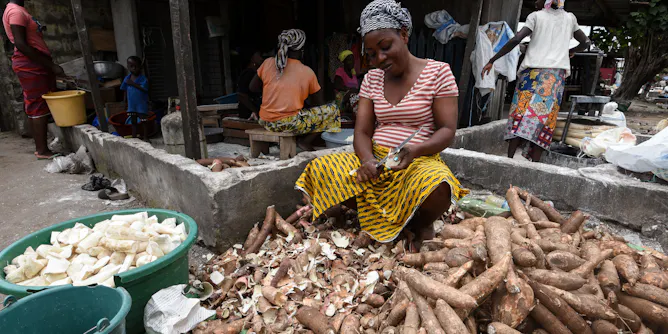
Cassava could thrive across more of Africa as the climate warms, but a deadly disease carried by whiteflies may spread faster, threatening the nutritious crop.
Articles on Agriculture + Land
Displaying 41 - 60 of 138 articles
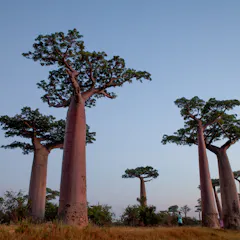
Madagascar’s protected area forests have 2.5km buffer zone forests surrounding them that also need urgent protection.
Women farmers in KwaZulu-Natal have had to abandon their fields because the government has failed to maintain irrigation systems built in the apartheid era.
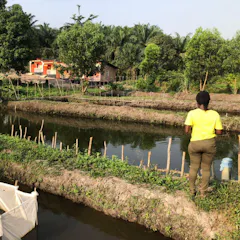
Wild fish sustain life in Sierra Leone’s fishing towns, but declining stocks mean fish farming is needed. However, fishing communities distrust farmed fish.
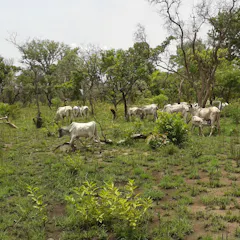
Benin’s smallholder dairy farmers need development finance to plant shady trees on the land where their cattle graze, to improve cattle health.
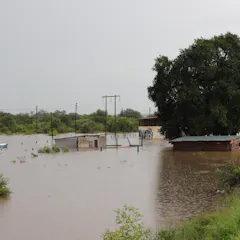
Severe floods hit parts of South Africa in January 2026, damaging roads and forcing evacuations.

Climate change is hitting Kenya’s coastal women and their small tourism businesses, but the loss of their way of life cuts as deeply as the economic damage.

Competition for shea trees is rising in west Africa, leaving the poorest women collectors with less access and fewer gains.
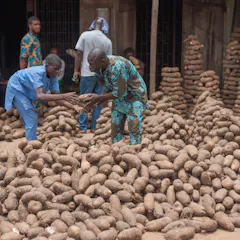
Climate change caused drought and flooding is damaging Nigeria’s staple foods, maize, cassava, millet and yam, smallholder farmers say.

South Africa needs to track whether beneficiaries of land reform policies are participating in the country’s thriving wildlife economy.
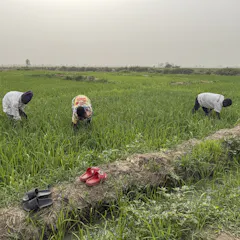
Climate-smart agricultural technologies increase crop sales revenue for farmers in the Sahel region.
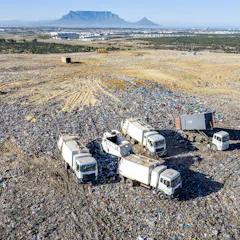
In South Africa, landfill practices impose a huge burden on the economy, environment and communities.
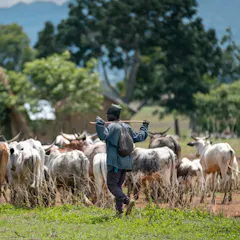
Africa’s drylands need support, but it shouldn’t overlook systems that people rely on.

There’s a significant shift towards the recognition of customary rights and the strengthening of women’s land rights.
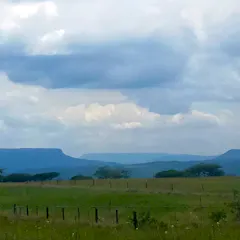
Decades of experimentation revealed slow ecological processes and long-term interactions that have international scientific value.

Development banks have spent over US$1 billion on factory farming in Africa, locking in high greenhouse gas emissions. Natural farming systems are a better choice.

Africa’s share of the world’s agriculture exports is low and has deteriorated over time.
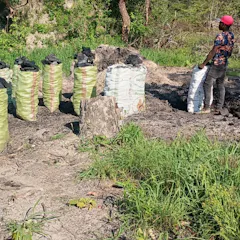
In rural Zambia, solar power has brightened lives, but communities living next to forests can only pay for it by cutting down trees, putting forests at risk.
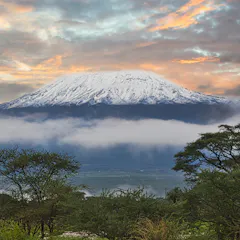
75% of Mount Kilimanjaro’s indigenous plants have been wiped out over the last century.
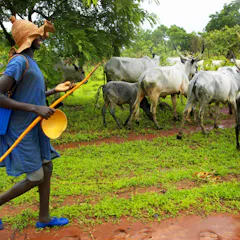
Conflict over land, pastoral mobility and weak governance often overlap with religious fault lines, but can’t be reduced to them.
Top contributors
-

Senior Fellow, Department of Agricultural Economics, Stellenbosch University
-
Senior Lecturer at Oyo State College of Agriculture and Technology, Igboora, Nigeria and Extraordinary Senior Lecturer at Indigenous Knowledge Systems Centre, North-West University, Mafikeng, South Africa, North-West University
-
Ass. Professor, University of Maryland Eastern Shore; North-West University
-
Professor of Climate Change, Food Systems and Health and Director of The Lancet Countdown in Africa, London School of Hygiene & Tropical Medicine
-
Research Active Lecturer, Discipline of Psychology, Charles Darwin University, Charles Darwin University
-
Senior Research Fellow & Malawi Country Program Leader, International Food Policy Research Institute (IFPRI)
-
Professor and DSTI/NRF SARChI Bio-economy Research Chair, University of Cape Town
-
Economist at the Centre for Competition, Regulation and Economic Development, University of Johannesburg
-
Senior Researcher, Associate Professor: Economic Management Sciences, University of Pretoria
-
Research entomologist, Department of Conservation Ecology and Entomology, Stellenbosch University
-
Senior Researcher, Agricultural Research Council - Animal Production, University of KwaZulu-Natal
-
Teaching Assistant Professor, University of Pittsburg and Visiting Associate Professor, The University of Osaka, University of Pittsburgh
-
Senior Researcher and Statistician, University of Hohenheim
-
Research Fellow, International Food Policy Research Institute (IFPRI)
-
PhD Candidate, University of Memphis