
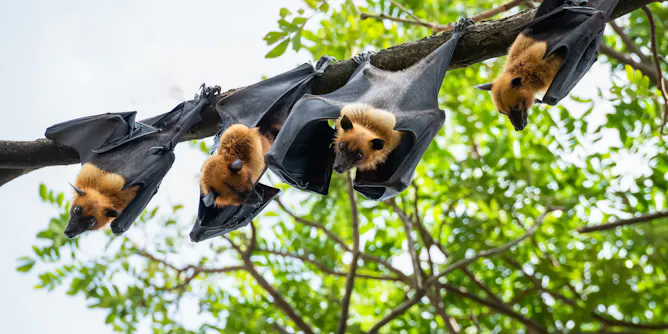
Do bats hold the secret to defeating coronaviruses?
Articles on Zoonoses
Displaying 61 - 80 of 107 articles
Yellow fever, malaria and Ebola all spilled over from animals to humans at the edges of tropical forests. The new coronavirus is the latest zoonosis.

The smallpox virus appears to have been with humanity for millennia before a global vaccination drive wiped it out. Current genome research suggests how smallpox spread and where it came from.

Urban growth and development affects human-animal relationships, as shown by the novel coronavirus that causes COVID-19.

People have lived with infectious disease throughout the millennia, with culture and biology influencing each other. Archaeologists decode the stories told by bones and what accompanies them.

Australia has been identified as a hotspot for emerging diseases, which occurs when human activities collide with a richness of animal species.
Animal suffering not only harms other species, it endangers our own. Here’s how we can do better.
Bats get a lot of negative press, but they also make positive contributions to the environment and to our lives.

Displaced people are particularly at risk from zoonotic diseases transmitted between animals and humans.
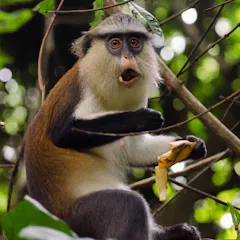
Illegal wild animal meat is found in cities right across the world and poses a very real threat of infecting people.

The US and its allies are demanding answers over how COVID-19 became a pandemic. But instead of pointing fingers at China, the inquiry should focus on scientific clues to help us thwart future disasters.
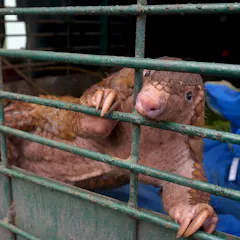
Covid-19, like other major epidemics, is not unrelated to the biodiversity and climate crisis we are experiencing.

There are telling parallels between the current pandemic and those that decimated indigenous populations in the post-Columbian era in the Amazon.

There aren’t enough international and domestic laws to address how the interests of humans and the needs of wildlife overlap.
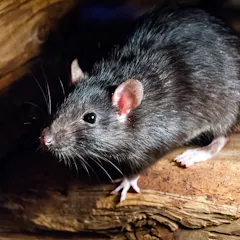
According to Google Trends, the top globally trending topic this week is ‘orthohantavirus’, as spurious sites claim it’s next pandemic on the horizon. The claim is baseless.
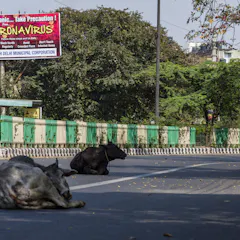
Could the 1889-1890 pandemic have been the result of cow coronaviruses jumping to humans?

Social media has allowed researchers around the world to collaborate and co-ordinate their efforts to fight the outbreak and contain its spread.

Two coronaviruses were identified in the 1960s, and five since SARS in 2003. It is the seventh that is now making headlines.

Leptospirosis is spread by rats and other rodents, potentially killing dogs and humans. But we can protect ourselves and our pets.

It doesn’t just seem like the world is experiencing more viral infections than before – it’s a reality. And the way humans live today helps viruses thrive.
Top contributors
-

Directeur régional Asie du Sud-Est, vétérinaire et épidémiologiste, Cirad
-
Professor of Infectious Diseases, Monash University
-
Chercheuse en épidémiologie, Cirad
-
Professor of Bioethics & Medicine, Sydney Health Ethics, Haematologist/BMT Physician, Royal North Shore Hospital and Director, Praxis Australia, University of Sydney
-
Lawyer, Queensland University of Technology
-
Sydney Horizon Fellow, veterinarian and wildlife disease ecologist, University of Sydney
-
Professor of Veterinary Infectious Diseases, University of Liverpool and International Livestock Research Institute, Kenya, University of Liverpool
-
Catedrático de Microbiología. Miembro de la Sociedad Española de Microbiología, Universidad de Salamanca
-
Deputy head of ASTRE research unit, epidemiologist, Cirad
-
Emeritus Professor, infectious disease ecology, Griffith University
-
Veterinarian epidemiologist, Cirad
-
Anthropologie, EHESS, CNRS, Laboratoire d'anthropologie sociale, Collège de France, Auteurs historiques The Conversation France
-
Dean Faculty of Sciences and Professor in the Department of Microbiology, Stellenbosch University
-
NHMRC Leadership Fellow and Professor of Virology, University of Sydney
-
Researcher, socio-economist of animal health, Cirad