

Academic partnerships with diplomats, industry leaders and others, can provide a comprehensive approach to addressing the challenges faced by women in STEM.
Articles on Women in STEM
Displaying 81 - 100 of 139 articles

We are three professional women who all made different decisions regarding name changes.

There are at least eight different ways to view gender equality. And this helps us understand why one of the biggest challenges for workplace gender equality is defining and measuring success.

You can support career development by nominating a deserving scientist, innovator or science teacher for recognition through a prize or award.

Women have made life-changing research discoveries in the life sciences. Their achievements need to be recognized in order to increase future discoveries by women scientists.
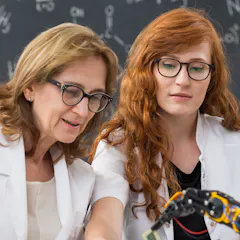
With changing student demographics, STEM programs need to provide different supports to accommodate the needs of women returning to education after a break.

Women are drastically under-represented in the science, technology, engineering and maths fields.
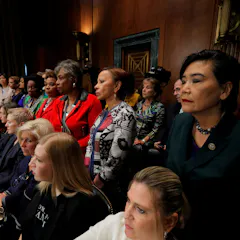
In the last year, workplace culture faced major upheaval for working women. We at The Conversation put together our reporting on that very topic from 2018.

The Athena Swan charter commits research institutions to create a gender inclusive workplace, through taking action and being held accountable. 15 Australian institutions are now bronze awardees.

New research shows girls are more likely to take physical science or technology degrees if they play video games.

Female role models can inspire the next generation through many different media.
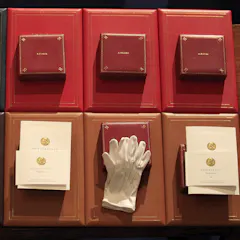
Progress has been made toward gender parity in science fields. But explicit and implicit barriers still hold women back from advancing in the same numbers as men to the upper reaches of STEM academia.
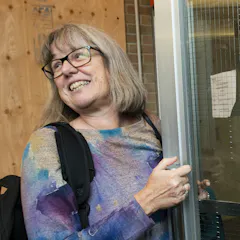
Donna Strickland is the first woman in 55 years to be awarded the Nobel Prize in Physics. Let’s hope the next such award to a woman won’t take so long.

Large gaps in the representation of women in science careers later in life are not due to lack of ability in the classroom.

Parliament has a problem retaining experienced women – and so does science. Working in STEMM places women in an ideological dilemma that is exhausting to confront, and feels impossible to change.

The new physics syllabus for year 11 and 12 students in NSW contains no mention of specific women who have contributed to the field, nor their work.
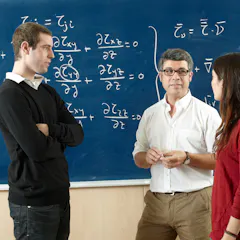
Without affirmative action through gender quotas and targets, we will have another 30 years of glacial progress on gender equity in academia.

New research shows children’s images of scientists are all too often male.

If you already write for The Conversation, thank you! But less than 30% of story pitches to our Science and Technology section come from women.

The young membership, frequency of elections and relaxed networks in science societies may provide vital positive influence for female promotion in STEM.
Top contributors
-

Australian Government Women in STEM Ambassador, Professor of Practice, UNSW
-
Professor and Associate Dean - Diversity, Belonging, Inclusion, and Equity, Australian National University
-
Professor and Lincoln Professor of Ethics in Public Affairs, Arizona State University
-
Associate Professor, Interim Pro Vice Chancellor Learning and Teaching, Australian National University
-
Lecturer in Cultural Studies in Health
-
Senior Research Fellow in Antarctic and island conservation science, Queensland University of Technology
-
Professor and Deputy Vice-Chancellor (Research), University of Sydney
-
Australia's Chief Scientist, Office of the Chief Scientist
-
Pro Vice-Chancellor (Academic Innovation & Change), Professor of Astrophysics, Swinburne University of Technology
-
Harold T. Stearns Professor of Earth Science, Wesleyan University
-
Lecturer, Education Futures, Adelaide University
-
Associate Professor of Critical Media Practices and Digital Humanities, University of Colorado Boulder
-
Professor of Mathematics, University of Sydney
-
Professor in Economics, Monash University
-
Research Manager at E61 Institute, Bocconi University