
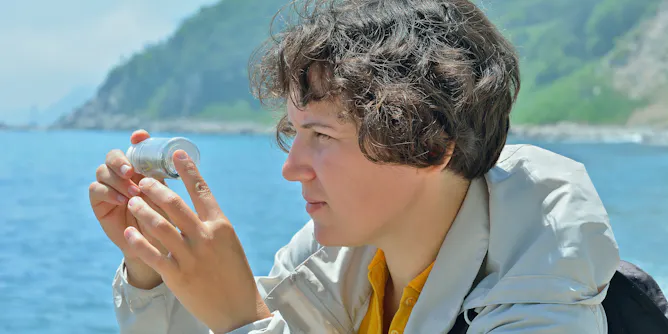
Overall, women receive a smaller share of research funding – but it’s not due to how applications are weighed up. The problem starts with the workforce itself.
Articles on Women in STEM
Displaying 21 - 40 of 139 articles
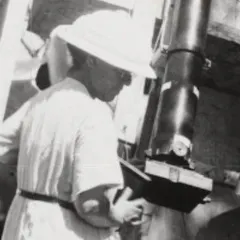
History might give you the impression astronomical discoveries were only done by men. But women were participating in scientific expeditions of eclipses too, even though it wasn’t easy.
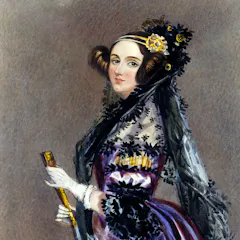
Lovelace was a prodigious math talent who learned from the giants of her time, but her linguistic and creative abilities were also important in her invention of computer programming.

A new study finds that women improve cyber risk management by bringing new perspectives and skills to the decision-making process of company boards.
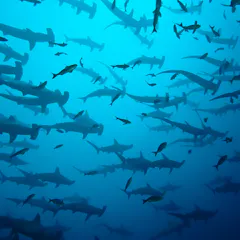
A study offers evidence that marine biology’s biggest stage is broken, and suggests ways to fix it.

Although female inventorship has grown over the years, 15 years’ worth of patent outcomes from IP Australia suggests inventing is still a luxury for women.

With unprecedented skills shortages looming in Australia, more than ever we need gender equity in science, technology, engineering, and mathematics. Here’s what needs to happen.
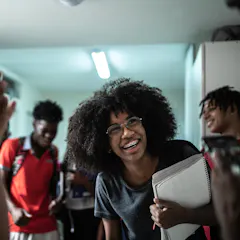
Research shows underrepresented people in STEM studies thrive in learning environments that address their need to belong, feel competent and find meaning in their work.

If mining workplaces are anything to go by, the clean energy sector will have their work cut out for them to retain women in the workforce.
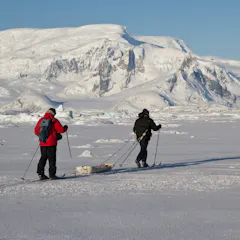
We’ve come a long time since women were deemed too “hormonal” to be sent into space. Yet gender bias is an issue women in the field still reckon with every day.

A negative environment dissuades many women engineering students from staying in the field. Can colleges and universities do anything to reverse the trend?

Moms in Proteomics hopes to ensure a sustainable and productive international community of expertly trained scientists, coupled with the necessary resources and tools to balance motherhood.
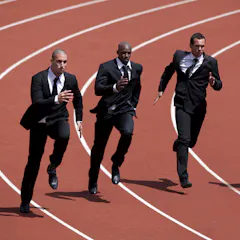
A focus on raw intellectual talent may unintentionally create a cutthroat workplace culture. New research suggests women’s preference to avoid that environment may contribute to gender gaps in some fields.
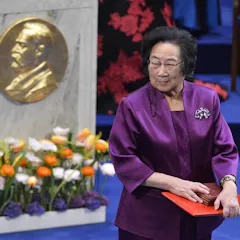
Discover the stories of five trailblazing women – Tharp, Nice, Tu, Noether and Wu – who worked in STEM during the 20th century.
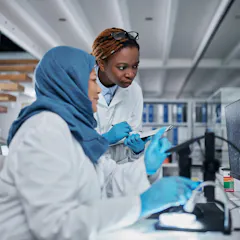
Young academies, which generally represent early career scientists, fared far better than their senior counterparts - a promising sign for the future.

The proportion of women in a discipline influences how rigorous and trustworthy people rate the field overall, as well as whether they categorize a STEM field as a ‘hard’ or ‘soft’ science.

Many scientists stuck at home during university closures dealt with increased domestic responsibilities. But some groups had it worse than others.
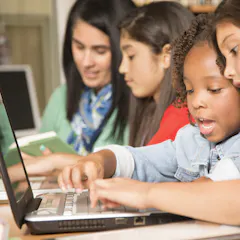
A comic-based curriculum for after-school programs could hold the key to unlocking girls’ interest in careers in cybersecurity.
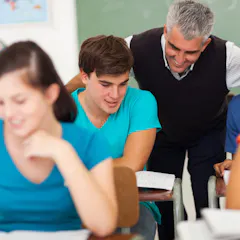
Research tracking teachers, classes and their grades over many years shows gender bias has long-term impacts on students’ performance and their post-school study choices.
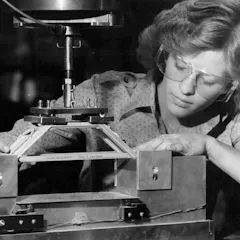
A survey of 251 women engineers who graduated from college in the 1970s sheds light on the experiences of these professional pioneers.
Top contributors
-

Australian Government Women in STEM Ambassador, Professor of Practice, UNSW
-
Professor and Associate Dean - Diversity, Belonging, Inclusion, and Equity, Australian National University
-
Professor and Lincoln Professor of Ethics in Public Affairs, Arizona State University
-
Associate Professor, Interim Pro Vice Chancellor Learning and Teaching, Australian National University
-
Lecturer in Cultural Studies in Health
-
Senior Research Fellow in Antarctic and island conservation science, Queensland University of Technology
-
Professor and Deputy Vice-Chancellor (Research), University of Sydney
-
Australia's Chief Scientist, Office of the Chief Scientist
-
Pro Vice-Chancellor (Academic Innovation & Change), Professor of Astrophysics, Swinburne University of Technology
-
Harold T. Stearns Professor of Earth Science, Wesleyan University
-
Lecturer, Education Futures, Adelaide University
-
Associate Professor of Critical Media Practices and Digital Humanities, University of Colorado Boulder
-
Professor of Mathematics, University of Sydney
-
Professor in Economics, Monash University
-
Research Manager at E61 Institute, Bocconi University