
Masculine cultures foster a greater sense of belonging and ability to be successful in boys than they do in girls.
Articles on Women in STEM
Displaying 121 - 139 of 139 articles

Most people have a very limited understanding of what engineers do – and we engineers don’t do a good job of expanding that view. But if we did, the benefits could be impressive.
Lovelace showed great insight into her subject and for that she’s still a hero to others.

Men still outnumber women in senior positions in Australian universities and other workplaces. Women are pushing for change but it’s men who can help redress the gender balance.

The drive the get more women involved in science should start at an early age. But as one space researcher found out, girls can get nudged out of science at school.
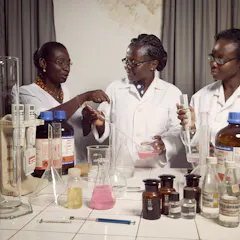
Getting more women into science, technology, engineering and maths fields is a process that involves many parts of a society. Several African countries are setting the pace.
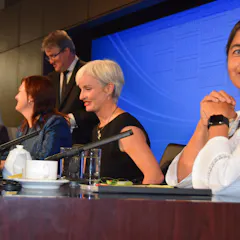
If we want a genuine ideas boom in Australia, then we need to remove the barriers preventing women from reaching the highest levels in science.
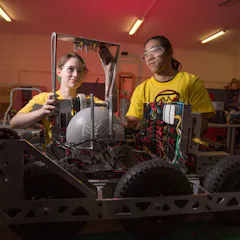
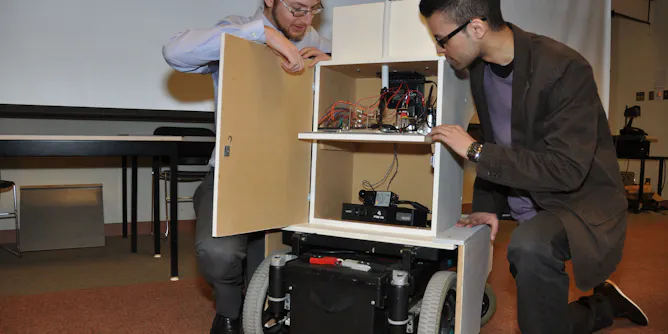
The FIRST robotics competition brings school students together to build a robot to complete a challenge. And it’s an inspiring way to encourage interest in STEM.

Women have come a long way in science, but plenty of work remains. After all, gender bias in science doesn’t happen in a vacuum.
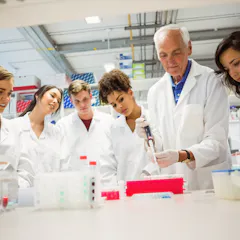
It’s fitting that on International Women’s Day we recognise the fact that greater diversity in science boosts research and its economic outcomes.

The push to bridge the gender gap and encourage more women and girls into a career in science gets the backing of the United Nations special day.
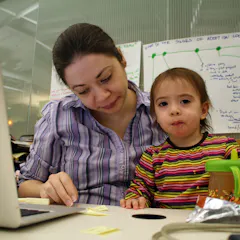
The limits of fertility and an elongated academic career path are currently at odds. If the choice to bear children contributes to the ‘leaky pipeline’ of women in STEM, what can be done?
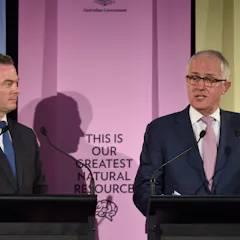
Prime Minister Malcolm Turnbull today announced the National Innovation and Science Agenda (NISA). Here’s what it means for science, commercialisation and industry in Australia.

Innovation is all the rage, but it require real reform to promote. Here are five things we could do to improve innovation in Australia.

Previous research found a preference in academia for hiring stellar female candidates over stellar male candidates for STEM jobs. A new study investigated what happens if applicants aren’t as evenly matched.

The new ‘science play’ Photograph 51 is hot on the heels of a host of others, including Stoppard’s The Hard Problem. Why are audiences attracted to these right now?
Men are harsher critics of research that reports evidence of gender bias in STEM fields, while women find it more compelling. How can we deal with the reality when we’re biased about bias?

Being underrepresented in science, technology, engineering and math means women can be made to feel they don’t belong, with long-term mental health consequences.

Changing the design of a classroom can get more girls interested in computer science. Here’s how.
Top contributors
-

Australian Government Women in STEM Ambassador, Professor of Practice, UNSW
-
Professor and Associate Dean - Diversity, Belonging, Inclusion, and Equity, Australian National University
-
Professor and Lincoln Professor of Ethics in Public Affairs, Arizona State University
-
Associate Professor, Interim Pro Vice Chancellor Learning and Teaching, Australian National University
-
Lecturer in Cultural Studies in Health
-
Senior Research Fellow in Antarctic and island conservation science, Queensland University of Technology
-
Professor and Deputy Vice-Chancellor (Research), University of Sydney
-
Australia's Chief Scientist, Office of the Chief Scientist
-
Pro Vice-Chancellor (Academic Innovation & Change), Professor of Astrophysics, Swinburne University of Technology
-
Harold T. Stearns Professor of Earth Science, Wesleyan University
-
Lecturer, Education Futures, Adelaide University
-
Associate Professor of Critical Media Practices and Digital Humanities, University of Colorado Boulder
-
Professor of Mathematics, University of Sydney
-
Professor in Economics, Monash University
-
Research Manager at E61 Institute, Bocconi University