
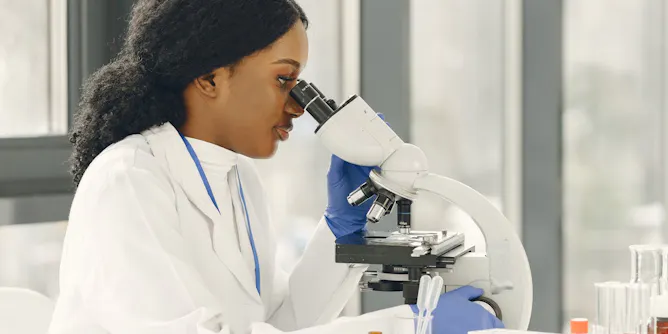
Women make up one in three researchers worldwide, but they remain sidelined in scientific organisations.
Articles on Women in science
Displaying 1 - 20 of 140 articles
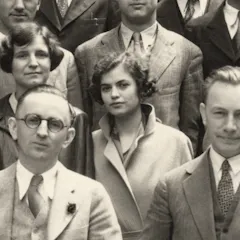
In the 1930s, this quantum mechanical pioneer faced obstacles that still confront women in physics today.
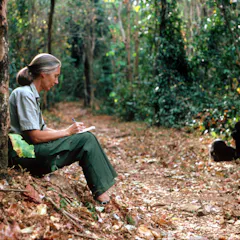
Jane Goodall showed tremendous courage in charting her own course as a pioneering researcher – and working to spread hope wherever she went.
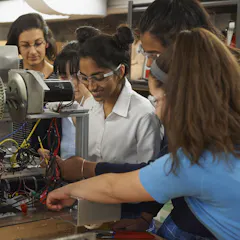
Women still face discrimination and underrepresentation in STEM fields; receiving mentoring and tools to navigate male-dominated fields can help them succeed.

Vera C. Rubin’s research into stars in galaxies led to the modern understanding of dark matter.
Science, technology, engineering and maths are still not an equal playing field for all. Here’s what needs to change.

Women in these fields are almost at parity with men at the most selective schools, but the gender gap doubled at many of the least selective universities.
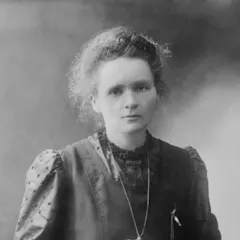
Winning a Nobel Prize is a rare achievement, but some researchers have been awarded more than one.
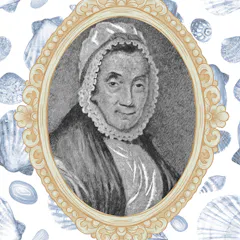
Collecting shells was a common past time in Enlightenment Britain, when elite women were becoming increasingly interested in science.
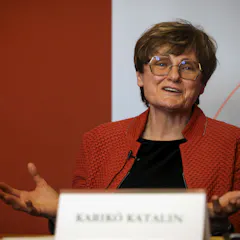
Studies reveal women’s research receives tougher assessment, less funding, fewer prizes and less citation than men’s.
In the academic world, researchers are rewarded for publishing frequently. Not only is this affecting research quality but it is also hindering female scientists.
Growing awareness of sexual harassment and discrimination in the field prompted an international survey and research into potential solutions.
From primary school to academic positions, despite some progress, gender inequality continues to be rife.
The trailer for ‘Oppenheimer’ fails to include female physicists, which is indicative of a broader media trend that, if reversed, could lead to greater gender diversity in science.
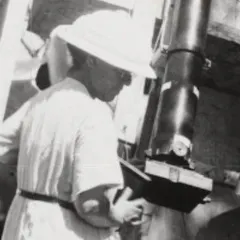
History might give you the impression astronomical discoveries were only done by men. But women were participating in scientific expeditions of eclipses too, even though it wasn’t easy.

Mary Anning, Thomas Bopp and Ben Bacon are just a few of the nonprofessionals who pushed the frontiers of science.
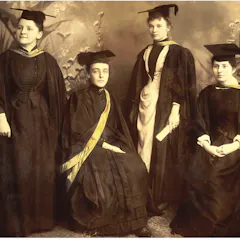
A new book explores a paradox: women have been excluded from Australian science for many social and political reasons, but were also present and active in it from its earliest days.
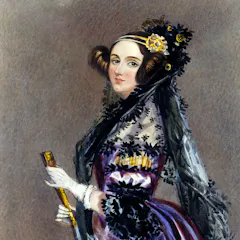
Lovelace was a prodigious math talent who learned from the giants of her time, but her linguistic and creative abilities were also important in her invention of computer programming.

The U.S. Antarctic Program struggles to keep women safe – and through the continent’s history, discrimination and prejudice are rampant.

Authors writing for Nature journals will also need to separate sex and gender data, so it can’t just be lumped in with other results.
Top contributors
-

Professor and Lincoln Professor of Ethics in Public Affairs, Arizona State University
-
Australia's Chief Scientist, Office of the Chief Scientist
-
Research Scientist, The University of Queensland
-
Professor of Mathematics, University of Sydney
-
Senior Instrument Scientist, Australian Nuclear Science and Technology Organisation
-
Pro Vice-Chancellor (Academic Innovation & Change), Professor of Astrophysics, Swinburne University of Technology
-
Professor Emeritus of Cognitive NeuroImaging, Aston University
-
Associate Professor, Interim Pro Vice Chancellor Learning and Teaching, Australian National University
-
Associate professor, University of Wollongong
-
Ph.D. Candidate in Psychology, Northwestern University
-
Associate Professor of Critical Media Practices and Digital Humanities, University of Colorado Boulder
-
Associate professor, University of Sydney
-
Professor and Deputy Vice-Chancellor (Research), University of Sydney
-
Associate Professor in Archaeology and Space Studies, Flinders University
-
Deputy Vice Chancellor Research & Innovation, Adelaide University