

It’s cheaper and quicker to dump waste illegally. At one location, it’s used to support collapsing land – a practice called ‘literal landfilling’.
Articles on Waste pickers
Displaying all articles
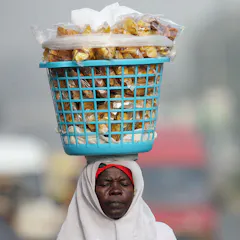
Street vendors are fighting to be brought under labour law rather than remain under business law.
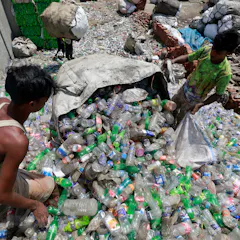
To be truly fair, a global treaty on plastic pollution must tackle the inequalities at the heart of current recycling and waste management systems.
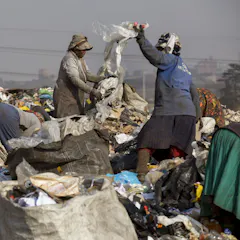
Because waste pickers go through trash and leave behind everything without value, they know better than anyone which plastics should be eliminated.
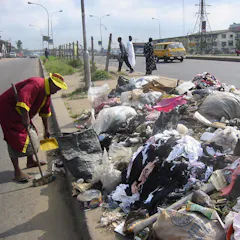
Lagos has a waste problem that can be tackled by adopting a sustainable waste management policy that considers income brackets.
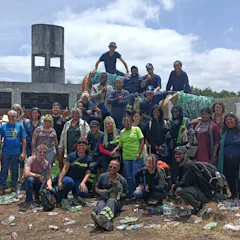
Waste pickers want a say in how policies are designed and implemented.
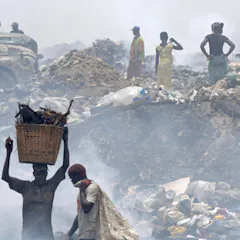
Employing children as waste pickers lowers costs but exposes them to hazards.
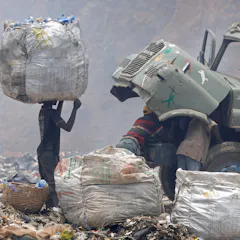
Lagos waste pickers were dissatisfied with their unhealthy working conditions, poverty and stigmatisation.
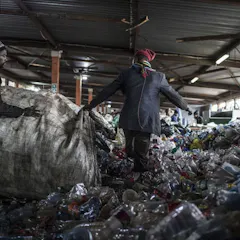
In South Africa, the work of ensuring plastic bottles are recycled lies with consumers and volunteers instead of the large industry polluters.
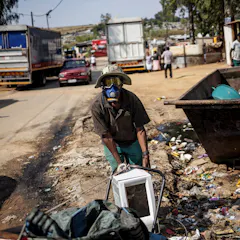
Waste reclaimers save South African municipalities up to R748 million a year in landfill space. Without them, the country’s recycling economy would not exist.
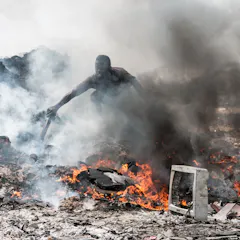
Two billion people worldwide lack a dedicated system of waste collection and management.
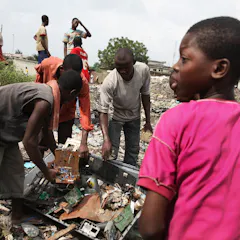
Waste management should be treated as an essential service, and in Nigeria that means recognising informal workers.
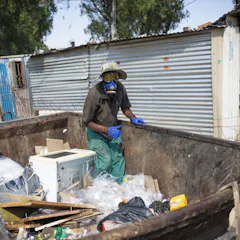
The clock is ticking: in the absence of government support, not being able to work means waste reclaimers don’t have money to buy food.
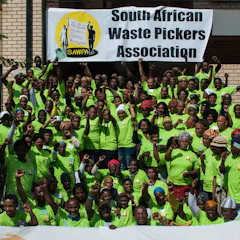
Waste, once freely available to the poor, is being appropriated for business purposes.
Top contributors
-

Associate Professor of Sociology, University of Johannesburg
-
Research Fellow, Royal Holloway, University of London
-
Associate professor in ecological economics and political ecology at the Universitat de Barcelona, Universitat Autònoma de Barcelona
-
Waste Pickers Global Coordinator, WIEGO & Lecturer in Architecture, Design and Urbanism, Universidad de la República Uruguay
-
Lecturer in Resource Efficiency Systems, School of Civil Engineering, University of Leeds; Imperial College London
-
Lecturer, Department of Urban and Regional Planning, Olabisi Onabanjo University, Ago-Iwoye, Ogun State, Nigeria, Olabisi Onabanjo University
-
PhD candidate, Meteorologist, University of Nigeria
-
Professor of Environmental Management & Sustainability, University of Nigeria
-
Researcher, Technical University Braunschweig
-
Lecturer, Department of Urban and Regional Planning, Olabisi Onabanjo University, Ago-Iwoye, Nigeria, Olabisi Onabanjo University
-
UKRI Future Leader Fellow, University of St Andrews
-
Research Associate, Department of Civil and Environmental Engineering, Imperial College London
-
Assistant Professor, Center for the Sociology of Organisations, CNRS/Sciences Po, Sciences Po
-
Associate Professor, University of the Western Cape
-
Visiting Researcher at the Institute of Environmental Science and Technology (ICTA-UAB) and PhD student in Social Sciences at PUCRS, Pontifícia Universidade Católica do Rio Grande do Sul (PUC-RS)