
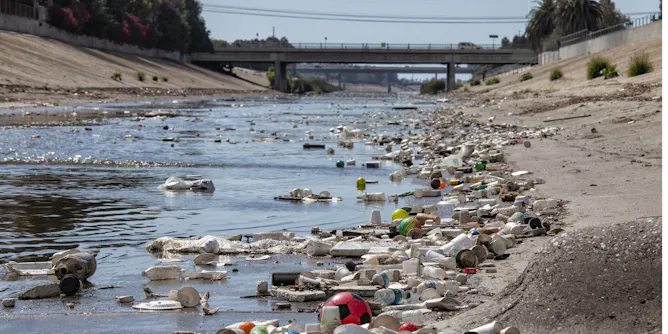
Better measuring standards, more responsibility for producers and an end to single-use products are all positive steps. But the US has not yet endorsed a cap on plastic production.
Articles on Solid waste management
Displaying 1 - 20 of 27 articles

Modern rodenticides can kill rats with a single dose and readily pass up the food chain to larger carnivores. They are widely used and largely unregulated.

Mountain tourism brings revenues to Nepal but leaves a mess behind. Local and international groups are offering new cleanup strategies.
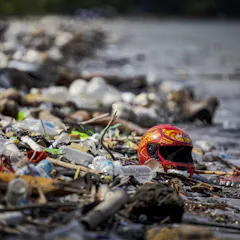
A central question remains unresolved in the draft treaty: Is plastic pollution basically a waste management problem, or can it be solved only with a cap on production?

The overarching goal of Indigenous cultural practices is to prevent the overconsumption of resources that underpins society’s throwaway culture.
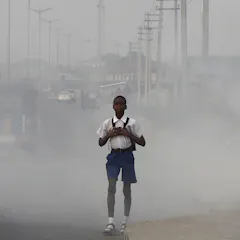
Air pollution accounts for many deaths in Africa yearly. However, this may change if people learn to protect themselves and hold their leaders accountable.
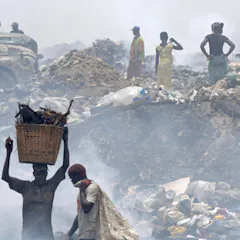
Employing children as waste pickers lowers costs but exposes them to hazards.

Nigeria must adopt a multi-pronged approach to address its flooding menace and minimise the effects.

Nigerian students can support positive environmental behaviour if they learn about the impact of solid waste management on society.
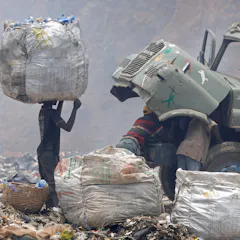
Lagos waste pickers were dissatisfied with their unhealthy working conditions, poverty and stigmatisation.
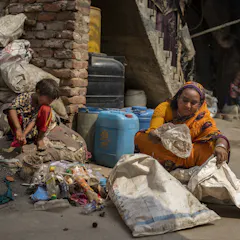
‘Smart’ solutions to urban solid waste are creating serious challenges for low-income women waste workers in India.

Priority should be given to improving municipal solid waste management in First Nation communities because they currently lack financial resources, infrastructure and solid waste diversion programs.
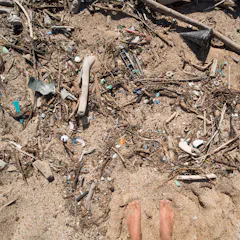
An estimated 8 million metric tons of plastic waste enters the ocean each year – equivalent to dumping in a garbage truckload of it every minute. A new report calls on the US to help stem the deluge.
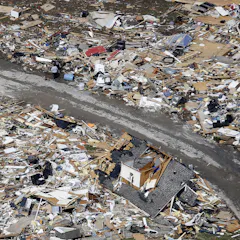
With the onset of spring come thunderstorms, and sometimes tornadoes. Learn how these systems form and why night tornadoes are especially deadly.
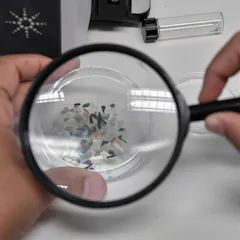
As more and more plastic trash permeates the oceans, fragments are making their way into fish and shellfish – and potentially into humans.
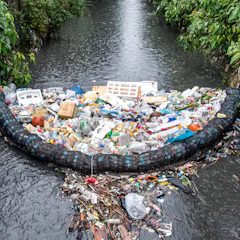
This automated approach can be used in any other city around the world, helping to reduce how much waste enters local waterways and reaches the ocean.
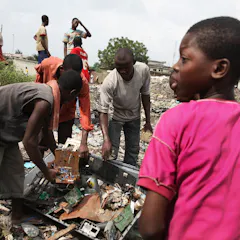
Waste management should be treated as an essential service, and in Nigeria that means recognising informal workers.
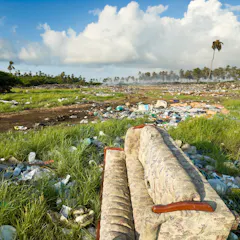
To manage plastic wastes, nations first need to know what they have and where it’s coming from. A case study from Trinidad and Tobago shows how this approach can help identify solutions.
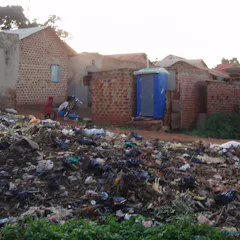
Residents have come up with solutions to make usable products out of organic waste materials.

Every year the US burns more than 34 million tons of garbage in incinerators. These plants are major pollution sources, and most are clustered in disadvantaged communities.
Top contributors
-

Research Scientist, Stanford University
-
Professor of Environmental Management & Sustainability, University of Nigeria
-
Professor of Law and Associate Dean for International Affairs, Wake Forest University
-
Assistant Professor of Environmental Policy and Sustainability Management, The New School
-
Assistant Professor, Aboriginal and Northern Studies, University College of the North
-
Head of Urbanisation and Wellbeing, African Population and Health Research Center, African Population and Health Research Center
-
Lecturer in Economics, University of Sydney
-
Assistant Professor in Additive Manufacturing Management, University of Nottingham
-
Professor of Urban Engineering, University of Illinois Chicago
-
Professor of Mechanical Engineering, Massachusetts Institute of Technology (MIT)
-
Research Associate, MRC Epidemiology Unit, University of Cambridge
-
Assistant Professor, Florida A&M University-Florida State University College of Engineering, Florida State University
-
Lecturer, Department of Urban and Regional Planning, Olabisi Onabanjo University, Ago-Iwoye, Nigeria, Olabisi Onabanjo University
-
Professor of Sustainability, Rochester Institute of Technology
-
Assistant Professor of Biochemistry and Molecular Biology, Michigan State University