
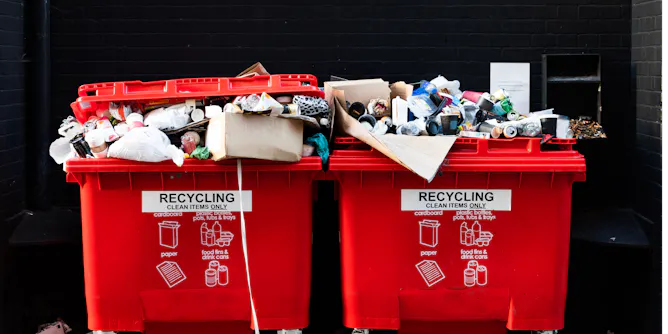
Tossing something into your recycling bin that can’t be processed does more harm than good.
Articles on Waste management
Displaying 41 - 60 of 85 articles
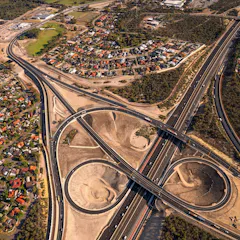
Government procurement policies are the key to reducing Australia’s mountain of construction waste.

Maine and Oregon have enacted laws that require makers of consumer product packaging to pay for recycling or disposing of it. Will other states follow?
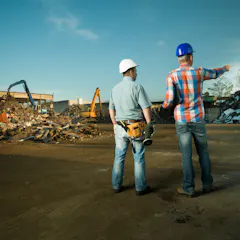
Construction and demolition creates more waste than any other sector, but much of it can be recycled. However, public resistance to setting up new plants stands in the way of a sustainable market.
Throughout human history, clay has played a role in many different industries. Its unique properties make it suited for a wide applications in widely ranging industries.
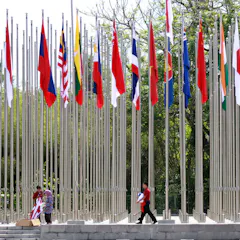
The countries of the ASEAN region have important roles to play in tackling the global problem of marine plastic waste.
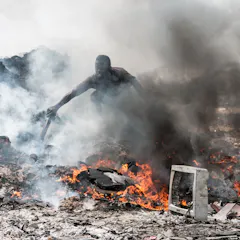
Two billion people worldwide lack a dedicated system of waste collection and management.

Research by author and her students about palm oil waste water processing using Microbial Fuel Cells at the Faculty of Biotechnology, Atma Jaya Catholic University of Indonesia
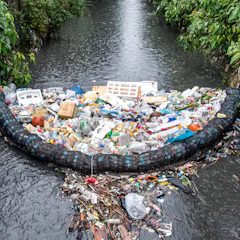
This automated approach can be used in any other city around the world, helping to reduce how much waste enters local waterways and reaches the ocean.

Water at informal settlements, where sanitation and waste management facilities were absent, had high bacteria levels.
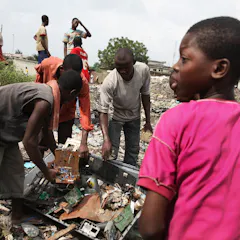
Waste management should be treated as an essential service, and in Nigeria that means recognising informal workers.
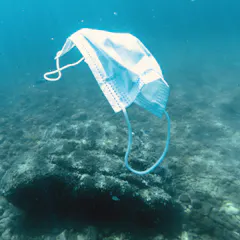
From a purely environmental perspective, owning multiple reusable face masks, and machine-washing them together, is the best option.
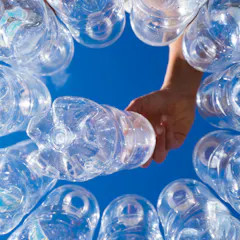
New Zealand’s potential to expand its domestic recycling sector is enormous. It could create jobs and divert millions of tonnes of waste from landfills, as long as there are clear, measurable targets.
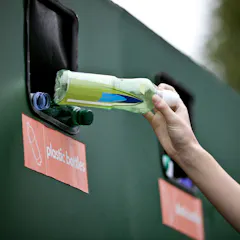
We investigated plastic recycling in the UK and uncovered startling inconsistencies.
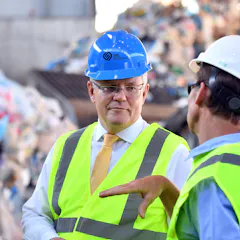
The federal government today announced $1 billion plan to divert more than ten million tonnes of waste from landfill. But waste management is about more than just recycling.
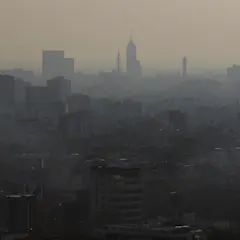
The Aztecs had a shining city on a lake, with canals, causeways and aqueducts – until the Spanish came. Mexico City is still suffering the consequences of their bad public health decisions.

The ‘pots to planes’ appeal in the summer of 1940 helped inspire a mass recycling effort, but problems soon emerged.

The COVID-019 pandemic has boosted use of disposable packaging and personal protective equipment, at the same time that many recycling programs are facing budget cuts. The upshot: More plastic trash.
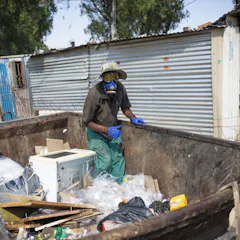
The clock is ticking: in the absence of government support, not being able to work means waste reclaimers don’t have money to buy food.
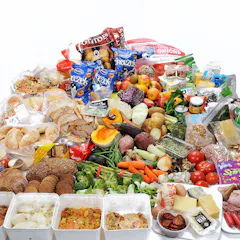
Waste-free by 2035 in Indonesia is doable through three strategies to reduce food waste.
Top contributors
-

Senior Lecturer, School of Property, Construction and Project Management, RMIT University
-
Associate Dean and Head of Project Management, RMIT University
-
Professor of Global Environmental Politics, University of California, Berkeley
-
Lecturer, School of Life and Environmental Sciences, Deakin University
-
Senior Principal Research Scientist, Environment, CSIRO
-
Lecturer in Resource Efficiency Systems, School of Civil Engineering, University of Leeds; Imperial College London
-
Research Associate, Department of Civil and Environmental Engineering, Imperial College London
-
Professor of Waste Management, The University of Queensland
-
Professor and Associate Dean, School of Property, Construction and Project Management, RMIT University
-
Research Principal, Institute for Sustainable Futures, University of Technology Sydney
-
Senior Research Fellow, BehaviourWorks Australia, Monash University
-
Research associate, Loughborough University
-
PhD Candidate in Environmental Science, Policy, and Management, University of California, Berkeley
-
Postdoc, University of Copenhagen
-
Research Scientist, Oceans and Atmospheres, CSIRO