
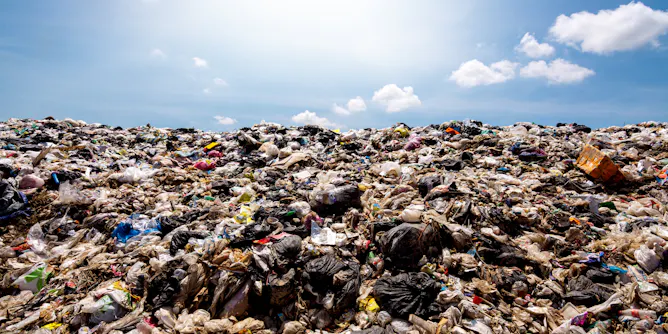
A new World Bank report shows that the world is struggling to deal with ever-growing quantities of waste.
Articles on Landfills
Displaying 1 - 20 of 41 articles

Rather than generating climate-warming emissions and wasting nutrients and energy, food waste can become a resource if processed in sewage treatment plants.
Critics of environmental protection laws may have forgotten how much progress has been made.
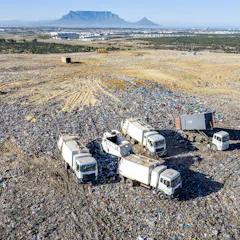
In South Africa, landfill practices impose a huge burden on the economy, environment and communities.
New research shows that the biggest sources of forever chemicals are rooted in the past – old landfills, waste sites or historic industrial use.
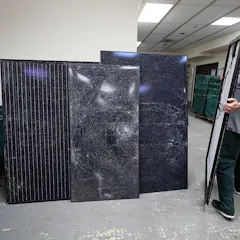
Recycling solar panels seems like a smart idea, but it’s complicated. Built to withstand years of wind and weather, solar panels are designed for strength, not easy breakdown.
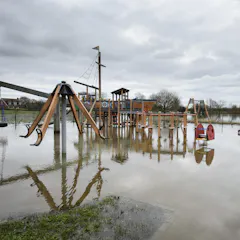
As floods get more severe and more frequent as a result of climate change, the risk of toxic pollutants being released from old landfills rises.
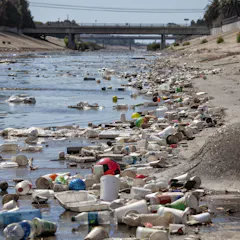
Better measuring standards, more responsibility for producers and an end to single-use products are all positive steps. But the US has not yet endorsed a cap on plastic production.

Mountain tourism brings revenues to Nepal but leaves a mess behind. Local and international groups are offering new cleanup strategies.
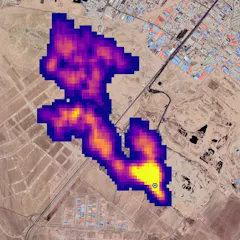
Methane is a potent greenhouse gas that can leak from oil and gas wells, pipelines and landfills. Satellites can spot the releases fast enough to get them fixed and help protect the climate.

If not properly managed, heavy metals such as arsenic can accumulate in landfills and leach into soils and groundwater.
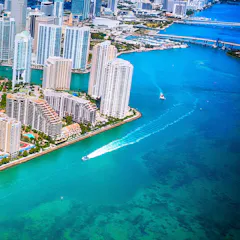
Scientists found PFAS hot spots in Miami’s Biscayne Bay where the chemicals are entering coastal waters and reaching the ocean. Water samples point to some specific sources.
For Australia to shift to a net zero economy, its big polluters need to cut emissions. A get-out clause buried in the policy makes it unlikely that they will, and the result will be devastating.
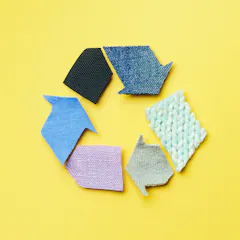
Brands like Zara and H&M are teaming up with recycled textile producers but more collaboration is needed.
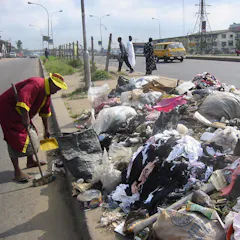
Lagos has a waste problem that can be tackled by adopting a sustainable waste management policy that considers income brackets.
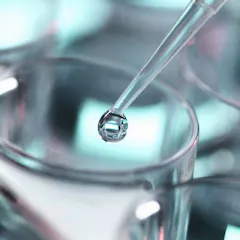
PFAS can be filtered, but getting rid of the chemicals is a monumental challenge. A biochemist and soil scientist explain.

Humans generate a lot of trash, but there are cheaper and safer ways to handle it than loading it on rockets.
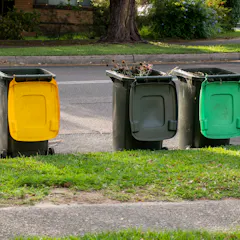
Most food waste still goes into red bins of mixed waste bound for landfill. It’s using up precious landfill space and harming the environment when it could produce valuable compost and biogas instead.
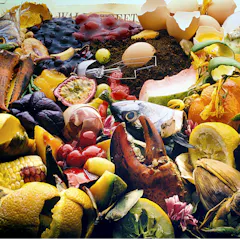
Reducing food waste at home is an action that anyone can take to help slow climate change, often saving money in the process. More consumer education could help show people what to do.
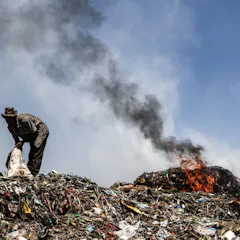
The decision by African ministers of environment to end open waste burning will not only save lives but also open up new income streams.
Top contributors
-

Professor of Global Environmental Politics, University of California, Berkeley
-
Retired Honorary Associate Professor in the School of Civil and Environmental Engineering, University of the Witwatersrand
-
Professor of Biochemistry, Michigan State University
-
Professor of Environmental Geochemistry, Queen Mary University of London
-
Professor of Waste Management, The University of Queensland
-
Professor of Environmental and Soil Chemistry, Michigan State University
-
Professor, Gender & Women's Studies, Anthropology & Marine Affairs, University of Rhode Island
-
Research Associate Professor of Supply Chain Management & Coordinator of Academic Sustainability, University of Arkansas
-
Assistant Professor of Mechanical Engineering, University of Michigan
-
Professor, Australian National University
-
Assistant Professor of Chemistry, Florida International University
-
Professor and Director Centre for Agricultural Engineering, University of Southern Queensland
-
Assistant Professor of Biochemistry and Molecular Biology, Michigan State University
-
Professor of Climate Sciences, Duke University
-
Professor of Economics, Bucknell University