

Used PPE needs to be incinerated for safety reasons, but once this pandemic is over we should consider more sustainable options.
Articles on Waste
Displaying 121 - 140 of 289 articles
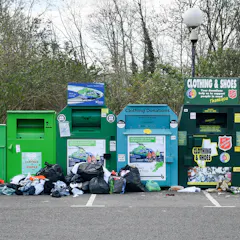
Lockdown has exposed real problems with the circular economy which urgently need to be addressed.
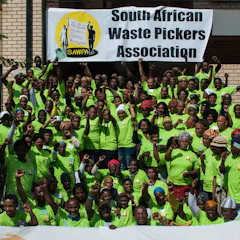
Waste, once freely available to the poor, is being appropriated for business purposes.
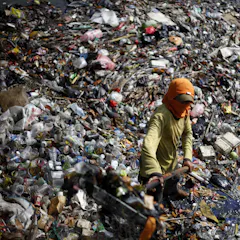
The study also finds the weight of plastic waste from all rivers in Jakarta totals 2.1 million kilograms equivalent to 1,000 Tesla Model S cars.
The social and environmental costs of rampant consumerism are becoming ever clearer, and we’re all encouraged to use less and recycle more, but how can we shift more sustainable model?
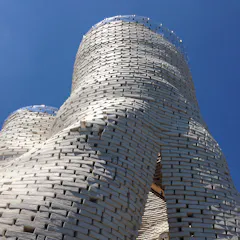
Our climate is changing – and so must architecture.
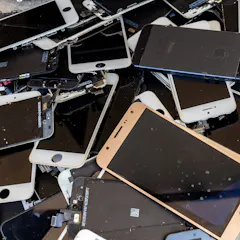
Right to Repair laws make it easier for consumers, repairers and tinkerers to fix their broken goods. It’s an attractive alternative to the dangers of overflowing e-waste.

Cities around the world are struggling to manage their mountains of waste. We can use the Internet of Things for smart waste systems that collect, sort, reuse and recycle most of what is thrown out.
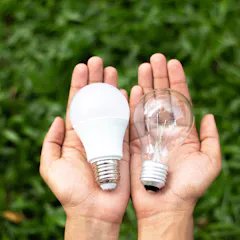
Often presented as one of the best ways to save energy, eco-efficiency often proves to be less effective than one might think.

Consumerism reaches a frenzied peak as the holidays approach, but it’s not too late to put on the brakes.

Australians spent $400 million on unwanted Christmas gifts last year. There must be a better way.
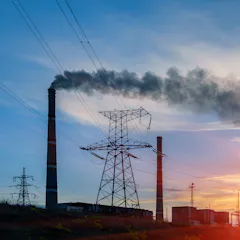
Due to inefficiencies in global energy systems, energy falls short of even making it to the consumer, often lost in the form of waste heat.

Government agencies have detailed plans for responding to disasters, like the Dec. 10-11, 2021 tornados. But one issue doesn’t get enough attention: cleaning up the mess left behind.
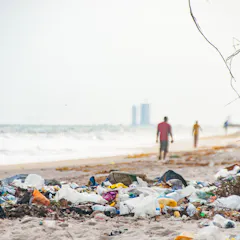
Nigeria’s government must encourage citizens to embrace a system where plastic never become waste.

Old buildings aren’t just waste – the materials can be reused to create the cities of the future.
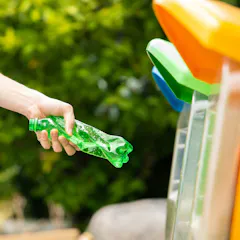
Americans recycle only about one-third of the solid waste we generate. A behavioral scientist argues that with the right motivators, we could do more.
An inconclusive COAG meeting comes after years of inquiries, announcements, initiatives, investigations and reviews. Australia is no closer to actually tackling our waste problems.
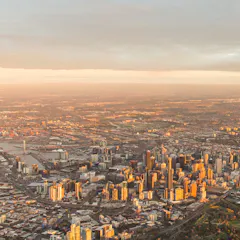
The demands on land and resources from our fast-growing cities are unsustainable, as are the wastes they produce. Yet still our leaders act as if unlimited growth is possible.
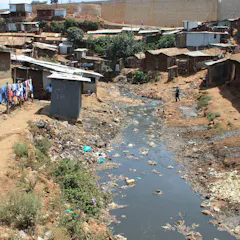
There are huge holes in the governance of Nairobi river and city’s waste which means the river’s condition has deteriorated.
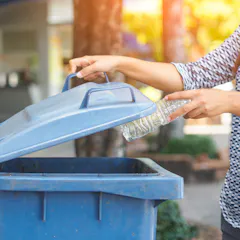
Consumers are much more likely to recycle their waste after viewing messages showing the products it might turn into.
Top contributors
-

Professor of Applied Environmental Science, University of Southampton
-
Senior Research Fellow, BehaviourWorks Australia, Monash University
-
Research associate, Loughborough University
-
Professor of Global Environmental Politics, University of California, Berkeley
-
Lecturer, School of Life and Environmental Sciences, Deakin University
-
Professor and Director Centre for Agricultural Engineering, University of Southern Queensland
-
Senior Lecturer, School of Property, Construction and Project Management, RMIT University
-
Senior Principal Research Scientist, Environment, CSIRO
-
Professor of Law, Griffith University, Griffith University
-
Emeritus Professor, School of Environment and Science, Griffith University
-
PhD Candidate in Environmental Science, Policy, and Management, University of California, Berkeley
-
Research Principal, Institute for Sustainable Futures, University of Technology Sydney
-
Associate Professor and Research Director, Institute for Sustainable Futures, University of Technology Sydney
-
Associate Dean and Head of Project Management, RMIT University
-
Associate Professor in Construction and Environmental Performance, The University of Melbourne