
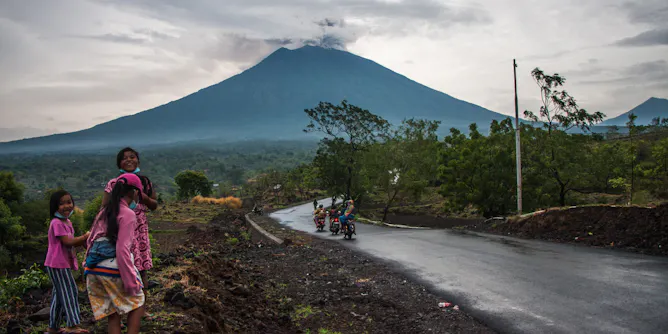
‘Volcano forensics’ involves a mixture of modern day monitoring and analysis of past eruptions. Geologists use volcanic rocks as a kind of time capsule to assess what happened previously.
Articles on Volcanoes
Displaying 161 - 180 of 260 articles
How do scientists predict volcanic eruptions? To do so with accuracy, they need to know the individual volcano and its history very well.
The world watches and waits to see what will happen next at Bali’s Mt Agung, an active volcano.
Volcanologists study the formation and eruptions of volcanoes - surely one of the most interesting jobs around. However, it can also be very dangerous.
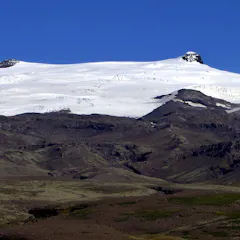
The saga of Öræfajökull suggests we should take small earthquakes in the region seriously.

Human-induced earthquakes have been reported from every continent except Antarctica. We asked a geologist to investigate whether North Korea’s nuclear tests could trigger geological changes.
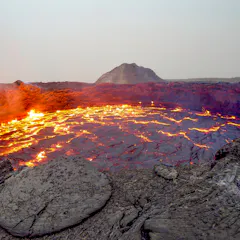
Satellite research in Ethiopia is opening up a new frontier in the hunt for geothermal power.
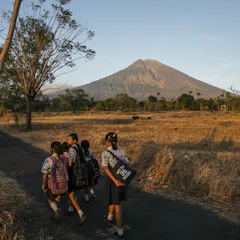
Hundreds of earthquakes a day are being recorded near Mount Agung in Bali as the volcano threatens to erupt for the first time in more than 50 years.
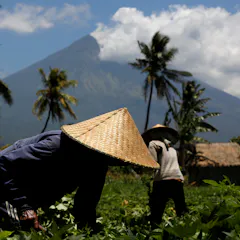
Volcanic ash can cause a nuisance to farmers, burying agricultural lands and damaging crops. But in the long term, this ash will create highly productive soil that can support huge populations.
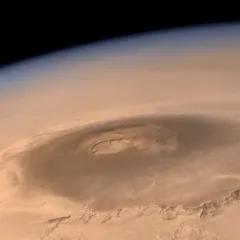
They erupted for billions of years and make Earth’s volcanoes look like molehills. Here’s what we know and what we don’t know about them.
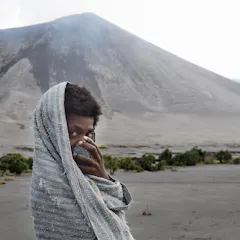
Ambae does not fit the stereotypical image of a volcano, and it poses a significant threat.
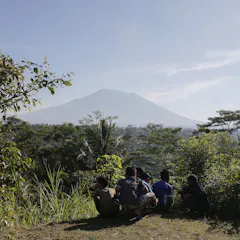
Warnings are being issued to stay clear of an Indonesian volcano following a series of earthquakes.
The treaty to limit the destruction of the ozone layer is hailed as the most successful environmental agreement of all time. Three decades on, the ozone layer is slowly but surely returning to health.
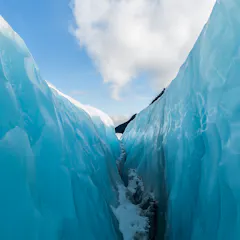
Earth’s thermostat can fail spectacularly at times. Around 700 million years ago, huge volcanic eruptions triggered “Snowball Earth”.
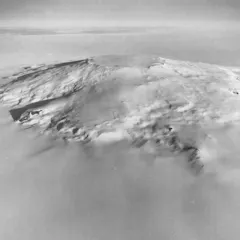
18,000 years ago a volcano in Antartica began erupting – and didn’t stop for 192 years.
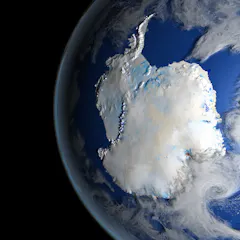
More than 100 volcanoes lie beneath the continent’s ice sheet.
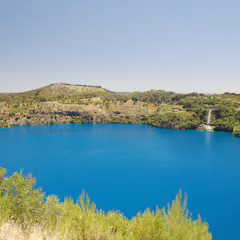
Indigenous people recorded stories that provide much detail about eruptions in Australia. They can help us date natural events in the past and are legitimate sources of scientific information.

The volcanoes would be a great place t to search for fossilised microbes.
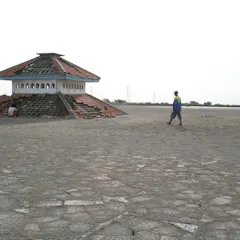
The world’s largest mud volcano has consumed several villages, but we’re no closer to the answer of how and why it began.
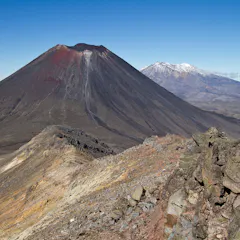
New research shows that satellite measurements of tiny movements of the Earth’s surface can tell scientists what is happening in the deeper layers of our planet.
Top contributors
-

Senior Curator of Geosciences, Museums Victoria Research Institute; Monash University
-
Volcanologist, Lancaster University
-
ARC Future Fellow and Associate Professor in Igneous Petrology/Volcanology, The University of Queensland
-
PhD researcher in Volcanology, UCL
-
Reader in Physical Geography and Natural Hazards, Coventry University
-
Professor in Earth Sciences, Nanyang Technological University, Singapore, and Emeritus Professor of Mineral Physics, University of Cambridge
-
Lecturer in Volcanology, University of Hull
-
Professor of Planetary Geosciences, The Open University
-
Emeritus professor in geology, Australian National University
-
Professor in Earth & Climate Science, University of Southampton
-
Assistant Lecturer in Volcanology, Monash University
-
Associate Professor in Earth Sciences, University of Tasmania
-
Professor of Geography, School of Law and Society, University of the Sunshine Coast
-
Associate Professor of Geology, University of Richmond
-
Associate Professor of Geosciences; Director for the Boise State Hazard and Climate Resilience Institute, Boise State University