

By observing the tree-ring-like growth records present in volcanic crystals, geologists are able to track volcanic activity and reconstruct the steps leading up to eruptions.
Articles on Lava
Displaying 1 - 20 of 31 articles
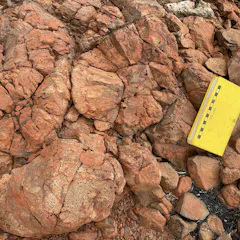
Today, plate tectonics carry water into Earth’s depths. But this deep water cycle goes back much further.

Decoding volcanic ‘crystal balls’ can help scientists tell ahead of time when a volcano is going to erupt
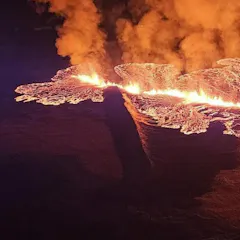
Iceland, Hawaii and Italy have all tried to control lava to save cities in the past. A volcanologist explains the methods.

The Peregrine and Nova-C landers are due to carry out valuable science at two diverse lunar locations.

Iceland is known as ‘the land of fire and ice’ for a reason.

For some people, it’s a choice based on cultural beliefs or economic opportunities provided by the volcano. Other times it’s less a choice than the only option.
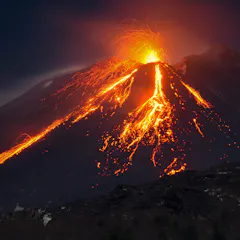
One in ten people around the world live near an active volcano. Understanding the drivers of eruptions is crucial.
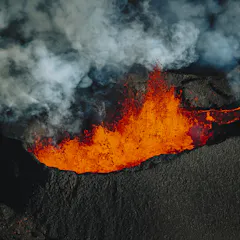
As they shape the Earth, volcanoes inspire and terrify humans.

The eruption of Mauna Loa is a profound spiritual experience for many Native Hawaiians. An anthropologist explains Native American beliefs on the living Earth and volcanic lava.
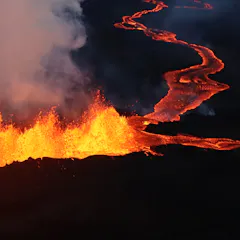
A scientist who led one of the first projects to map the Hawaiian Islands’ deep volcanic plumbing explains what’s going on under the surface as Mauna Loa erupts.

Earth has liquid rock inside. Here’s what happens to that rock to make lava happen.
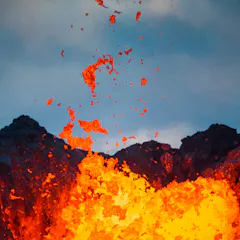
Volcanoes might seem like nature’s incinerators, but using them to burn up trash would be dangerous and disrespectful to indigenous people who view them as sacred.
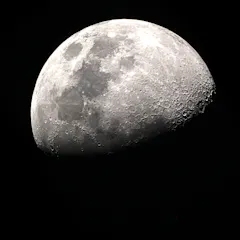
A key goal of the Chang'e-5 mission was to find evidence of some of the youngest volcanic eruptions on the Moon.
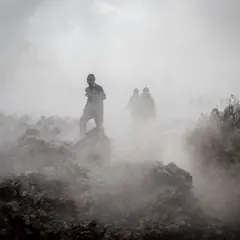
Nyiragongo is one of the most dangerous volcanoes in the world because of its fast-moving lava. It can flow at a speed of about 100km per hour.
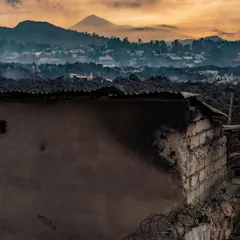
National governments need to wake up to the volcanic risks posed by tectonic rifting around Mount Nyiragongo.
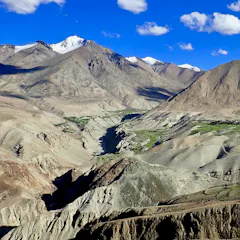
Earth’s magnetic field locks information into lava as it cools into rock. Millions of years later, scientists can decipher this magnetic data to build geologic timelines and maps.
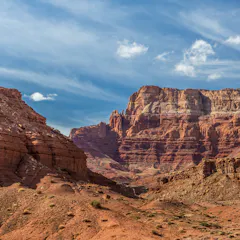
As strange as it sounds, rocks are made from stardust.
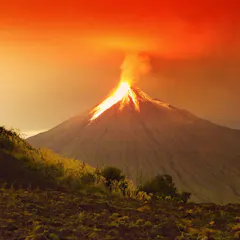
When magma rises towards the surface gas bubbles start to form. Whether or not they can escape as the magma is rising affects how explosive the eruption will be.
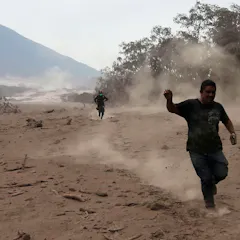
Important points about volcanoes: location matters, explosiveness can be predicted to an extent, and fast-moving flows of volcanic materials (known as pyroclastic flows) are deadly.
Top contributors
-

Volcanologist, Lancaster University
-
ARC Future Fellow and Associate Professor in Igneous Petrology/Volcanology, The University of Queensland
-
Senior Curator of Geosciences, Museums Victoria Research Institute; Monash University
-
Postdoctoral Associate of Earth Sciences, University of Minnesota
-
Postdoctoral Research Fellow in Isotope Geochemistry, Adelaide University
-
Senior Lecturer in Earth Sciences and Environmental Sciences & the Center for Exoplanet Science, University of St Andrews
-
Assistant Professor of Earth Sciences, University of Oregon
-
Lecturer in Geology, Macquarie University
-
Lecturer in Volcanology, University of Hull
-
Senior Lecturer in Volcanology, University of South Wales
-
Lecturer in Education, Charles Darwin University
-
Assistant Lecturer in Volcanology, Monash University
-
Professor of Earth Sciences, University of Oxford
-
Lecturer in Geology, Adelaide University
-
Professor of Planetary Geosciences, The Open University