

By observing the tree-ring-like growth records present in volcanic crystals, geologists are able to track volcanic activity and reconstruct the steps leading up to eruptions.
Articles on Volcanic eruptions
Displaying 1 - 20 of 85 articles

AI models could spot volcanic eruptions earlier – and new research says the lives saved make the occasional false alarm worth the price.
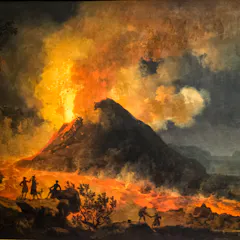
A volcanic eruption in 536 kicked off ‘the worst year to be alive’.

From scary headlines to recycled eruption videos, new research reveals how common misconceptions can fuel misinformation about volcanoes.
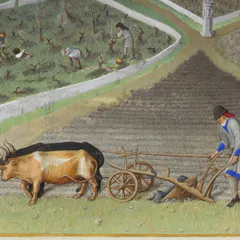
Monks wrote chronicles about the devastating heat of the 13th century, and detail what happened.

As heavier rain raises landslide risk, gaps in data, law and funding leave New Zealand relying on response rather than prevention.
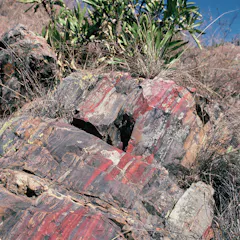
Young Earth was a blue planet covered in oceans, much like today. But the atmosphere was a lethal cocktail of gases, with no oxygen.

Researchers can study volcanic deposits at archaeological sites to piece together how ancient people responded to catastrophic events.
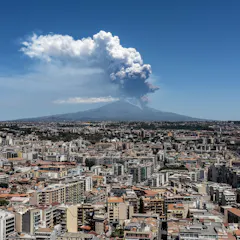
On an explosiveness scale from Hawaii to Vesuvius, the latest from Mount Etna was relatively mild.
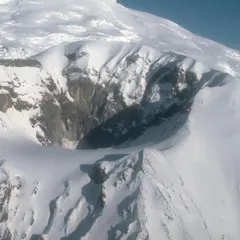
When volcanoes like Alaska’s Mount Spurr erupt, the ash can damage people’s lungs, smother crops and kill animals, and the harm can continue to spread long afterward.
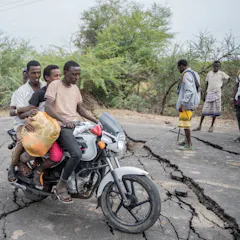
A geologically dynamic region in the Great Rift Valley is closely watched by scientists as a fascinating natural laboratory.

The DRC illustrates how millions of people in fragile, violent and conflict-affected parts of the world are at risk of disaster.

Ash particles that get inside aircraft engines will melt and build up, causing disruption of the airflow. This could cause the engine to ‘flame out’ or stall.

Decoding volcanic ‘crystal balls’ can help scientists tell ahead of time when a volcano is going to erupt
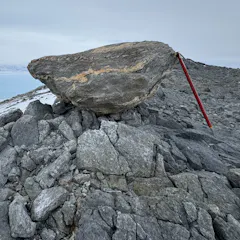
When landslides or glaciers bring rocks to the surface, cosmic rays bombard them, smashing common atoms into rarer forms and acting as a chronometer of the changing Earth.

Cratons are pieces of ancient continents that formed billions of years ago.
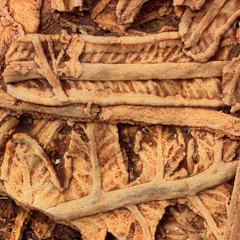
Millions of years ago, widespread volcano eruptions in eastern Australia buried entire forests. Today, these time capsules reveal stunningly fossilised plants.

Iceland is known as ‘the land of fire and ice’ for a reason.
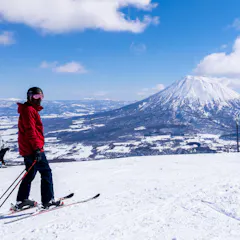
Like icy thermometers, glaciers overlying volcanoes shift according to temperature changes below.

For some people, it’s a choice based on cultural beliefs or economic opportunities provided by the volcano. Other times it’s less a choice than the only option.
Top contributors
-

Senior Curator of Geosciences, Museums Victoria Research Institute; Monash University
-
ARC Future Fellow and Associate Professor in Igneous Petrology/Volcanology, The University of Queensland
-
Professor of Earth Sciences, University of Auckland, Waipapa Taumata Rau
-
Volcanologist, Lancaster University
-
Professor in Earth Sciences, Nanyang Technological University, Singapore, and Emeritus Professor of Mineral Physics, University of Cambridge
-
Associate Professor of Geosciences; Director for the Boise State Hazard and Climate Resilience Institute, Boise State University
-
Associate Professor of Medieval History, Durham University
-
Senior Natural Hazards Risk Scientist, GNS Science
-
Emeritus professor in geology, Australian National University
-
Reader in Physical Geography and Natural Hazards, Coventry University
-
Associate Professor in Geophysics, Te Herenga Waka — Victoria University of Wellington
-
Professor of Planetary Geosciences, The Open University
-
Associate Professor in Earth Sciences, University of Tasmania
-
Associate Professor of Geology, University of Richmond
-
Professor, Addis Ababa University