
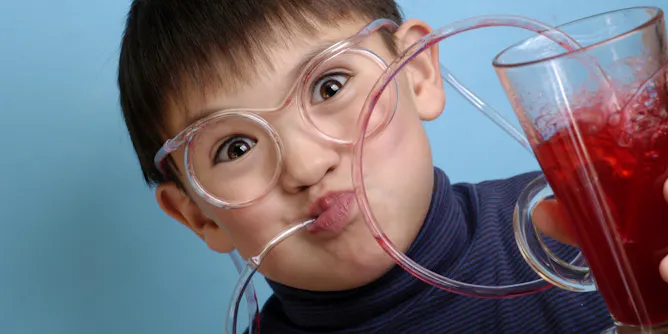
Bubbles in fizzy drinks are full of science you probably didn’t know about - and which can even be found in volcanoes!
Articles on Volcanoes
Displaying 121 - 140 of 260 articles
New findings suggest the core has been leaking for the past 2.5 billion years, and that could help scientists understand how the core was formed.
The vast majority of climate scientists agree that rising CO₂ is driving climate change, yet barely 50% of the public agrees. Did scientists get the story wrong? No, as the fossil record makes clear.
Geophysicists use sound waves to build a picture of the magma and rock beneath this active volcano, most of which is underwater. It’s like CT scanning the Earth.
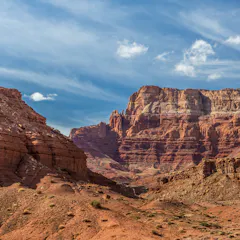
As strange as it sounds, rocks are made from stardust.
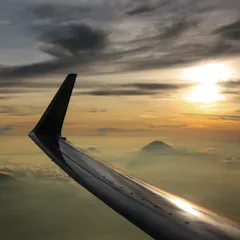
Volcanic ash is made of tiny crystal and rock fragments that during an eruption can reach as high as the cruising altitude of commercial aircraft, and that’s a concern for airlines.
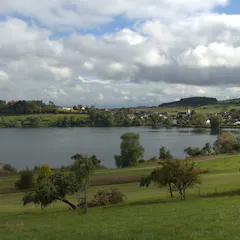
A maar is a volcanic crater, often filled with water. New research highlights the similarities between oral stories around the world that shed light on the formation of these craters.
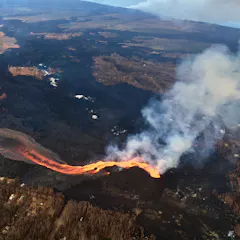
Scientists say they’ve found a new method to help predict when volcanoes will erupt, based on data crunched from an eruption last year in Hawaii.

To prepare for future Mars missions, scientists collect samples and simulate communications conditions from volcano parks on Earth.
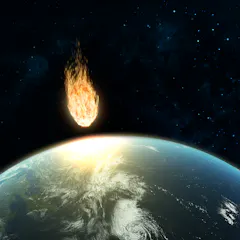
More evidence that the asteroid hit on Earth that marked the end of the dinosaurs could have triggered a deadly increase in volcanic activity.
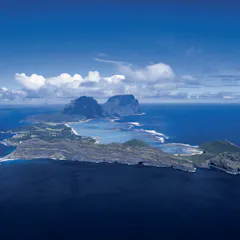
Lord Howe Island is part of an underwater volcanic chain much older than first thought, with the possibility of new islands still to form.
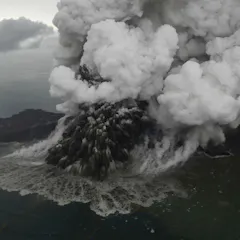
Research into volcanic activity in the waters off Indonesia shows how active this region is and how destructive landslide-caused tsunamis can be.
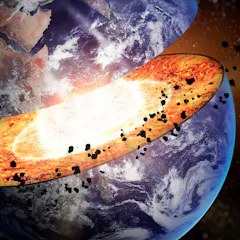
The Earth’s core is cooling down, and one day it will be completely solid – when that happens, Earth might look a lot like Mars.
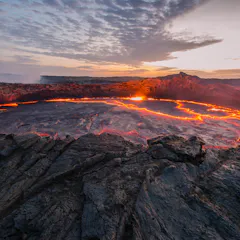
To be better prepared for future eruptions there’s a need to understand and monitor poorly known volcanoes, even in remote places.
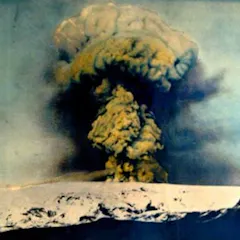
We can’t say that Katla in Iceland is ‘due’ to erupt, no matter what you have read.
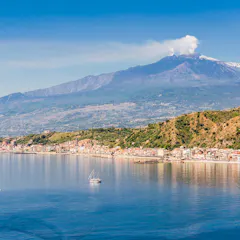
Gravity, not magma, is forcing Etna to move, increasing the chances of collapse.
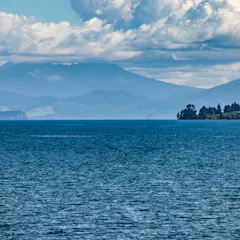
New research shows that carbon dioxide in groundwater can affect the aging of volcanic eruptions. The findings could help predict future eruptions.
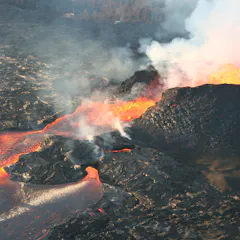
Melbourne lies at the eastern end of a volcanic province, but when’s it going to blow? Understanding the geology of Melbourne and comparing it to Hawaii is really helpful in calculating risk.
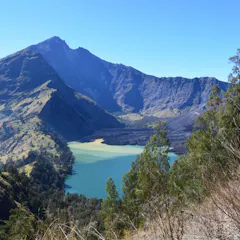
A tectonic earthquake doesn’t always trigger eruptions of nearby volcanoes. If an eruption happens, the volcano must already have been in a critical condition.
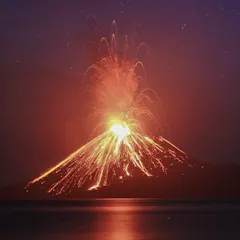
Compared to Earth, more “oomph” is required to bring magma to the surface of Mars, and this is probably why we haven’t seen any recent eruptions on the red planet.
Top contributors
-

Senior Curator of Geosciences, Museums Victoria Research Institute; Monash University
-
Volcanologist, Lancaster University
-
ARC Future Fellow and Associate Professor in Igneous Petrology/Volcanology, The University of Queensland
-
PhD researcher in Volcanology, UCL
-
Reader in Physical Geography and Natural Hazards, Coventry University
-
Professor in Earth Sciences, Nanyang Technological University, Singapore, and Emeritus Professor of Mineral Physics, University of Cambridge
-
Lecturer in Volcanology, University of Hull
-
Professor of Planetary Geosciences, The Open University
-
Emeritus professor in geology, Australian National University
-
Professor in Earth & Climate Science, University of Southampton
-
Assistant Lecturer in Volcanology, Monash University
-
Associate Professor in Earth Sciences, University of Tasmania
-
Professor of Geography, School of Law and Society, University of the Sunshine Coast
-
Associate Professor of Geology, University of Richmond
-
Associate Professor of Geosciences; Director for the Boise State Hazard and Climate Resilience Institute, Boise State University