

If we think about the success of the UK’s vaccine rollout to date, and factor in how social norms tend to diffuse, then there’s good reason to be optimistic.
Articles on Vaccine hesitancy
Displaying 161 - 180 of 251 articles

Free doughnuts and lotteries may drive some people to get their COVID-19 vaccine. But for those who are afraid of needles, other interventions may be necessary.
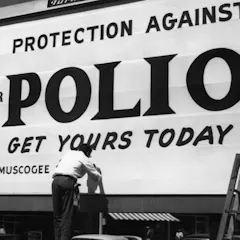
History tells us the public will tolerate risk of harm from a vaccine if their fear of the disease exceeds their fear of the vaccine.

Age and education level are the main factors associated with vaccine hesitancy. While this affects Māori and Pacific communities, basic access to health care and information is more important.

Answers to key questions about rare blood clots linked to AstraZeneca’s COVID-19 vaccine, including risks, symptoms and whether people who have had one AstraZeneca shot should have a second.

As vaccine eligibility is expanded to adolescents and young adults, understanding who might be more likely to be vaccine hesitant, and why, can help inform public health strategies

From free beers to lottery tickets, many jurisdictions around the world have introduced vaccine incentives. Is it time for Australia to do the same?
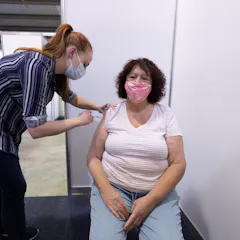
Many over 50s seem to be asking this question. But there are a number of reasons it’s important to go ahead and get the AstraZeneca vaccine now.

In a pandemic or any other emergency, the first ethical duty of the media is to report accurately and soberly, and specifically not to induce unjustified anxiety or panic.

Even where vaccines are available, one barrier to progress is vaccine hesitancy: the reluctance or refusal to vaccinate.

Community leaders or trusted work colleagues can be COVID vaccine advocates and help boost vaccination rates. Here are some simple steps they can take.

New research suggests hearing about the collective benefits of COVID-19 vaccines is unlikely to change people’s minds, which contradicts previous findings.

From maternity wards to primary care, Canadian researchers are looking to find the positive motivations of vaccine hesitant people, whether they are new parents or other adults.

Recent uncertainty over blood clots and vaccine expiration dates have taken a toll on public confidence.
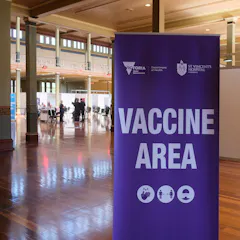
There are tangible things we can do now to help people understand the benefits and possible risks of COVID-19 vaccination.
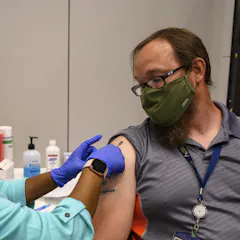
Can companies legally require workers to get vaccinated? Employers have gotten so good at finding ways to get employees to comply with their policies that it may not matter.

The challenge now is to address the understandable concerns and prevent them from contaminating the broader public dialogue on COVID-19 vaccination.

Analysis of almost 100,000 tweets reveals how news reports can change the way people feel about vaccination.
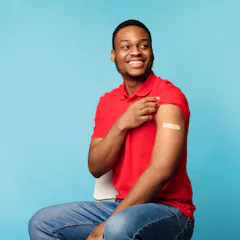
Our well-meaning efforts to use images to help demystify the vaccination process or share our pride in getting a COVID vaccine can backfire.
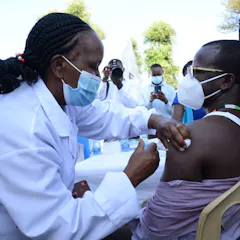
Kenya grapples with two major challenges in the vaccination rollout: access to sufficient doses in light of the global shortage; and vaccine hesitancy.
Top contributors
-

Associate Professor of Health Law, Policy and Management, Boston University
-
Professor, School of Population Health, UNSW
-
Professor of Paediatrics and vaccinologist, Royal Childrens Hospital, University of Melbourne and Murdoch Childrens Research Institute (MCRI); Associate Dean International, University of Melbourne, Murdoch Children's Research Institute
-
Research Fellow, Vaccine Uptake Group, Murdoch Children's Research Institute
-
Professor, School of Public Health, University of Sydney
-
Professor, School of Social Sciences, The University of Western Australia
-
Extraordinary Professor, Global Health, Stellenbosch University; South African Medical Research Council
-
Endowed Professor of Health Policy and Associate Dean, George Washington University
-
Assistant Professor of Communication and Political Science, The Ohio State University
-
Senior Scientist, Cochrane South Africa, South African Medical Research Council (SAMRC) and Honorary researcher, Division of Social & Behavioural Sciences, School of Public Health, UCT, South African Medical Research Council
-
Professor of Neurology, Medicine (Infectious Diseases), and Epidemiology, University of Colorado Anschutz
-
Executive Director, African Population and Health Research Center
-
Senior Lecturer, School of Communication, Journalism and Marketing, Te Kunenga ki Pūrehuroa – Massey University
-
Assistant Professor of Health Policy and Managment, School of Public Health, Texas A&M University
-
Postdoctoral Research Associate in Public Interest Communications, University of Florida