

The US has split into “two Americas,” one of the unvaccinated and one of the vaccinated. The differences in deaths and hospitalizations between the two populations are striking.
Articles on Vaccine hesitancy
Displaying 141 - 160 of 251 articles

Vaccinating a population requires a proactive approach to health promotion and community preparedness.
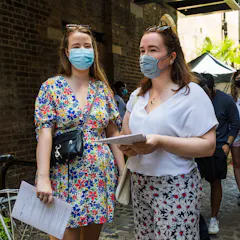
Comparing COVID-19 vaccines with others that are less effective makes people see them more favourably.

Vaccine hesitancy in parents shouldn’t mean adolescents can’t get vaccinated.

Some deaths among the vaccinated are to be expected given how high the threat of COVID-19 is to older people.
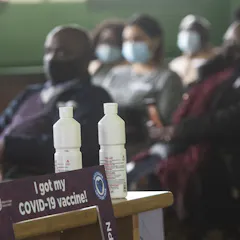
Nearly a quarter of survey participants were still hesitant about getting vaccinated. Some were not even open to persuasion. Communication campaigns must be tailored to the fears of sub-populations.
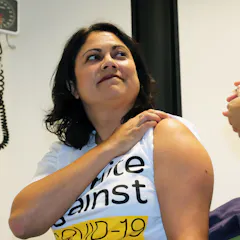
The latest survey shows COVID-19 vaccine acceptance is at 81%, but it suggests low reach for the government’s vaccination ads, with only four in ten people saying they’ve seen them on television.

COVID-19 vaccination produces a more consistent immune response than a past infection. With the delta variant, the difference in protection may be even greater.

At this stage of the pandemic, when behavioural change is so key to vaccine take-up, the government ignores the views of the public at its peril.
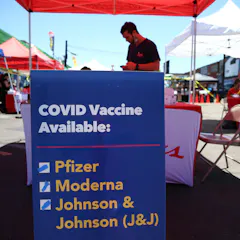
People who haven’t gotten vaccinated for COVID-19 often have complex reasons for their relunctance or may face other barriers. Lumping them all together undercuts the vaccination campaign.
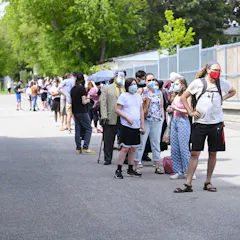
With youth ages 12 and over eligible for COVID-19 vaccination — and as trials for younger children move ahead — parental hesitancy is emerging as the new challenge for COVID-19 vaccine programs.
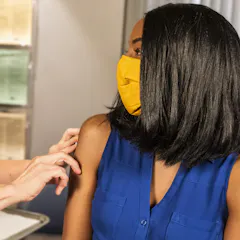
With enough vaccine supplies coming online from October, the government has no excuse not to have all arrangements in place for an efficient vaccination program. Here’s what needs to change.

Should people be compelled to take the vaccine? Should you feel guilty for skipping the line? And what about parts of the world where vaccines aren’t readably available? Ethicists have it covered.
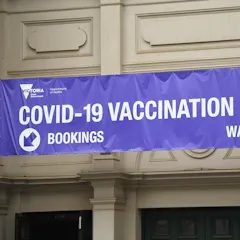
The rules around allocation, and the enforcement of those rules, can’t rest with each individual. Responsibility lies with those in charge of delivering vaccines.

Our attitudes and behaviours are shaped by what others in society do. So there’s a real danger that vaccine hesitancy, when reported widely in the media, could catch on to more people.

Canadians are increasingly turning to private messaging apps where COVID-19 misinformation and conspiracy theories spread in an unregulated manner.

In Australia, a preference for a particular brand of COVID vaccine is likely to change, depending on the latest health advice, and media reports.
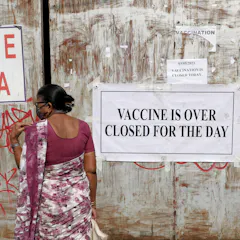
Psychologists have identified three potential barriers to vaccination: capability, opportunity and motivation.

People who are afraid of needles are twice as likely to be vaccine hesitant, new research shows.

The federal government is due to launch a new advertising campaign for COVID-19 vaccines in July. This is a chance to offer something more engaging than what we’ve seen to date.
Top contributors
-

Associate Professor of Health Law, Policy and Management, Boston University
-
Professor, School of Population Health, UNSW
-
Professor of Paediatrics and vaccinologist, Royal Childrens Hospital, University of Melbourne and Murdoch Childrens Research Institute (MCRI); Associate Dean International, University of Melbourne, Murdoch Children's Research Institute
-
Research Fellow, Vaccine Uptake Group, Murdoch Children's Research Institute
-
Professor, School of Public Health, University of Sydney
-
Professor, School of Social Sciences, The University of Western Australia
-
Extraordinary Professor, Global Health, Stellenbosch University; South African Medical Research Council
-
Endowed Professor of Health Policy and Associate Dean, George Washington University
-
Assistant Professor of Communication and Political Science, The Ohio State University
-
Senior Scientist, Cochrane South Africa, South African Medical Research Council (SAMRC) and Honorary researcher, Division of Social & Behavioural Sciences, School of Public Health, UCT, South African Medical Research Council
-
Professor of Neurology, Medicine (Infectious Diseases), and Epidemiology, University of Colorado Anschutz
-
Executive Director, African Population and Health Research Center
-
Senior Lecturer, School of Communication, Journalism and Marketing, Te Kunenga ki Pūrehuroa – Massey University
-
Assistant Professor of Health Policy and Managment, School of Public Health, Texas A&M University
-
Postdoctoral Research Associate in Public Interest Communications, University of Florida