

Low faith in public figures and institutions may explain why uptake is lower in ethnic minority groups.
Articles on Vaccine hesitancy
Displaying 81 - 100 of 251 articles

Vaccine hesitancy may be a waiting game. Even those who said they would never get the COVID-19 vaccine if it were available immediately became more likely to do so when it was available in the future.

Instead of assuming that science skeptics are motivated by ignorance, or selfishness, we should listen to them and try to understand and address their actual concerns.
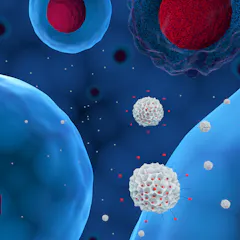
Some vaccine hesitancy is based on a fear of the nanoparticles used in mRNA vaccines. But humans have been interacting with nanoparticles for millennia, and we use nanotechnology-based devices every day.

A panel of experts answer questions about vaccines, omicron and other COVID-related issues in a discussion with The Conversation.

We have moved beyond burning witches and lynching wrong-doers. So we should also stop shaming unvaccinated people. There are better ways to change behaviour.

Pediatricians and other health care providers can take some concrete steps toward building trust and counteracting anti-vaccination misinformation.

Using trusted messengers, making sure that vaccine information is tailored to those being targeted, and greater flexibility over vaccination timing and venues could all increase uptake.

CC BY-NC-ND12.1 MB (download)
Vaccine hesitancy poses significant risks for those refusing to be vaccinated. The more people get vaccinated, the better the chances of living with the virus.

Fear of prosecution and a history of distrust toward the government have contributed to some fundamentalist groups’ views of medicine.
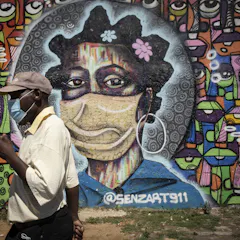
It was the biases of its ‘first world’ which prevented South Africa from mobilising the energies and talents of most of its people against COVID-19.

Mandates should be considered only when all geographical, financial and cultural access issues have been addressed. They should be a last resort.

Conspiracy theories can make parents hesitant to vaccinate their children.

Thousands took to streets across Australia to protest COVID19 lockdown measures and vaccine mandates. How are white supremacist and right wing groups capitalising on vaccine hesitancy?
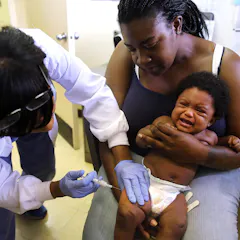
Vaccination uptake is influenced by many factors and carries a variety of meanings – social, political, economic, ideological, moral as well as biological.
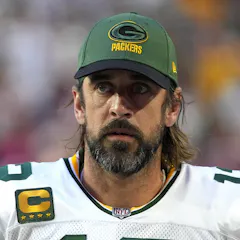
NFL star Aaron Rodgers has amplified dangerous and disproven myths about the COVID-19 vaccine. Here’s why his statements are not only untrue, but also harmful because they spread misinformation.
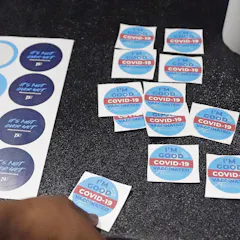
To help increase trust in vaccines, researchers analyzed data on adverse events to address safety concerns, and then used cognitive science to show how cognitive biases feed vaccine hesitancy.

Improving care workers’ wages and working conditions will not only boost vaccination rates – it will tackle staffing shortages in care.

To convince 18- to 30-year-olds to get vaccinated, three doctoral students designed an innovative, fun, non-judgmental quiz.

The development of COVID vaccines has already been explosive. There are more innovations on the way.
Top contributors
-

Associate Professor of Health Law, Policy and Management, Boston University
-
Professor, School of Population Health, UNSW
-
Professor of Paediatrics and vaccinologist, Royal Childrens Hospital, University of Melbourne and Murdoch Childrens Research Institute (MCRI); Associate Dean International, University of Melbourne, Murdoch Children's Research Institute
-
Research Fellow, Vaccine Uptake Group, Murdoch Children's Research Institute
-
Professor, School of Public Health, University of Sydney
-
Professor, School of Social Sciences, The University of Western Australia
-
Extraordinary Professor, Global Health, Stellenbosch University; South African Medical Research Council
-
Endowed Professor of Health Policy and Associate Dean, George Washington University
-
Assistant Professor of Communication and Political Science, The Ohio State University
-
Senior Scientist, Cochrane South Africa, South African Medical Research Council (SAMRC) and Honorary researcher, Division of Social & Behavioural Sciences, School of Public Health, UCT, South African Medical Research Council
-
Professor of Neurology, Medicine (Infectious Diseases), and Epidemiology, University of Colorado Anschutz
-
Executive Director, African Population and Health Research Center
-
Senior Lecturer, School of Communication, Journalism and Marketing, Te Kunenga ki Pūrehuroa – Massey University
-
Assistant Professor of Health Policy and Managment, School of Public Health, Texas A&M University
-
Postdoctoral Research Associate in Public Interest Communications, University of Florida