
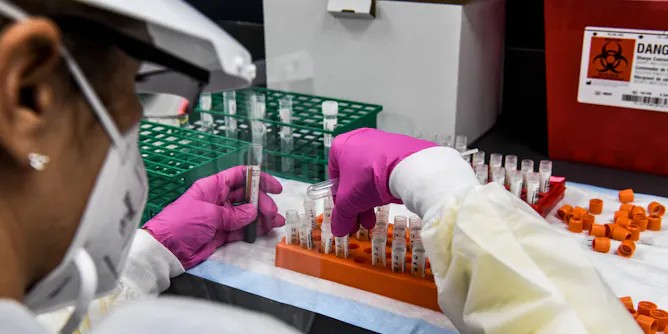
People who oppose vaccines often are dismissed as ignorant or naive. Failing to hear their concerns and address them may only be fueling vaccine resistance, however.
Articles on Vaccine hesitancy
Displaying 221 - 240 of 251 articles
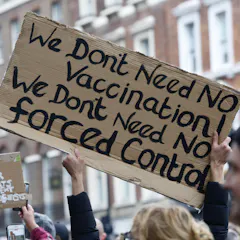
A safe, effective COVID-19 vaccine is expected to be developed in record time and may be approved for production, distribution and acceptance some time in 2021.
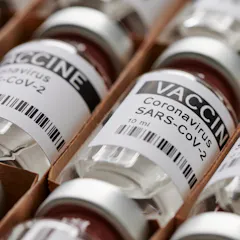
Experts from across The Conversation look at how COVID-19 vaccines will work, how they’re being tested and manufactured, and what challenges there will be to rolling them out.
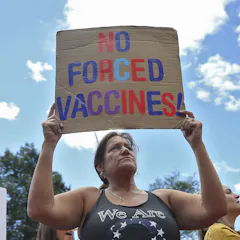
From 2017 to 2019, Twitter users in the United States saw many tweets related to vaccination but only rarely encountered anti-vaccine content and almost never saw content from bots.
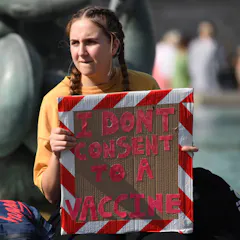
Australians who refuse vaccines spend a lot of time trying to understand vaccine choices and think they’re making evidence-based decisions.
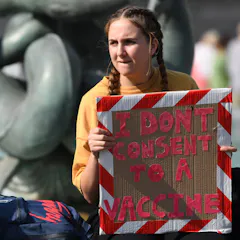
Governments need to engage not just with anti-vaxxers, but with concerns about the safety and environmental impact of vaccines

Several vaccines are in Phase 3 trials. So when will we know whether any of these will protect against COVID-19?
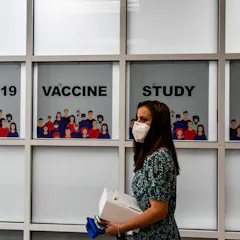
Clear messages from experts helped New Zealand to contain COVID-19 outbreaks. The same is now necessary to counter vaccine misinformation and to build public trust in vaccination.

Current rates of vaccine hesitancy could jeopardize efforts to achieve herd immunity in the US, says Matt Motta, a political scientist who studies vaccine uptake and effective health communication.

The government should used trusted spokespeople, tailor information so it can be understood by different groups, acknowledge people’s concerns, be transparent, and seek public feedback along the way.
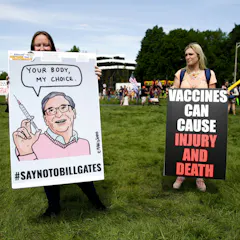
Those opposing vaccinations often mistrust government, science and the news media. There may be better ways to persuade them than by offering facts only.
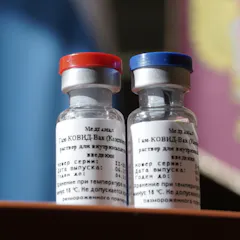
As Russia fast tracks a coronavirus vaccine, scientists worry about skipped safety checks – and the potential fallout for trust in vaccines if something ends up going wrong.

As most of the world early awaits a vaccine for COVID-19, a smaller group of people scoffs. They could spell real trouble in the effort to build widespread immunity.

Responding to someone who questions vaccination can be difficult. Before you react, it pays to assess the situation because weighing in can do more harm than good.
We need to investigate the overall health effects of vaccines.

Anti-vaccine info online might have foreign roots and political aims.
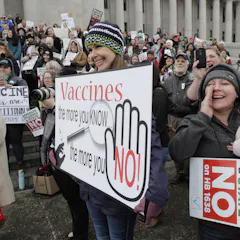
Studies have shown that the reasons for anti-vaccine sentiment run deep, and scientific facts don’t often matter. A new study drills deeper into reasons for resistance and possible ways to counteract them.
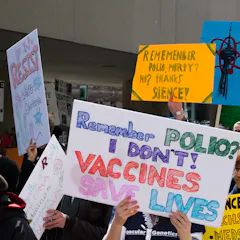
Effective communication strategies will be crucial if scientists want to counter the worrying anti-vaccination trend.
People universally believe scientists’ solar eclipse calendars, but vaccine warnings or climate predictions are forms of science that strangely do not enjoy equivalent acceptance.
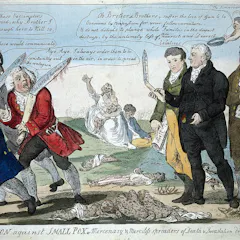
Some people have objected to childhood vaccination since it was introduced in the late 1700s. And their reasons sound remarkably familiar to those of anti-vaxxers today.
Top contributors
-

Associate Professor of Health Law, Policy and Management, Boston University
-
Professor, School of Population Health, UNSW
-
Professor of Paediatrics and vaccinologist, Royal Childrens Hospital, University of Melbourne and Murdoch Childrens Research Institute (MCRI); Associate Dean International, University of Melbourne, Murdoch Children's Research Institute
-
Research Fellow, Vaccine Uptake Group, Murdoch Children's Research Institute
-
Professor, School of Public Health, University of Sydney
-
Professor, School of Social Sciences, The University of Western Australia
-
Extraordinary Professor, Global Health, Stellenbosch University; South African Medical Research Council
-
Endowed Professor of Health Policy and Associate Dean, George Washington University
-
Assistant Professor of Communication and Political Science, The Ohio State University
-
Senior Scientist, Cochrane South Africa, South African Medical Research Council (SAMRC) and Honorary researcher, Division of Social & Behavioural Sciences, School of Public Health, UCT, South African Medical Research Council
-
Professor of Neurology, Medicine (Infectious Diseases), and Epidemiology, University of Colorado Anschutz
-
Executive Director, African Population and Health Research Center
-
Senior Lecturer, School of Communication, Journalism and Marketing, Te Kunenga ki Pūrehuroa – Massey University
-
Assistant Professor of Health Policy and Managment, School of Public Health, Texas A&M University
-
Postdoctoral Research Associate in Public Interest Communications, University of Florida