
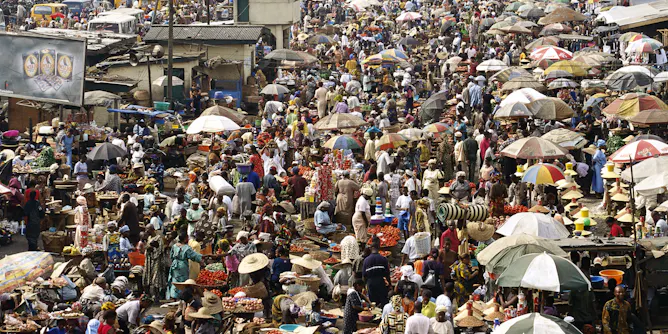
Floods regularly devastate Lagos’s informal workers, but traders and residents have built their own systems to adapt where the state has failed.
Articles on Urban resilience
Displaying 1 - 20 of 30 articles
Two engineers explain how data center design, construction and operation can help the facilities support their communities.
It’s not enough to have parks in city outskirts or urban green belts. Green spaces must be accessible for residents and placed to provide effective flood protection for cities.
The zoning policies that planners introduced to create vibrant and resilient mixed-use neighbourhoods have had the opposite effect, as services and residential developments crowd out light industry.
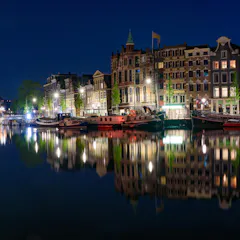
When the pandemic put tourism on hold, many residents heaved a sigh of relief. Will hasty economic recovery plans scupper our chance for a rethink?
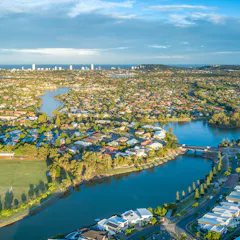
Infrastructure is often seen as the main way to reduce the impacts of climate-related disasters like floods and drought. But cities are complex systems with many factors affecting their resilience.
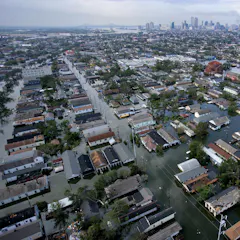
We can design parks, open space and public infrastructure to hold excess water when flood strikes. That means better control of where floodwater ends up, reducing the risk to lives and property.
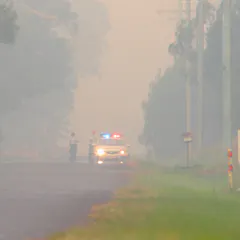
The disasters have come one after another. While they may not be entirely preventable, we can take many practical steps tailored to local needs and conditions to reduce the impacts on our cities.
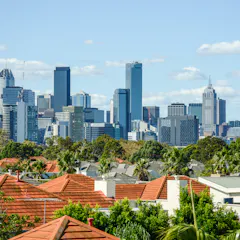
Melbourne and Sydney are members of 100 Resilient CIties, which the Rockefeller Foundation has said it will no longer fund. So what has the global network achieved? And what can we learn from this?
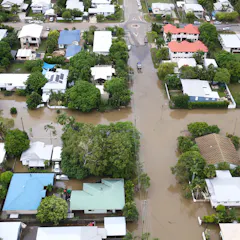
Amid fears that parts of Townsville and other Australian cities might become “uninsurable”, making urban areas more resilient and adaptable to flooding is becoming more urgent.

Urbanisation is the main reason for rising temperatures and water pollution, but receives little attention in discussions about the health of water streams, reefs and oceans.
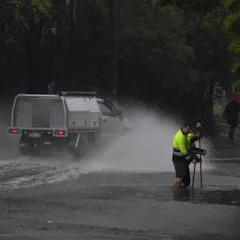
Australia’s coastal settlements are highly exposed to the impacts of climate change. Climate-resilient urban landscapes that can cope with large amounts of water need to become the new normal.
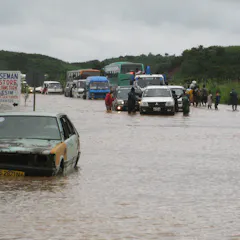
Ghana needs to deal with the underlying causes of floods and prepare people for them.
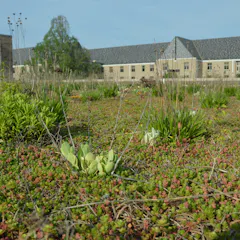
Taking this step may improve the quality of life for vulnerable people and reduce the amount of air conditioning they use, making their neighborhoods less prone to power outages.
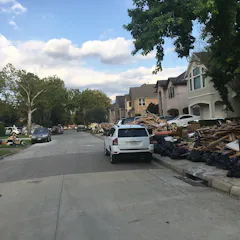
After disasters, communities often push to rebuild as quickly as possible. A public health expert says they should aim higher and fix problems that exist pre-storm.
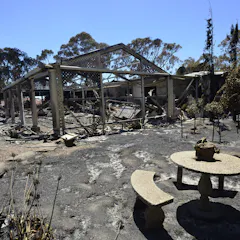
What decisions can we make today to reduce the future risk of hazards like floods and fire? Particularly in a time of climate change, modelling various plausible futures helps us plan for uncertainty.
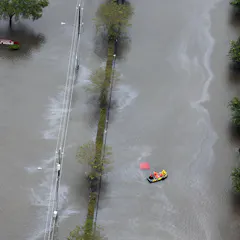
It’s not just about rebuilding infrastructure after storms: Cities need to systematically rethink their knowledge systems which are at the heart of urban resilience.
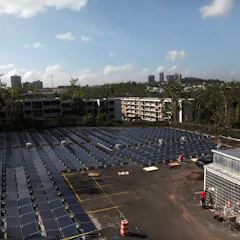
Yes, Puerto Rico and any other storm-vulnerable location could benefit from on-site solar and battery backup, but it’s unrealistic to say these microgrids are enough to power the island.
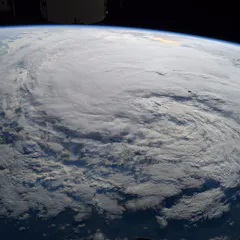
Three atmospheric scientists from Texas say Hurricane Harvey shows how the country needs to adapt to the effects of climate change and cut carbon emissions.

Developing principles to create cities that are good for all is not easy. Who decides what is good? And for whom? We desperately need a big and general public discussion about this.
Top contributors
-

Director, Melbourne Sustainable Society Institute, The University of Melbourne
-
Professor and Inaugural Judith Neilson Chair in Architecture, UNSW
-
Architect/Urbanist and landscape planner - Senior Lecturer, Faculty of Built Environment, UNSW
-
Senior Lecturer in Environmental Management, University of Tasmania
-
Professor of Architecture, Director of the Metropolitan Design Center, and Dayton Hudson Chair in Urban Design, University of Minnesota
-
Adjunct Associate Professor, Adelaide University
-
Professor of the Future of Innovation in Society, Arizona State University
-
Doctor of Philosophy, University of British Columbia
-
Associate Professor, School of Architecture and Built Environment, University of Newcastle
-
Professor of Political Science, Public Policy and Urban Affairs, Northeastern University
-
Professor of Climate Change Adaptation, La Trobe University
-
Associate Professor in Construction and Environmental Performance, The University of Melbourne
-
Research Social Scientist, International Institute of Tropical Forestry
-
Deputy Head of School, School of Architecture and Built Environment, University of Newcastle
-
Professor of Civil and Environmental Engineering, Rice University