
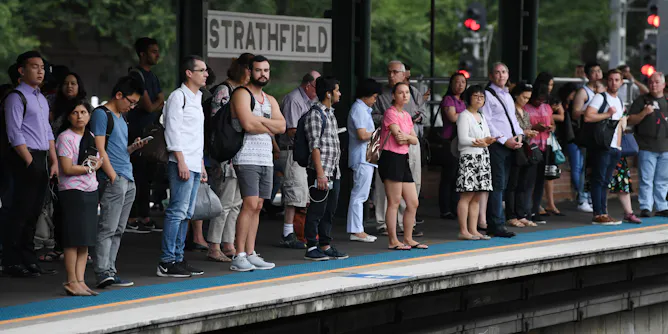
The change in our behaviour in response to COVID-19 has created an opportunity to build on this moment and transform our local neighbourhoods into vibrant mixed-use centres of activity.
Articles on Urban planning
Displaying 281 - 300 of 694 articles
The business of metropolitan planning is not the natural game of state governments. The Victorian government tries but cannot manage metropolitan Melbourne.

A friendly wave from a neighbour is one of life’s incidental but invaluable interactions. Porches, balconies, front yards and footpaths have proven their importance as cogs of neighbourhood life.
Distancing rules will make life very difficult for smaller bars, cafes and restaurants. Our streets can be modified quickly to help save an important part of the life of cities and their economies.

Apartments house one in ten Australians, including a higher share of low-income households than other housing types. A new study identifies why some high-density neighbourhoods work better than others.
Re-imagining cities after COVID-19 is both a practical and philosophical task. People’s perceptions of places are changing. It is a time for planners and policymakers to plan with, not for, people.
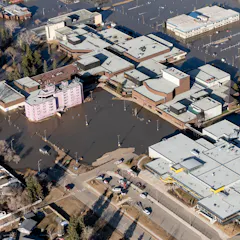
Blaming flooding on an act of God wrongly absolves government and developers of their liability for poor decisions that unfairly burden taxpayers.
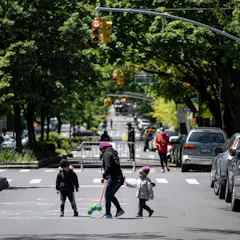
For centuries, disease outbreaks have forced cities to transform physically and operationally in ways that ultimately benefited all residents going forward.
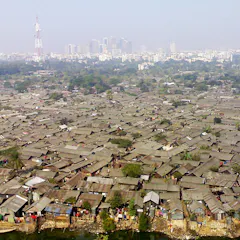
Many are speculating about the pandemic changing how we plan and use our cities. What they overlook is how many people live in unplanned settlements where it’s more likely to be business as usual.

When urban spaces work well they are highly social spaces. How do we safely manage them and people’s fears about mingling when ‘being together but apart’ is the norm?

The size of our housing is linked to our physical and mental health.

After the ‘world’s biggest work-from-home experiment’, many people (and their employers) might decide they needn’t commute every day. If even a fraction do that, infrastructure needs will change.
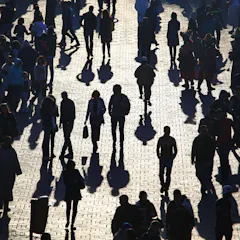
Understanding the reasons behind urban patterns of coronavirus can help improve urban resilience and sustainability.

Temporary use of land and buildings plays a role in the aftermath of crisis.
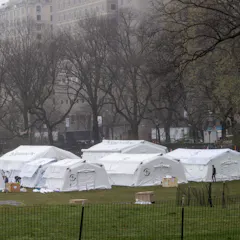
The impacts of coronavirus on cities are extraordinarily difficult. Yet around the world, cities are responding rapidly and decisively to the crisis and its implications for urban life.
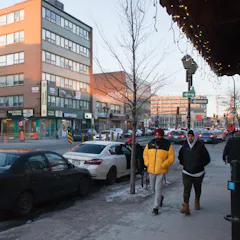
Gentrification often leads to the eviction of poor and largely racialized populations. When a university campus drives the change, they can choose to do something about it.
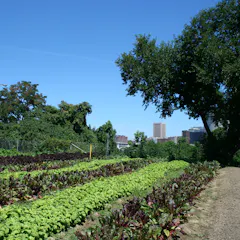
Four out of 5 Americans live in cities, so urban planning can make a big difference in our lifestyles – especially if it promotes healthy diets and physical activity.
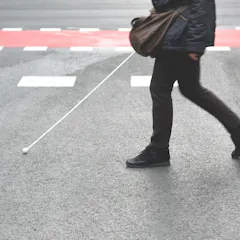
Urban safety is as much about inclusion and belonging as it is about better lighting and CCTV.
Only the inner suburbs of Melbourne and other capital cities meet the 20-minute neighbourhood test. But we could transform the other suburbs for much less than the cost of current transport projects.

In a warming world, trees can play a major role in keeping cities and your home cool. If you plan it right, they can even save you money and protect your home from bushfires.
Top contributors
-

Professor of Human Geography and Planning, University of Tasmania
-
Senior Lecturer in Urban and Environmental Planning, Griffith University
-
Head of Urbanism and Associate Professor of Urban Studies, School of Architecture, Design and Planning, University of Sydney
-
Associate Professor of Urban Planning, The University of Melbourne
-
Professor of Planning, School of Built Environment, UNSW
-
Associate Professor in Urban Planning, The University of Queensland
-
Professor of International Planning, Centre for Urban Research, RMIT University
-
Associate Professor in Urban and Regional Planning, University of Sydney
-
Teaching Assistant Professor, University of Pittsburg and Visiting Associate Professor, The University of Osaka, University of Pittsburgh
-
Associate professor, UNSW International Centre for Future Health Systems, UNSW
-
Honorary Professor of Planning, The University of Queensland
-
Senior Lecturer in Urban Planning & Design, Monash University
-
Professor of Sustainability, Curtin University
-
Senior Lecturer, University of Environment and Sustainable Development
-
Professor, City Futures Research Centre, UNSW