
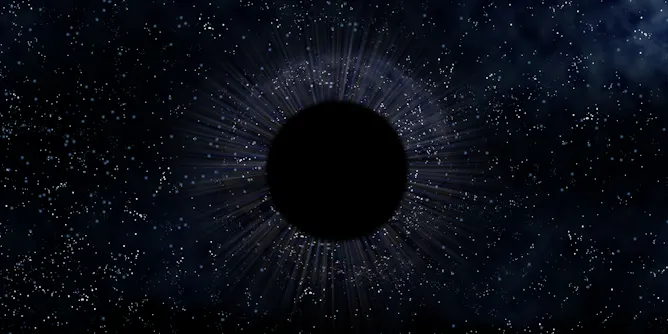
Regular matter makes up just one-sixth of all the matter in the universe. What would it mean to finally understand what makes up the rest?
Articles on Universe
Displaying 81 - 100 of 185 articles

A decadelong experiment produced the most accurate measurement yet of the mass of W bosons. These particles are responsible for the weak force, and the result is more evidence for undiscovered physics.
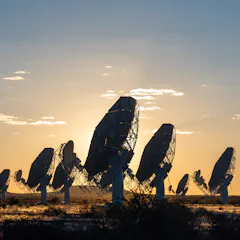
Complementary science will be at the heart of the Square Kilometre Array.

In the absence of mathematical explanations, the universe would be irrational rather than unpredictable.

Scientists have come up with a number of theories about the multiverse.
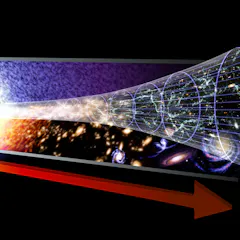
Some argue the Big Bang was a rebirth rather than a birth.
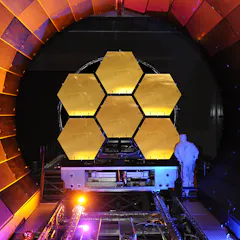
JSWT may be able to discover signs of life on planets around other stars.
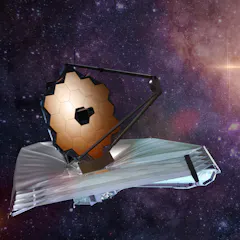
Plus, the tactics the food industry is using to boost sales of ultra-processed foods in middle-income countries. Listen to The Conversation Weekly.
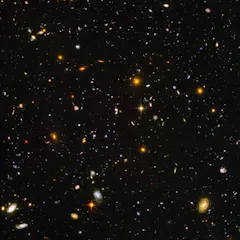
The James Webb Space Telescope is set to launch into orbit in December 2021. Its mission is to search for the first light to ever shine in the universe.
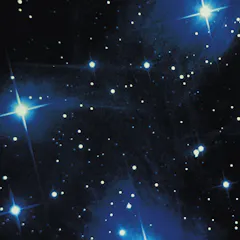
Scientists have a good estimate on the staggering number of stars in the universe.

Gravity, mass and centrifugal force all contribute to the final shape of a planet.

Technology is allowing astronomers to study and analyse galaxies in far more detail than was previously possible.
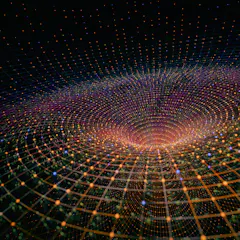
The universe has a finite age — 13.8 billion years to be exact. So if it had a beginning, why is it so difficult to say for sure whether it will have an end?
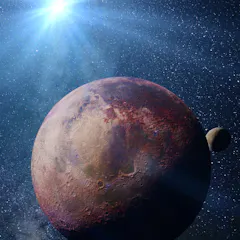
Billions of galaxies are in the universe, with billions of stars in every galaxy. Could billions of planets be out there too?
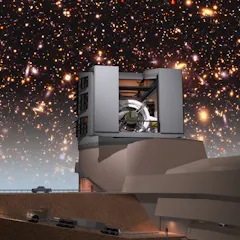
Machine learning is helping astronomers unravel the vast amounts of data being collected.
A different interpretation of time might explain why people see their whole lives replayed to them in a split second.
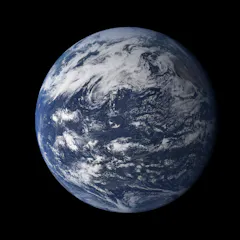
A recent study shows that the Earth’s water could come directly from the oxygen and hydrogen present in the rocks that formed it, and not from a late supply by asteroids.
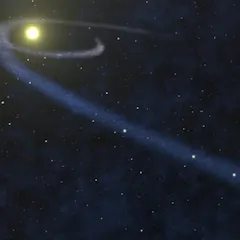
Thanks to the discovery of five twinkling galaxies in a rare alignment, astronomers have been able to calculate — for the first time — the properties and geometry of an invisible gas cloud in space.
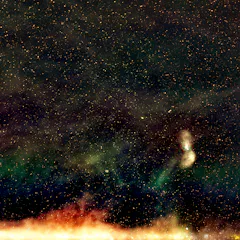
Some of the baby radio galaxies found may not be ‘babies’ at all. Rather, they may be ‘angsty teens’, rapidly growing into adults much faster than researchers had anticipated.
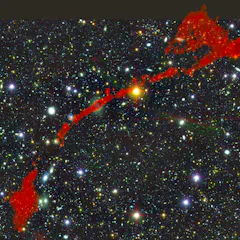
Based on what we currently know about the density of giant radio galaxies in the sky, the probability of finding two of them in this region is extremely small.
Top contributors
-

Professor of Astrophysics, University of Sydney
-
Associate Professor in Astronomy, Monash University
-
Associate Dean of Innovation and Engagement, Swinburne University of Technology
-
ARC Laureate Fellow & Distinguished Professor, Centre for Astrophysics & Supercomputing, Swinburne University of Technology
-
Emeritus Professor of Cosmology and Astrophysics, Institute of Astronomy, University of Cambridge
-
Senior Curator (Astronomy), Museums Victoria Research Institute; The University of Melbourne
-
Senior Lecturer in Physics, Western Sydney University
-
Professor, The University of Queensland
-
Pro Vice-Chancellor Flagship Initiatives, Swinburne University of Technology
-
Reader in Astrophysics, UCL
-
Professor (Astrophysics), University of Southern Queensland
-
Cosmologist, University of Tasmania
-
Professor, Macquarie University
-
John Curtin Distinguished Professor (Radio Astronomy), Curtin University
-
Professor of Astronomy & Astrophysics, University of California, Santa Cruz