

Physicists often say space-time “exists,” but what does that really mean? A hidden confusion between happening and being could be warping our view of reality.
Articles on Universe
Displaying 21 - 40 of 185 articles

Everything bends space-time. Sometimes, we can even see this effect – and learn a lot from it.

What does this new story have to offer cinema audiences accustomed to characters they already know and onscreen worlds that they have already visited?
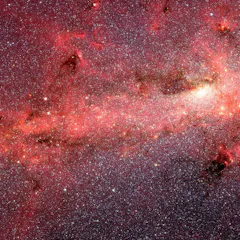
As the universe expands, it feels like it must be spreading out from some initial point. But a physicist explains why that’s not how it works. Hint: space-time is involved.
The speed of light is the fastest anything can travel. What happens to a photon from a galaxy 25 million light years away on its journey toward Earth?
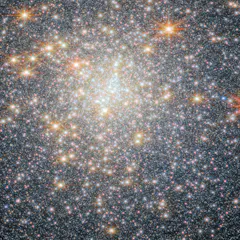
Suppose the law of gravity is simply a byproduct of the universe operating under a computer-like code.
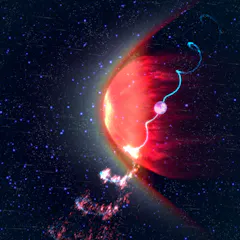
For the first time, astronomers have measured the plasma layers of a shock wave surrounding a pulsar.
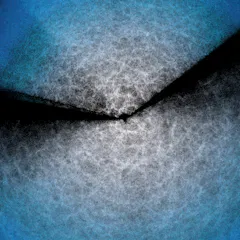
The universe’s expansion is accelerating, not decelerating. Our understanding of how the universe works may need an update.
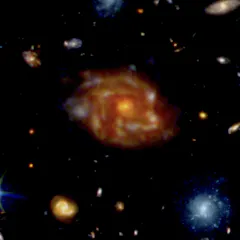
This enormous disk object formed soon after the Big Bang, challenging what we know about how galaxies grow.
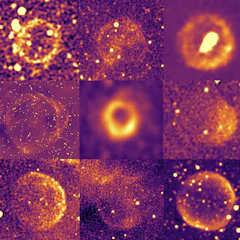
The newest generation of radio telescopes can detect objects so faint, we’ve never seen them before.
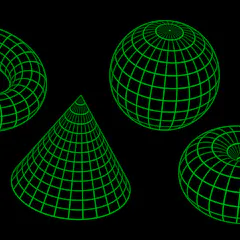
Topologists categorize all the possible shapes in each dimension.
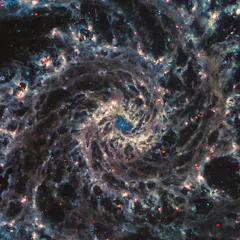
The James Webb Space Telescope is celebrating three years from its launch. Its discoveries have already changed our understanding of the early universe.

In 2017, astronomers found an object they’d never seen before. Now, it’s part of a growing category of elusive ‘dark comets’ – and we might find more soon.
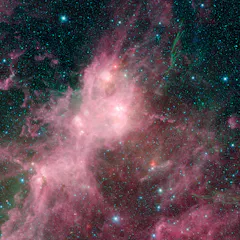
The universe is constantly expanding, but how do scientists think about what it’s expanding into?
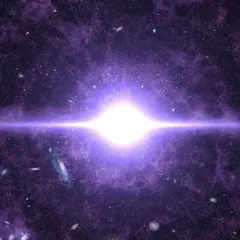
Can we really understand what happened at the beginning of the universe?
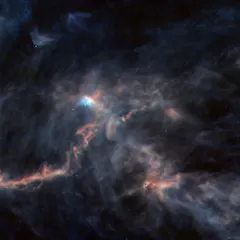
Life showed up really early on Earth – it needed complex carbon molecules to do so. A new discovery hints that these molecules can survive the harsh conditions when stars are born.
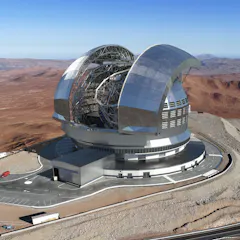
Cosmology could be transformed by a new wave of telescopes – both on the ground and in space.
We may never know – and the universe may not even have an edge. But here’s what we do know.
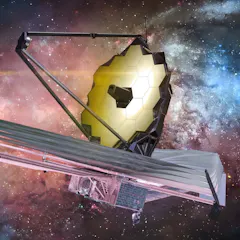
Some of the earliest galaxies found with JWST are also the brightest. That’s a problem for our ideas about the universe.
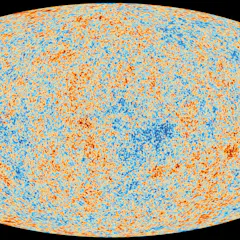
We may be on the cusp of finally breaking the standard model of cosmology.
Top contributors
-

Professor of Astrophysics, University of Sydney
-
Associate Professor in Astronomy, Monash University
-
Associate Dean of Innovation and Engagement, Swinburne University of Technology
-
ARC Laureate Fellow & Distinguished Professor, Centre for Astrophysics & Supercomputing, Swinburne University of Technology
-
Emeritus Professor of Cosmology and Astrophysics, Institute of Astronomy, University of Cambridge
-
Senior Curator (Astronomy), Museums Victoria Research Institute; The University of Melbourne
-
Senior Lecturer in Physics, Western Sydney University
-
Professor, The University of Queensland
-
Pro Vice-Chancellor Flagship Initiatives, Swinburne University of Technology
-
Reader in Astrophysics, UCL
-
Professor (Astrophysics), University of Southern Queensland
-
Cosmologist, University of Tasmania
-
Professor, Macquarie University
-
John Curtin Distinguished Professor (Radio Astronomy), Curtin University
-
Professor of Astronomy & Astrophysics, University of California, Santa Cruz