

Classroom assessment is a major source of student stress. Research suggests redesigning assessments around psychological needs may improve well-being.
Articles on Testing
Displaying 1 - 20 of 77 articles

A deep dive into the test’s framework suggests it was designed to fail about the same share of students every year, even if they’d made actual progress from previous years.

Responding to AI proactively means departing from old answers to the question of education’s purpose.

Our two recent studies suggest the way students respond to test questions on computers may not be the same as on paper.

This week, the national 2024 NAPLAN results were released. This comes after families have been receiving individual student results since the beginning of Term 3.
Schools have been releasing individual results to families since the start of term 3. Today, we have the overall results.

To boost post-pandemic math learning, a multi-dimensional approach is needed that promotes the success of the whole child: academic, physical and socio-emotional.

Inert ingredients are added for purposes other than killing pests and are not required under federal law to be tested for safety or identified on pesticide labels.

Researchers had college students and AI take a standardized test in creative thinking, and all of them were scored by trained evaluators who didn’t know in advance that some had been completed by AI.
Teachers in a study identify ‘grading obsession’ as a top challenge in education. Some are fighting back and dedicating class time to student self-assessment and peer assessment activities.

Educators need to carefully consider ChatGPT and issues of academic integrity to move toward an assessment system that leverages AI tools.

NAPLAN testing has been brought forward from May to March and results will be reported against just four levels of achievement.
Improving genomic surveillance to better understand new variants as they arise in different parts of the world could prevent threats to vulnerable health systems and populations.

Calculating your risk of death or hospitalization if you are infected with the coronavirus requires good data – notably, the total number of infections in the US. Unfortunately, that data is fuzzy.

Countries must be encouraged to distribute essential healthcare provision - like diagnosis - to where people most need them and where they can be accessed more easily.
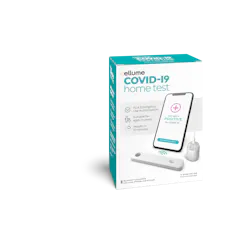
A new over-the-counter COVID-19 test has been authorized by the FDA. Though it can be used to test people with and without symptoms, moderate cost and limited production mean it isn’t a game-changer.

With a vaccine now approved in the UK, other countries won’t be far behind. But a vaccine won’t singlehandedly ensure the virus doesn’t cross international borders when travel picks up.

In September, production of rapid tests really ramped up in the US. But due to low accuracy and massive numbers needed, these tests alone are unlikely to have much of an effect on the pandemic.

COVID-19 cases are skyrocketing across the US. Testing has ramped up over the past few months, but increasing hospitalizations, deaths and test-positivity rates show that the virus is out of control.
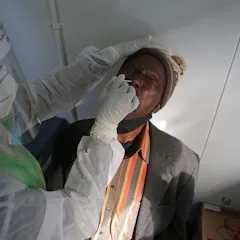
It is important to understand that not everyone should be tested and that the timing and correct use of the different types tests is important in order to gain the best results.
Top contributors
-

Associate Professor of Public Policy, University of Maryland, Baltimore County
-
Associate Dean, School of Graduate Studies & Professor, Faculty of Education, Queen's University, Ontario
-
Senior Research DECRA Fellow, Institute for Learning Sciences and Teacher Education, Australian Catholic University
-
Distinguished Professor, Faculty of Education, Brock University
-
Associate Professor of Education Policy, Australian Catholic University
-
Associate Professor in Higher Education Studies, University of Cape Town
-
Professor of Education Futures, The University of Melbourne
-
Professor, School of Education, University of Southern Queensland
-
Professor of Information, University of Michigan
-
Professor in Psychology, University of Essex
-
Professor, Faculty of Education and Arts, Australian Catholic University
-
Emeritus Professor of Education, University of Cumbria
-
Clinical Professor of American and New England Studies, Boston University
-
Faculty Director for Professional Education, BU School of Education, Boston University
-
Professor of Digital Learning and Play, Northumbria University, Newcastle