
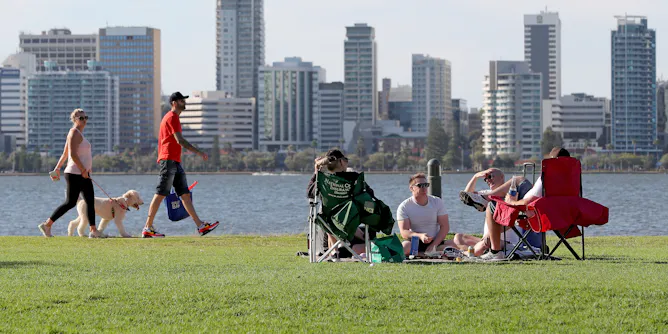
Testing and isolating cases only after they develop symptoms might not be enough to prevent further outbreaks of COVID-19. Sentinel surveillance, by testing randomly in the community, can go further.
Articles on Testing
Displaying 41 - 60 of 77 articles
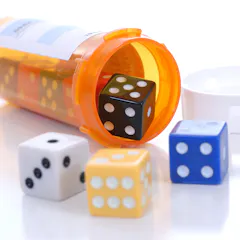
Researchers and public health officials still don’t know how widespread nor how deadly the coronavirus really is. Random testing is a way to quickly and easily learn this important information.

As the health care system tries to solve the crisis in care around the coronavirus, pharmacists stand ready to help, but they face limits.
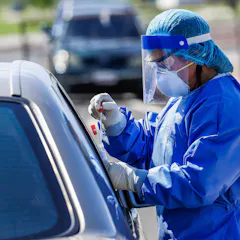
A group of population experts have called on governments in Latin American and the Caribbean to urgently ramp up testing for COVID-19 before it’s too late.
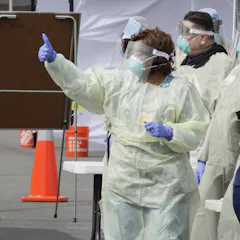
Officially, not that many people have recovered from the coronavirus. An epidemiologist explains what has to happen for a COVID-19 survivor to get a clean bill of health.
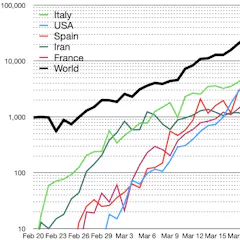
We need to update models on death rates or introduce truly random testing to understand the true impact of the coronavirus.
The questions in the NAPLAN numeracy tests are often years behind the level of mathematics students following the curriculum are studying that year.
This week’s NAPLAN results show the writing skill of students is actually dropping as they progress from Year 3 through to Year 9.
Under no circumstances do NAPLAN scores alone indicate a student’s full potential, so linking them to any future job application is a dangerous idea.

Algorithms are only human (well, designed by humans) but we need to trust they’ll do what they’re supposed to do. And that means we need a better way to test them.
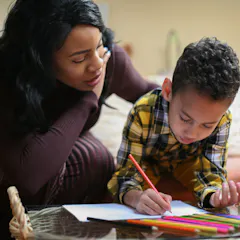
Educational experts offer tips for parents and teachers to help children manage test anxiety but find that overall, policy-makers need to re-think what matters in schools and what’s worth measuring.

Changes to the literacy and numeracy standards for new teachers in Victoria have raised questions about what makes a ‘good’ teacher.
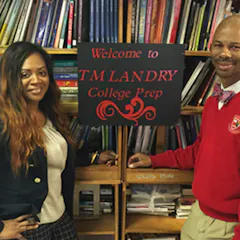
T.M. Landry College Prep, facing allegations of abuse, is known for getting students from poor backgrounds into Ivy League schools. An education scholar says the school’s focus was misplaced.
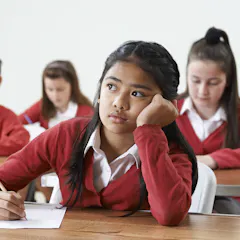
Do they really matter?
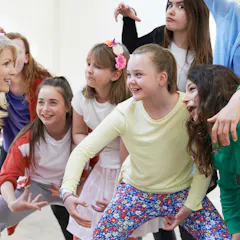
Literacy and numeracy can be assessed through creative tasks, like creating a drama performance or an electrical circuit, without hindering creativity.
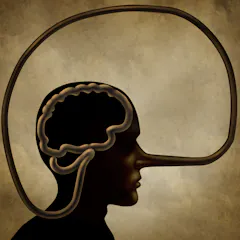
An education professor, who worked as a teacher in Atlanta Public Schools during a cheating scandal that began in 2009, explains what factors and forces lead educators to fake academic success.
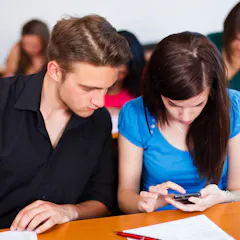
Despite embarrassing publicity about cheating at top US high schools, academic dishonesty remains a problem. Could focusing on mastery instead of test scores help mitigate the problem?
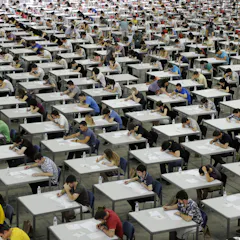
The use of standardised testing is a divisive topic, and most of the disagreement comes down to beliefs about whether using it to control education is a good or bad thing.
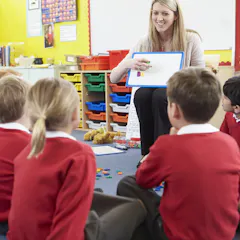
Education Minister Simon Birmingham is right to be concerned about the number of children struggling with literacy - but this test is not the solution.
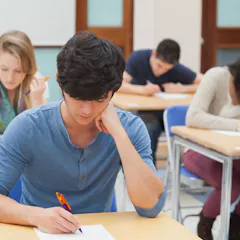
This year’s preliminary NAPLAN results show Australian students are flatlining after ten years of the controversial tests.
Top contributors
-

Associate Professor of Public Policy, University of Maryland, Baltimore County
-
Associate Dean, School of Graduate Studies & Professor, Faculty of Education, Queen's University, Ontario
-
Senior Research DECRA Fellow, Institute for Learning Sciences and Teacher Education, Australian Catholic University
-
Distinguished Professor, Faculty of Education, Brock University
-
Associate Professor of Education Policy, Australian Catholic University
-
Associate Professor in Higher Education Studies, University of Cape Town
-
Professor of Education Futures, The University of Melbourne
-
Professor, School of Education, University of Southern Queensland
-
Professor of Information, University of Michigan
-
Professor in Psychology, University of Essex
-
Professor, Faculty of Education and Arts, Australian Catholic University
-
Emeritus Professor of Education, University of Cumbria
-
Clinical Professor of American and New England Studies, Boston University
-
Faculty Director for Professional Education, BU School of Education, Boston University
-
Professor of Digital Learning and Play, Northumbria University, Newcastle