
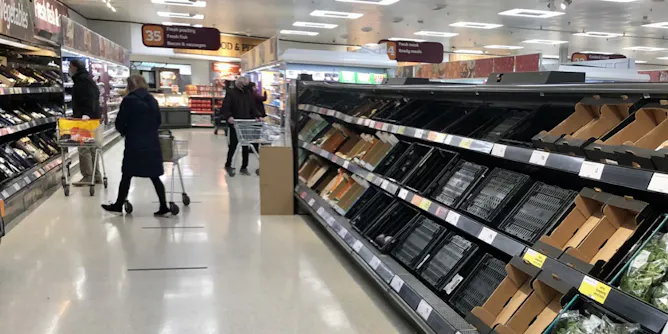
Queues at borders, suspended deliveries, empty shelves: the EU-UK Trade Cooperatiion Agreement is not quite what it seemed in the brochure.
Articles on Supermarkets
Displaying 101 - 120 of 226 articles

Yes, there will be temporary meat shortages in Victoria, but not for long.
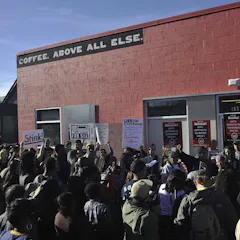
Hip food offerings can signal that a neighborhood is gentrifying – especially when they repackage traditional foods for wealthy white eaters.
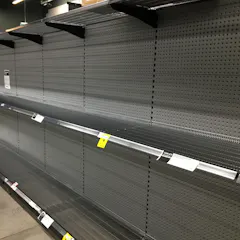
Melbourne’s return to stage 3 restrictions has precipitated another round of grocery stockpiling. But supermarket shelves won’t be empty as long as last time.
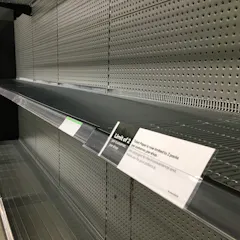
What motivates people to panic buy and stockpile goods like toilet paper? The COVID-19 pandemic has given us the chance to find out.

We are too reliant on supermarkets and industrial agriculture.
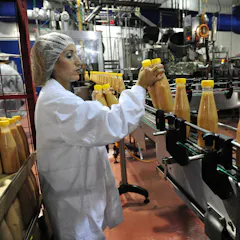
Pickers, purifyers and producers are all working flat out.

Continuing flour shortages in supermarkets highlight a fundamental food security problem in distribution systems.
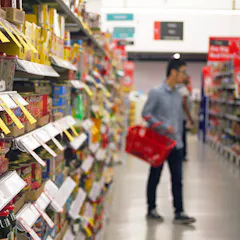
We surveyed over 100 Coles, Woolworths, Aldi and independent stores around Australia and found supermarkets are promoting unhealthy food much more often, and more prominently, than healthier products.

After the brief shock of food insecurity in the form of empty supermarket shelves, we might start thinking about having a Plan B and C based on local food sources and shorter supply chains.
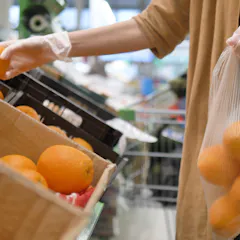
Product tampering is not just committed by teenagers, nor has it just come about during this pandemic.
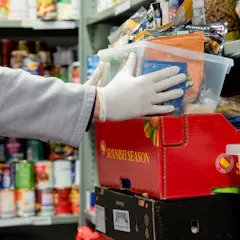
The government is focusing on the market to feed the UK but to avoid long-term risks and short-term emergencies a UK food plan is needed now
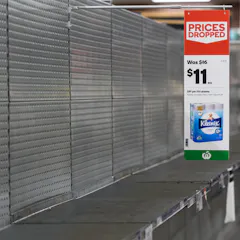
Behavioural scientists explain why people react badly to paternalistic messaging from politicians. If you treat people like children and tell them to stop doing something, it has the opposite effect.
By shopping responsibly and thinking of others, consumers will play a big part in ensuring everyone can buy what they need.
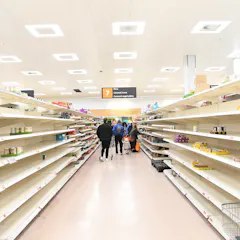
The good news is supermarket shelves should be back to normal sooner rather than later.
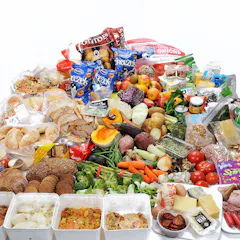
Waste-free by 2035 in Indonesia is doable through three strategies to reduce food waste.

Technological change has always destroyed jobs. But now automation and artificial intelligence are drying up the options for those displaced.

Abandoned trolleys are an all-too-common sight. A solution to this intractable problem depends on a combination of policy and legal changes, public engagement and tracking technology.

Australians spent $400 million on unwanted Christmas gifts last year. There must be a better way.

There are still some serious issues around food labelling that must be addressed and enforcement is one of them.
Top contributors
-

Professor of Marketing and Consumer Behaviour, Queensland University of Technology
-
Associate Dean, School of Business and Law, Edith Cowan University
-
Associate Professor of Marketing, Tasmanian School of Business and Economics, University of Tasmania
-
Professor of Economics, Monash University
-
Professor in Sustainable Production and Consumption, Anglia Ruskin University
-
Professor of Public Health, Deakin University
-
Professorial Fellow, University of Canberra
-
Emeritus Professor of Marketing, University of Birmingham
-
Professor of Public Health Policy, Deakin University
-
Associate Professor in Operations and Supply Chain Management, UTS Business School, University of Technology Sydney
-
PhD, Political Economy, Macquarie University
-
Retail Academic Researcher, Business School, University of Sydney
-
PhD Candidate, ARC Centre of Excellence for Automated Decision-Making and Society, RMIT University
-
Professor of Accounting, University of Portsmouth
-
Associate Professor, Supply Chain Analytics, University of Bradford