

Are education systems succeeding in transforming individual abilities into collective opportunities? This is what rankings ought to be measuring rather than reducing education to a few figures.
Articles on Student assessment
Displaying 1 - 20 of 27 articles

Teachers in a study reported strong emotional reactions to small setbacks from their perfectionistic students, ranging from crying or lashing out to shutting down completely.
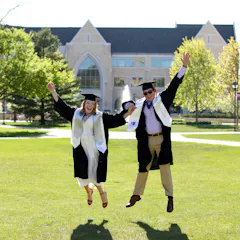
Even when grades rise, we shouldn’t assume that every rise is unearned or indefensible. The full picture is messier than that.
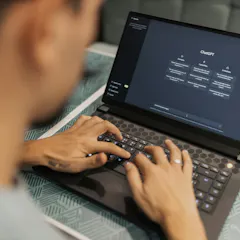
Simply setting rules around using AI is not enough. To ensure assessments are valid and fair, unis and teachers need to change the task itself.

A deep dive into the test’s framework suggests it was designed to fail about the same share of students every year, even if they’d made actual progress from previous years.

Responding to AI proactively means departing from old answers to the question of education’s purpose.
Only by considering conditions specific to post-secondary education today can educators reimagine more engaged and critical learning.

Six ways to meaningfully and effectively integrate financial literacy into high school learning without high-stakes testing.

Parents need to directly hear from teachers and administrators via open houses or parent advisory councils to lift the fog of confusion and concern surrounding this change.

Teachers in a study identify ‘grading obsession’ as a top challenge in education. Some are fighting back and dedicating class time to student self-assessment and peer assessment activities.

Students could learn about critical thinking, writing and the broader role of artificial intelligence tools like chatbots.

Understanding complex and contextual differences in grading across cultures and countries is important. Only in doing so can we interpret student achievement based on grades in a fair and valid way.

Educators need to carefully consider ChatGPT and issues of academic integrity to move toward an assessment system that leverages AI tools.

We need to embrace the use of AI in higher education because the positives can far outweigh the negatives.
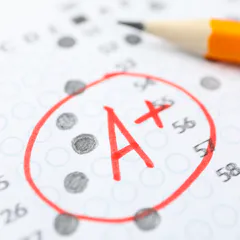
Both teachers and our media landscape contribute to how youth make sense of what is expected of them, and who are bound to excel in which fields.

A new study of academic integrity policies and practices at 41 Australian universities found little evidence of changes to deal with cheating and academic misconduct arising from online assessment.
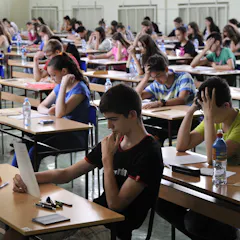
When COVID forced exams online, reports of cheating were rife and proctoring software was problematic. But in-person exams are also flawed, so now’s the time to rethink how assessment works.
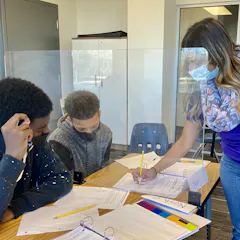
Revamping standardized testing needs to be accompanied with tangible actions to mitigate students’ opportunity gaps at the community level, particularly for racialized students.

Let’s not burden 15-year-old students with a low-value test that does a poor job of evaluating learning.

A chasm has opened up between early childhood learning and the first years of compulsory schooling. Kids go from playing to being tested in the blink of an eye, and their learning is poorer for it.
Top contributors
-

Associate Dean, School of Graduate Studies & Professor, Faculty of Education, Queen's University, Ontario
-
Distinguished Professor, Faculty of Education, Brock University
-
Professor of Creative Pedagogies, Edinburgh Napier University
-
Deputy Vice-Chancellor, Education, Murdoch University; Professor of Measurement, Assessment and Evaluation, Murdoch University
-
Professor of Science and Environmental Sustainability Education, Brock University
-
Professor, Jean Augustine Chair in Education, Community & Diaspora, York University, Canada
-
Associate Professor, College of Information & Communication Technology, School of Engineering and Technology, CQUniversity Australia
-
Learning Hub Lead (Academic Language & Learning), University of Sydney
-
Professor and Director of Assessment and Evaluation Group, Queen's University, Ontario
-
Teaching Assistant Professor, Memorial University of Newfoundland
-
Director of Initial teacher Education, The University of Melbourne
-
Professor of Behavioural Genetics, King's College London
-
Adjunct Professor, Faculty of Education, University of British Columbia
-
Adjunct Professor of Education, Saint Mary’s University
-
Associate Lecturer in English and Writing, University of Sydney