

A study of more than 750,000 student records from four Toronto universities finds that living in residence is linked to better grades and higher satisfaction, especially for first-year students.
Articles on Grades
Displaying 1 - 20 of 21 articles

Whether students feel pressure to get good grades or keep up with classmates, the anxiety this effort produces can have long-term effects on their brains.

Teachers in a study reported strong emotional reactions to small setbacks from their perfectionistic students, ranging from crying or lashing out to shutting down completely.
Grades can magnify inequities that exist in American schools, making it harder for some students to succeed.

Not all teachers comply when asked to adjust student grades. An education scholar takes a look at what happens when they don’t.

Parents need to directly hear from teachers and administrators via open houses or parent advisory councils to lift the fog of confusion and concern surrounding this change.

A scholar of grading explains how teachers can do a better job of reporting what grades represent, and what they are for.

Teachers in a study identify ‘grading obsession’ as a top challenge in education. Some are fighting back and dedicating class time to student self-assessment and peer assessment activities.

Understanding complex and contextual differences in grading across cultures and countries is important. Only in doing so can we interpret student achievement based on grades in a fair and valid way.

Educators need to carefully consider ChatGPT and issues of academic integrity to move toward an assessment system that leverages AI tools.
Grades may be a crude incentive for students aspiring to the highest performance, but they have little influence on those who take satisfaction from the learning process.

Grades don’t actually measure learning, and they can increase students’ stress and decrease their motivation. A college professor explains an alternative to grading students’ work.
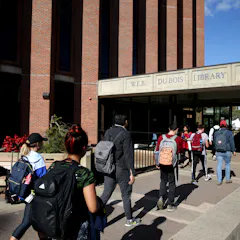
Headed off to college? A librarian shares four tips for college students ready to hit the books.

How much homework kids should do is a subject of great debate.

Recent news that at least one Ontario university adjusts for grade inflation during the undergraduate application process is a call to action – for long-term educational change.

Research shows that many students are excessively optimistic about course grades. Those with a stronger sense of personal control are also less likely to receive the grades they expect.

Across Canada and around the world, thousands of students are paying cash for good grades - in tests, essays and even PhD theses. On Oct. 18, 2017, universities globally are fighting back.
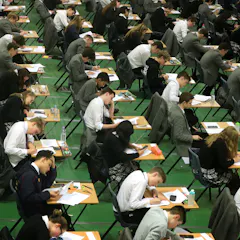
This year’s changes to GCSE grades means results cannot be compared with those of previous years.

Recent research raised concerns about girls’ stereotypes on their gender’s lack of ‘brilliance.’ But an overlooked finding suggests boys also hold hindering stereotypes about themselves in school.

Crunching the numbers on the latest school performance data.
Top contributors
-

Associate Dean, School of Graduate Studies & Professor, Faculty of Education, Queen's University, Ontario
-
Associate Professor of Teaching and Leadership, University of North Dakota
-
Distinguished Professor, Faculty of Education, Brock University
-
Director, Nottingham Institute of Education, Nottingham Trent University
-
Associate Professor of Education, University of Virginia
-
Thomas and Dorothy Litwin Professor of American Studies and Dean of the School of Continuing Education and Summer Sessions, Cornell University
-
Assistant Professor of Teacher Education, University of Mississippi
-
Deakin Distinguished Professor and Co-Director, Centre for Research on Assessment and Digital Learning, Deakin University
-
Teaching Assistant Professor, Memorial University of Newfoundland
-
Professor (Assessment and Digital Learning), Deakin University
-
Deputy Vice-Chancellor, Education, Murdoch University; Professor of Measurement, Assessment and Evaluation, Murdoch University
-
Professor and Director of Assessment and Evaluation Group, Queen's University, Ontario
-
Adjunct Assistant Professor, Faculty of Education, Queen's University, Ontario
-
Professor of English, University of Richmond
-
Doctoral Student, Faculty of Education, Queen's University, Ontario