
Until recently, the Prairie province has been an outlier with no provincewide mandated testing.
Articles on PISA
Displaying 1 - 20 of 114 articles
The numbers that show Indigenous students ‘behind’ their non-Indigenous peers are accurate. But they only tell part of the story.
The results for the UK nations are mixed.
Results from the latest international test of 15-year-olds has prompted headlines suggesting serious problems with Australia’s academic results.
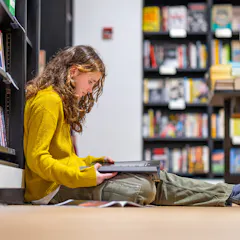
Pisa should be seen as a warning light, rather than a diagnosis of what is wrong with Welsh education.
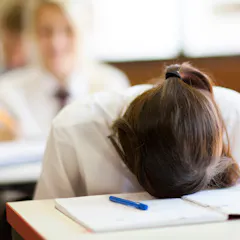
New analysis shows boys are more confident in tasks involving maps and timetables. Parents can help by telling daughters it’s OK to make mistakes in maths.

In January, named for the two-faced Roman god Janus, it’s fitting to consider how schooling can address lesser-discussed non-cognitive skills like emotional intelligence.
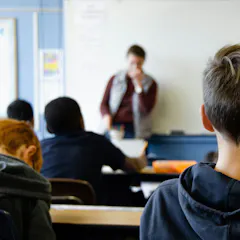
A new report analyses responses from more than 13,430 Australian students to understand their school experiences and how these impact on maths performance.
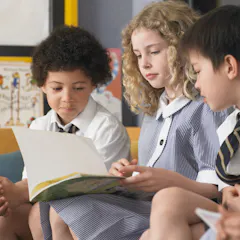
There are alternatives to England’s focus on synthetic phonics, which teaches children to decode words by learning the relationship between letters and sounds.
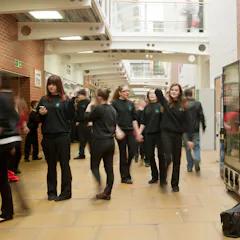
Pisa measures 15-year-olds in reading, maths and science every three years - but is that the best way to test an education system?
Two researchers independently studied Australian students’ results. These papers both reached the same conclusions: scores on the vast majority of standardised assessments are not in decline.

To boost post-pandemic math learning, a multi-dimensional approach is needed that promotes the success of the whole child: academic, physical and socio-emotional.
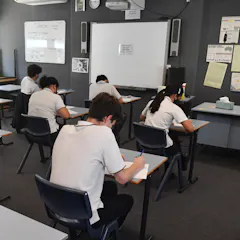
The latest Programme for International Student Assessment (PISA) show Australian 15-year-olds have recorded similar results to 2015 and 2018 in maths, science and reading.

New research looked at NSW Year 12 results in English and maths and tested if socioeconomic status or rural location impacts student results.

Let’s not burden 15-year-old students with a low-value test that does a poor job of evaluating learning.
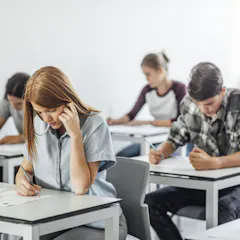
Motivation plays a large part in educational success. Of students who sat the PISA test in 2018, 73% indicated they would have put in more effort had the scores counted towards their school marks.

Australian governments have committed a lot of money and effort over the last few decades to improve schooling using “what works”. But this hasn’t worked. So what can we do to improve education?

Only 8% of Australian students said they were learning two or more foreign languages in 2018, compared to 50% of students across OECD countries.
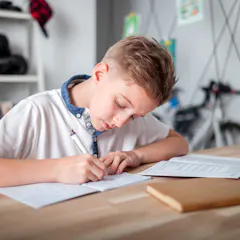
Studies on homework are frequently quite general, and don’t consider specific types of homework tasks. So it isn’t easy to measure how effective homework can be. But here’s what we do know.

A survey of 268 teachers found 85% considered education news coverage to be generally negative. And 81% found it demoralising.
Top contributors
-

Distinguished Professor, Faculty of Education, Brock University
-
Deputy CEO (Research), Australian Council for Educational Research
-
Professor of Education, Sheffield Hallam University
-
Lecturer in Economics and Social Statistics, UCL
-
Professor, School of Education, University of Southern Queensland
-
Deputy Vice-Chancellor, Education, Murdoch University; Professor of Measurement, Assessment and Evaluation, Murdoch University
-
Senior Lecturer in Education, Canterbury Christ Church University
-
Professor of Education, The University of Melbourne
-
Senior Research Fellow, Australian Council for Educational Research
-
Research Fellow, Oxford University Centre for Educational Assessment, University of Oxford
-
Associate Professor, Beijing Normal University
-
Research group leader, principal investigator, and ATTRACT-fellow, University of Luxembourg
-
School Education Program Director, Grattan Institute
-
Professor, Deakin University
-
Director of Research and Deputy Head of Southampton Education School, University of Southampton