

A new study shows it does rain more in cities, but the trend over time has been exaggerated by changes in satellites.
Articles on Stormwater
Displaying 1 - 20 of 37 articles

The Big Cypress fox squirrel is losing its habitat to urban and suburban development. But a few design changes could help to save this and other species.

New technology allows networks of rainwater tanks to work together to benefit households and the environment.
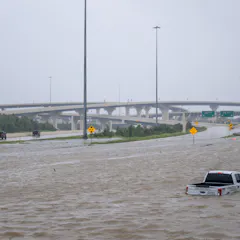
None of the three main options could handle another Hurricane Harvey, but they would give varying benefits based on different sizes, costs and timelines.

Climate change is contributing to larger rainfalls throughout Canada, and aging urban infrastructure is unable to keep up. Blue-green infrastructure updates can help to flood-proof cities.
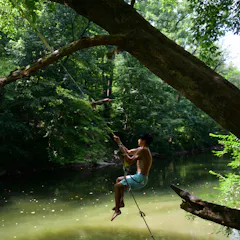
The lush urban forest in northwest Philadelphia helps cool the city and provides other environmental protections.

Ontario’s recent flooding reminds us of the fragility of our buildings and infrastructure, and the importance of nature-based solutions in designing more resilient communities.

Billions have been spent making the Seine swimmable for the first time in a century. It might not be enough.
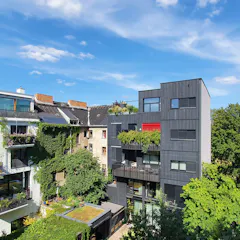
The majority of 25 surveyed developments around New Zealand lacked healthy, ecologically meaningful vegetation. Applying biodiversity targets for medium-density housing could turn this around.
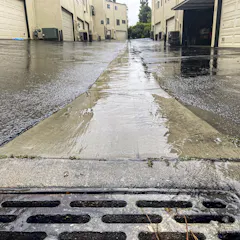
US cities are doing green infrastructure, but in bits and pieces. Today’s climate-driven floods require a much broader approach to create true sponge cities that are built to soak up water.
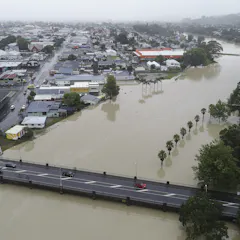
A new report sets out the practical ways New Zealand can improve its urban resilience to flooding due to climate change. But time, rather than money, is of the essence.
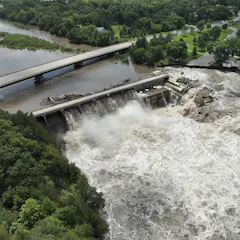
Heavier rainfall and more frequent storms raise the risk of floodwaters running over or around dams, potentially causing them to fail.

Flood risks are rising, yet communities may spend millions of dollars in federal infrastructure funding on systems that aren’t built to handle them.
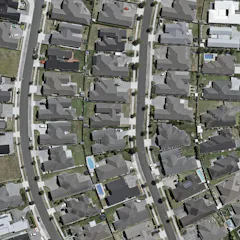
New Zealand’s urban green space has dwindled over the past six decades. The Commissioner for the Environment has issued a warning and a challenge – get greener before climate change gets meaner.
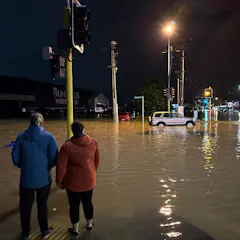
Flood and cyclone damage shows why turning Auckland and other urban parts of New Zealand into ‘sponge cities’ is the right idea. But overseas experience from China and beyond shows it won’t be cheap.
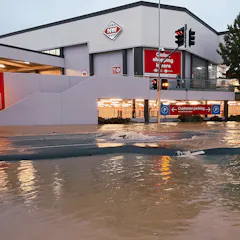
The more hard surfaces we build, the more stormwater we need to drain. Auckland must future-proof its urban design as climate change bites.

There simply aren’t enough water engineers in New Zealand for the massive Three Waters projects. Matching capacity with forward planning is an urgent issue the government must address.
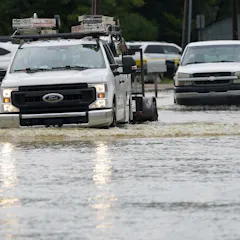
Flash flooding can happen in both urban and rural areas, with deadly results in either setting.

There is a growing interest in planting small trees in urban areas. However, large trees have significant advantages.
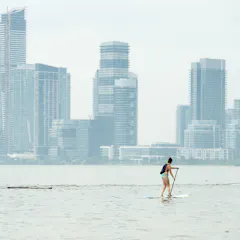
Shoreline communities are already faltering under the weight of billions of dollars in damages — and worrying that climate change will continue to make things even worse.
Top contributors
-

Senior Lecturer in Urban Planning, University of Auckland, Waipapa Taumata Rau
-
Assistant Professor, University of Central Florida
-
Associate Professor, Department of Geography, Environment and Geomatics, University of Guelph
-
Professor and Director of the Institute for Water Research, Rhodes University
-
Associate Professor, Associate Chair of Graduate Studies for Environmental Engineering, and Canada Research Chair in Stormwater and Low Impact Development (Tier II), Carleton University
-
Professor of Civil, Architectural and Environmental Engineering and Director, Sustainable Water Resource Engineering Laboratory, Drexel University
-
Senior lecturer, Nelson Mandela University
-
Professor of Architecture, Director of the Metropolitan Design Center, and Dayton Hudson Chair in Urban Design, University of Minnesota
-
Associate Professor of Civil and Environmental Engineering, Vanderbilt University
-
Professor of Environmental Microbiology, University of Brighton
-
Associate Professor in Environmental Science, Western Sydney University
-
Director and Professor, Great Lakes Institute for Environmental Research, University of Windsor
-
Deputy Dean of the Faculty of Design and Creative Technologies, Auckland University of Technology
-
Master's Candidate, School of Planning in the Faculty of Environment, University of Waterloo
-
Visiting professor, University of Saskatchewan