
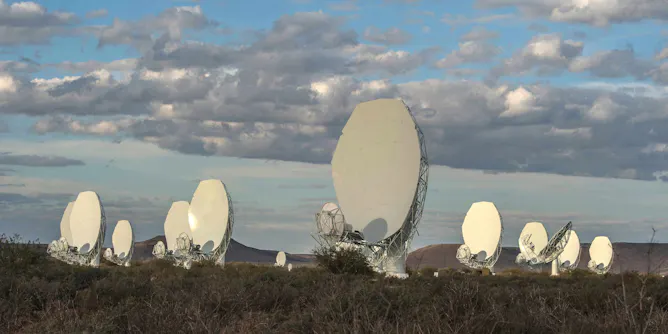
The pandemic has underscored that the world requires agility for survival. That makes blue skies science, which encourages curiosity and nimble thinking, perhaps more important than ever.
Articles on Square Kilometre Array
Displaying 21 - 40 of 57 articles
The federal budget contains money for big-ticket items like the SKA telescope and mRNA vaccines. But dwindling funds for universities and fundamental science will leave us vulnerable to future problems.
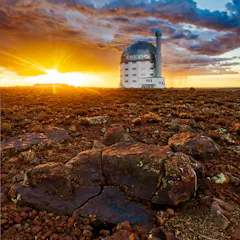
Cape astronomers were responsible for, among other things, the first measurement of the distance to a star; the first photographic sky survey and the accurate measurement of the distance to the sun.

When the outlook is dark, astronomy can help us take the long view and build for the future.

Data science is going to grow over the coming decades and requires trained graduates who can handle the work.
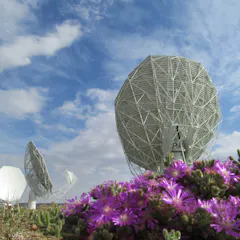
The SKA global project could be a driver that contributes to South Africa’ economic growth.
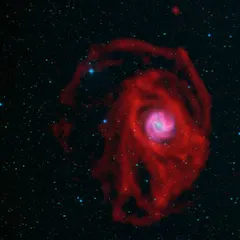
A precursor to the Square Kilometre Array- the MeerKAT telescope - is being built right now and remarkable progress has been made in the last 12 months.

Astronomy on the continent has been given a much needed boost with Ghana’s converted radio telescope between it and South Africa, to conduct scientific observations.
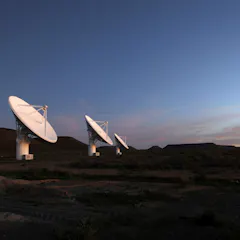
Very few African universities offer postgraduate degrees in astronomy. This gap in knowledge and training can be addressed through international partnerships and collaboration.
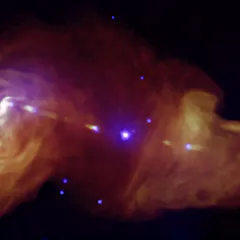
It’s difficult to get jets - powerful, lightning fast particles - to give up their secrets. The new Square Kilometre Array radio telescope could hold the key to solving jets’ mysteries.
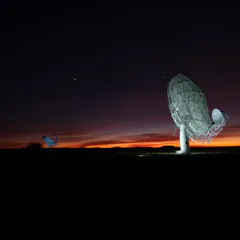
What’s particularly exciting about “first light” images from South Africa’s MeerKAT radio telescope is that they prove Africa is a rising star in the world of astronomy.
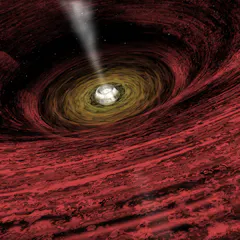
The discovery of gravitational waves has ushered in a new era in astronomy and physics. Where will the next big discovery be made? There’s no reason for it not to be Africa.
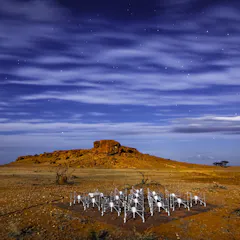
The Murchison Widefield Array sits in remote Western Australia far from noisy civilisation so it can help us understand the universe by tuning into radio waves from the distant cosmos.
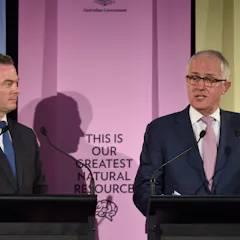
Prime Minister Malcolm Turnbull today announced the National Innovation and Science Agenda (NISA). Here’s what it means for science, commercialisation and industry in Australia.
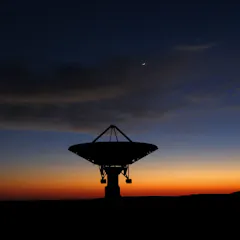
Citizen science will ensure that the skies have no limit when it comes to research, as ordinary people are encouraged to take part in simple acts of exploration.
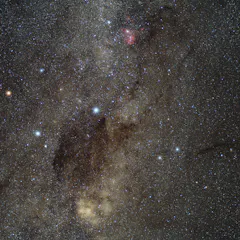
The next decade will be an exciting one for Australian astronomy, as we probe the heavens for answers to age old questions.
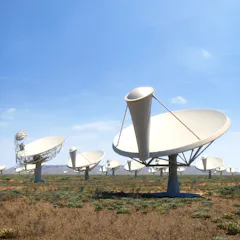
The Square Kilometre Array is the world’s largest telescope – what will it do and how does it work?
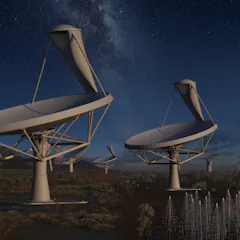
Telescopes have come a long way since the days when they were all about lone astronomers watching the night sky through their upstairs windows. Today teams of astrophysicists build and use much more modern…
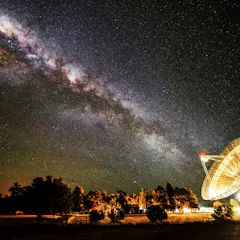
The future looks very bright for Australian radio astronomy but it was somewhat clouded earlier this year when CSIRO’s radio astronomy program took a dramatic hit in the Australian federal budget. CSIRO…
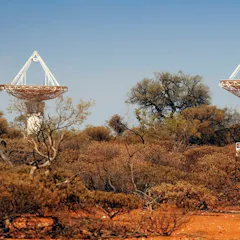
The first images from Australia’s Square Kilometre Array Pathfinder (ASKAP) telescope have given scientists a sneak peek at the potential images to come from the much larger Square Kilometre Array (SKA…
Top contributors
-

John Curtin Distinguished Professor (Radio Astronomy), Curtin University
-
Australian Government Women in STEM Ambassador, Professor of Practice, UNSW
-
Professor, Radio Astronomy, University of Sydney
-
Distinguished Professor, Australian National University
-
Lecturer, University of Cape Town
-
SKA-Low Senior Commissioning Scientist and Adjunct Associate Professor, Curtin Institute of Radio Astronomy, Curtin University
-
Dean of Science, University of California, Santa Cruz
-
ARC Laureate Fellow, Swinburne University of Technology
-
Post-doctoral researcher in Astrophysics, University of the Western Cape
-
SKA Postdoc in Observational Cosmology, University of the Western Cape
-
Postdoctoral Fellow in High Energy Astro-particle physics
-
Science Engagement Astronomer, South African Astronomical Observatory, National Research Foundation
-
Honorary Research Fellow, CSIRO
-
Neurosurgeon and Director Monash Institute of Medical Engineering, Monash University
-
Vice-Chancellor, University of Newcastle