
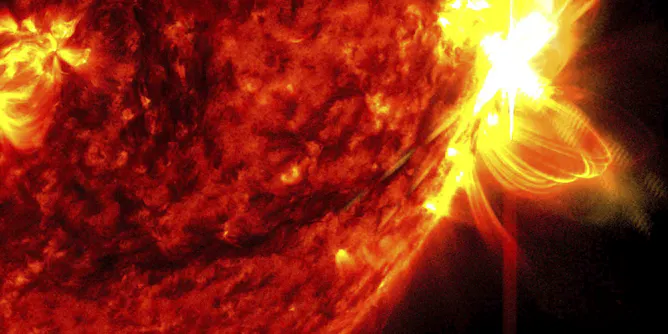
A massive solar flare could seriously disrupt life on Earth – but new NASA missions and others in development will help monitor the Sun.
Articles on Space weather
Displaying 1 - 20 of 51 articles
There’s a pressing need to understand and respond to what’s known as “space weather”.
The US, China, India, Europe and Japan all have exciting missions on the horizon in 2026. Many of them are collaborative feats.
Four big outbursts from the Sun mean skies may light up much further from the poles than usual.
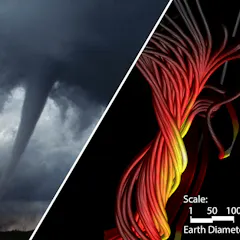
Unprecedented simulations show the formation of space tornadoes capable of causing strong geomagnetic storms around Earth, calling for earlier and more accurate warnings.
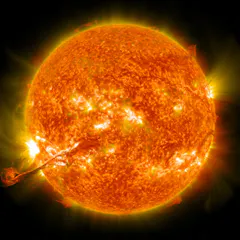
Space weather isn’t referring to rain clouds that float through the galaxy. Instead, it’s caused by massive explosions of particles that shoot out from the Sun.
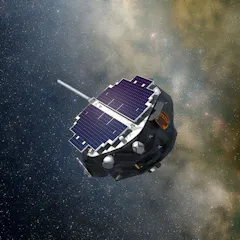
Studying the Sun helps researchers understand how space weather can affect technology back on Earth.
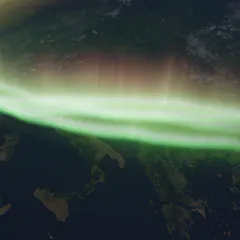
Two geophysicists and an archaeologist teamed up to connect space weather 41,000 years ago to human behaviors that might have been in response – and show the value in cross-discipline teamwork.
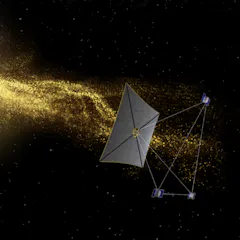
As more satellites are launched into orbit, space agencies are looking at how to predict space weather events that could harm them.
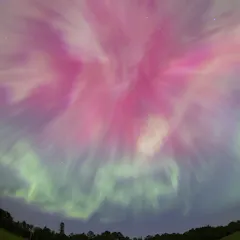
Geomagnetic storms occur fairly often. Minor ones happen multiple times per year.
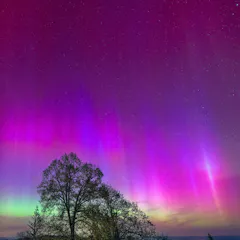
Every few thousand years, the Sun unleashes a burst of high-energy particles that can have serious consequences for life on Earth.
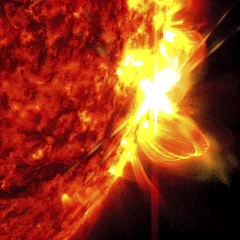
The Sun will be at its most explosive right around the time NASA plans to put people back on the Moon.
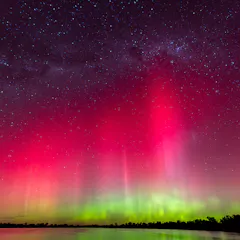
Australians were in for a Mother’s Day treat as auroras swept the skies. But there was little warning, and the spectacle didn’t repeat.
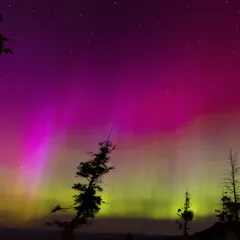
The electric rainbow of the aurora happens when excited atoms relax via ‘forbidden transitions’.
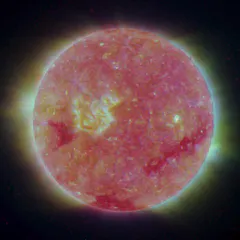
The solar corona can be seen during the solar eclipse on April 8. Astronomers are still trying to figure out the mysteries of the corona, including why it’s so hot.

The sun is expected to reach its solar maximum in 2025. Recent auroras suggest that the maximum may be bigger than predicted.
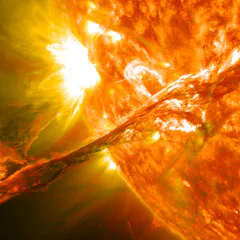
We’re currently a few years into the 25th studied solar cycle. An 11-year period of sun activity, this solar cycle is more active than previously expected.
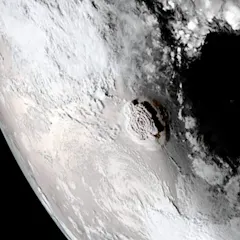
The eruption was so large, it created its own space weather and satellite technology disruptions – here’s how.
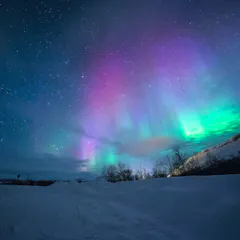
The aurora is one of nature’s most spectacular sights, a dazzling glow in the upper atmosphere driven by space weather.
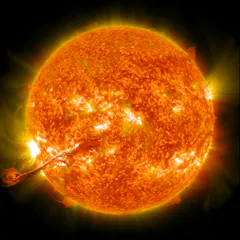
Space weather can affect satellites in a number of different ways, from frying electronics to increasing drag in the atmosphere.
Top contributors
-

Associate Professor, RMIT University
-
Professor of Astronomy, Mathematics, and Physics, Athabasca University
-
Researcher in Physics and Astronomy, Dartmouth College
-
Professor of Physics, UCL
-
Astrophysicist, Smithsonian Astrophysical Observatory, Smithsonian Institution
-
Researcher in Astrophysics, Smithsonian Institution
-
Research Scientist, Laboratory for Atmospheric and Space Physics, University of Colorado Boulder
-
Associate Research Scientist, University of Michigan
-
Professor of Space Physics, Lancaster University
-
Reader in Physical Sciences, Aberystwyth University
-
Lecturer and STFC Ernest Rutherford Fellow, Queen's University Belfast
-
Senior Research Associate in Space and Planetary Physics, Lancaster University
-
Assistant Research Scientist in Climate and Space Sciences and Engineering, University of Michigan
-
Associate Professor of Space Systems, West Virginia University
-
Researcher in Astrophysics, Smithsonian Institution