
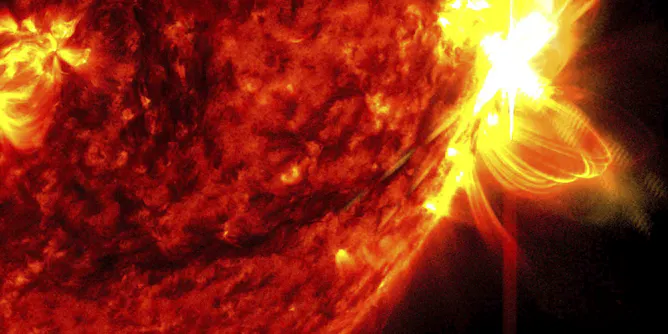
A massive solar flare could seriously disrupt life on Earth – but new NASA missions and others in development will help monitor the Sun.
Articles on Geomagnetic storm
Displaying all articles
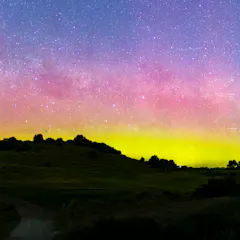
Four big outbursts from the Sun mean skies may light up much further from the poles than usual.
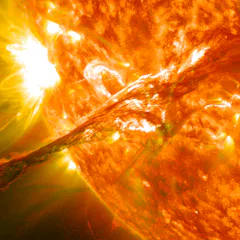
From communications outages to a brush with nuclear war, solar events like flares and coronal mass ejections have shaped human history.
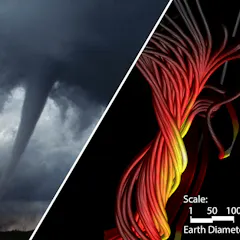
Unprecedented simulations show the formation of space tornadoes capable of causing strong geomagnetic storms around Earth, calling for earlier and more accurate warnings.
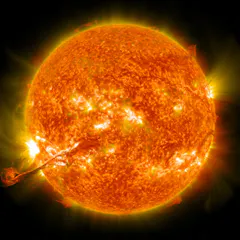
Space weather isn’t referring to rain clouds that float through the galaxy. Instead, it’s caused by massive explosions of particles that shoot out from the Sun.
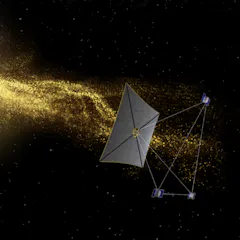
As more satellites are launched into orbit, space agencies are looking at how to predict space weather events that could harm them.
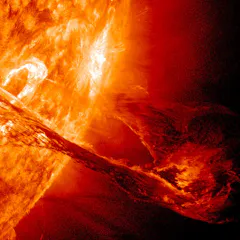
While geomagnetic storms can lead to gorgeous aurora displays, they can also damage satellites and GPS.
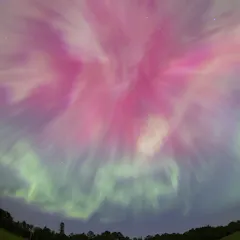
Geomagnetic storms occur fairly often. Minor ones happen multiple times per year.
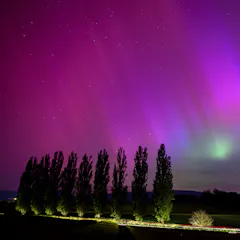
Here’s what’s going on to cause more widespread northern and southern lights.
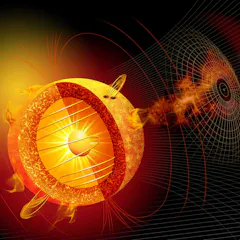
Solar storms can play havoc with electrical grids, satellites and railway lines.
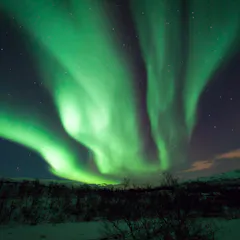
Every few centuries the Sun blasts the Earth with a huge amount of high-energy particles. If it were to happen today, it would wreak havoc on technology.
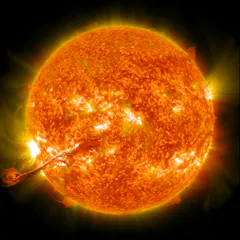
Space weather can affect satellites in a number of different ways, from frying electronics to increasing drag in the atmosphere.

The sun has entered a phase causing more chances to see the northern lights in the UK, an expert explains.
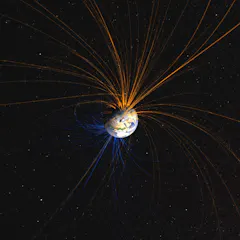
A strange patch of extremely strong magnetic field occurred over Jordan in 1000BC. Could we be about to face another one?
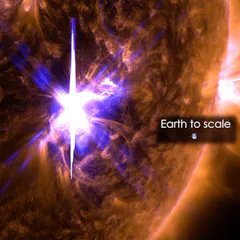
At a time in the sun’s cycle when space weather experts expect less solar activity, our star is going bonkers with solar flares and coronal mass ejections. What effects will Earth feel?

Space weather can impact life on Earth.
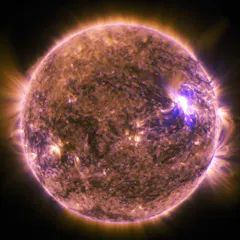
Our power grid infrastructure on Earth is more vulnerable to space weather than previously thought – with susceptibility in more regions and even during quiet geomagnetic periods.
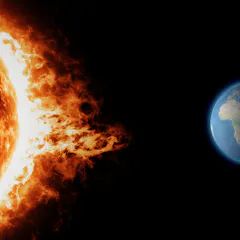
Astrophysicists found out after the January 2014 solar flare that their predictions of solar weather were not very accurate. Here’s the fix (kind of).
Top contributors
-

Researcher in Physics and Astronomy, Dartmouth College
-
Associate Professor of Environmental History, Georgetown University
-
Associate Professor of Space Systems, West Virginia University
-
Astrophysicist, Smithsonian Astrophysical Observatory, Smithsonian Institution
-
Researcher in Astrophysics, Smithsonian Institution
-
Associate Research Scientist, University of Michigan
-
Researcher in Astrophysics, Smithsonian Institution
-
Associate Professor, RMIT University
-
Senior Lecturer in Physics, Nottingham Trent University
-
Professor of Space Physics, Lancaster University
-
Assistant Clinical Professor of Electrical Engineering, Mississippi State University
-
Director, Centre for Fusion, Space and Astrophysics, University of Warwick
-
Applied Geomagnetic Researcher, South African National Space Agency
-
Postdoctoral Research Fellow, University of Michigan
-
Associate Professor of Aerospace Engineering and Mechanics, University of Alabama