
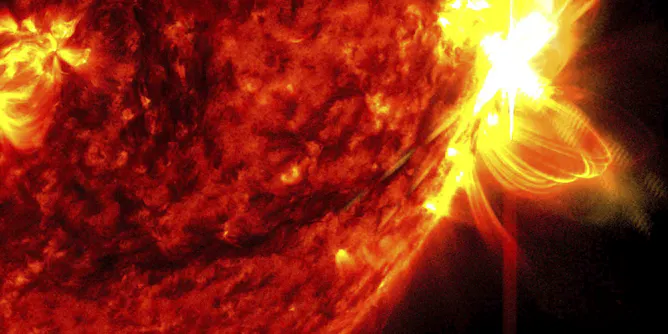
A massive solar flare could seriously disrupt life on Earth – but new NASA missions and others in development will help monitor the Sun.
Articles on Solar storm
Displaying all articles
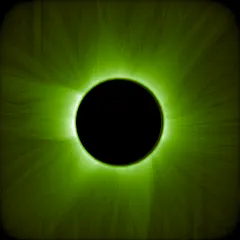
There’s a pressing need to understand and respond to what’s known as “space weather”.
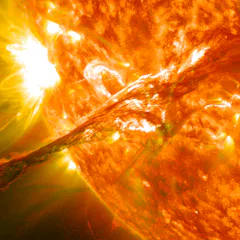
From communications outages to a brush with nuclear war, solar events like flares and coronal mass ejections have shaped human history.
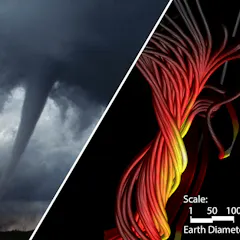
Unprecedented simulations show the formation of space tornadoes capable of causing strong geomagnetic storms around Earth, calling for earlier and more accurate warnings.
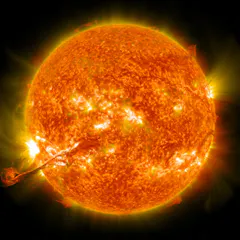
Space weather isn’t referring to rain clouds that float through the galaxy. Instead, it’s caused by massive explosions of particles that shoot out from the Sun.
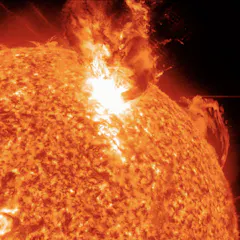
Extreme solar storms could play havoc with technological infrastructure.
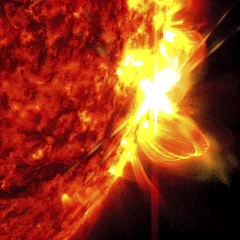
The Sun will be at its most explosive right around the time NASA plans to put people back on the Moon.

Here’s what’s going on to cause more widespread northern and southern lights.
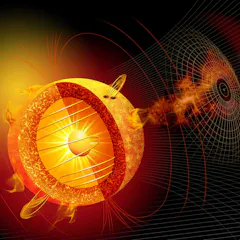
Solar storms can play havoc with electrical grids, satellites and railway lines.
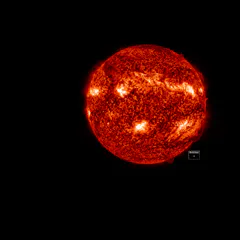
NASA, NOAA and SpaceWeather say a coronal mass ejection will reach Earth this week. It has the potential to knock out communications in some parts of the world.

Every few centuries the Sun blasts the Earth with a huge amount of high-energy particles. If it were to happen today, it would wreak havoc on technology.
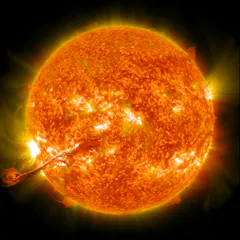
Space weather can affect satellites in a number of different ways, from frying electronics to increasing drag in the atmosphere.
It’s true that here on Earth, if you want to burn something you need oxygen. But the Sun is different. It is not burning with the same kind of flame you would have on Earth if you burned a candle.
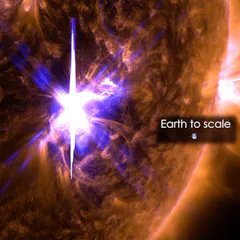
At a time in the sun’s cycle when space weather experts expect less solar activity, our star is going bonkers with solar flares and coronal mass ejections. What effects will Earth feel?

In five or seven billion years time, the Sun’s life will come to an end. And it will be really spectacular - if you’re watching from far enough away.
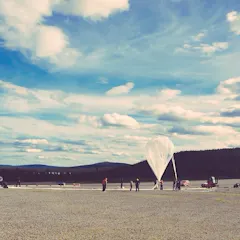
Geomagnetic storms can interact with particles near Earth, causing issues for satellites and other tech. Researchers send balloons 20 miles into the sky to figure out just what’s going on up there.
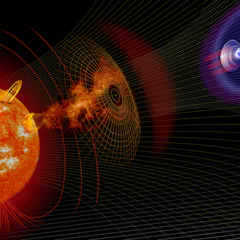
When the sun belches out high-energy solar storms into space, fair warning would be appreciated by those who run technologies that can be affected here on Earth. A new technique promises better forecasts.
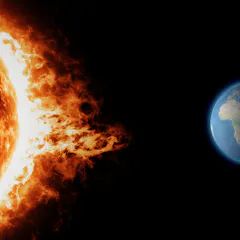
Astrophysicists found out after the January 2014 solar flare that their predictions of solar weather were not very accurate. Here’s the fix (kind of).
Top contributors
-

Associate Professor of Space Systems, West Virginia University
-
Associate Professor of Environmental History, Georgetown University
-
Researcher in Astrophysics, Smithsonian Institution
-
Researcher in Physics and Astronomy, Dartmouth College
-
Researcher in Astrophysics, Smithsonian Institution
-
Assistant Research Scientist in Climate and Space Sciences and Engineering, University of Michigan
-
Astrophysicist, Smithsonian Astrophysical Observatory, Smithsonian Institution
-
Assistant Clinical Professor of Electrical Engineering, Mississippi State University
-
Estudiante de Doctorado en Astrofísica, Centro de Astrobiología (INTA-CSIC)
-
Professor of Space Physics, Lancaster University
-
Senior Lecturer, Monash Centre for Astrophysics, Monash University
-
Professor of Physics, UCL
-
Associate Professor, RMIT University
-
Reader in Physical Sciences, Aberystwyth University
-
Professor of Space Physics, Department of Space Physics and Astronomy, University of Oulu