
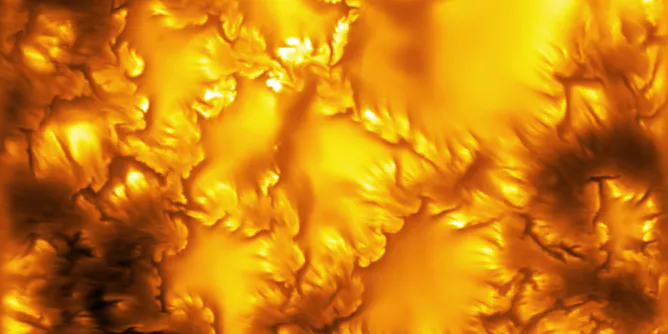
The closer you zoom in, the more fascinating it is.
Articles on Magnetic fields
Displaying 1 - 20 of 68 articles

Quantum computers are still a work in progress but quantum sensors are already in use at hospitals, laboratories and by defense contractors.
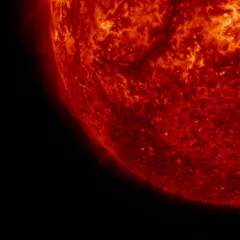
The Sun is a complex physical body. It generates incredible amounts of heat and a strong, often tangled, magnetic field.
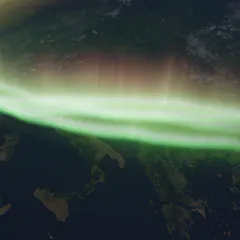
Two geophysicists and an archaeologist teamed up to connect space weather 41,000 years ago to human behaviors that might have been in response – and show the value in cross-discipline teamwork.
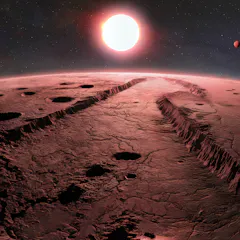
The small worlds were particularly challenging to discover.
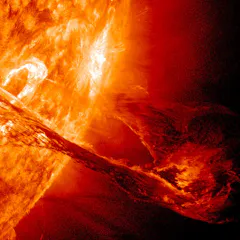
While geomagnetic storms can lead to gorgeous aurora displays, they can also damage satellites and GPS.
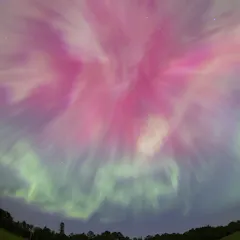
Geomagnetic storms occur fairly often. Minor ones happen multiple times per year.
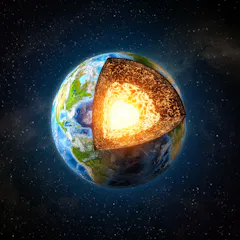
The Earth’s core may be much younger than previously thought.
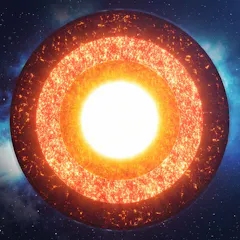
Like a piece of music, every earthquake has a coda – and it contains clues about what’s happening in our planet’s core.

The Sun gives us light, warmth and, occasionally, tans. But our star also experiences crises and storms that can have very real repercussions on everyday life.

Every few thousand years, the Sun unleashes a burst of high-energy particles that can have serious consequences for life on Earth.

The Peregrine and Nova-C landers are due to carry out valuable science at two diverse lunar locations.
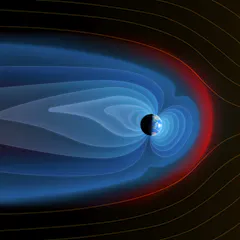
Ever seen the northern lights? You have a magnetic layer in Earth’s atmosphere to thank for those beautiful displays. But the magnetosphere does a lot more than create auroras.
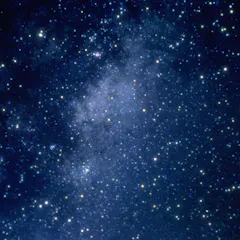
Measuring the ages of planets and stars is tricky. An observational astrophysicist describes the subtle clues that provide good estimates for how old different space objects are.
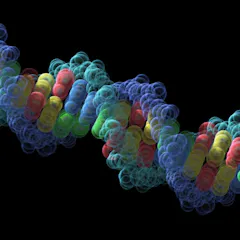
Studying the brief and tiny quantum effects that drive living systems could one day lead to new approaches to treatments and technologies.
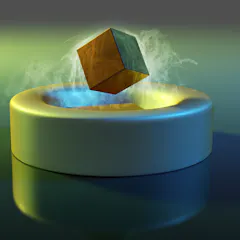
Superconductors are materials that can transmit electricity without any resistance. Researchers are getting closer to creating superconducting materials that can function in everyday life.
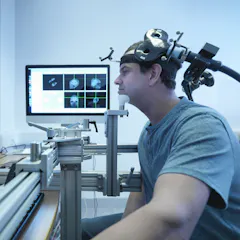
Patients who undergo transcranial magnetic stimulation say it’s painless, with few to no side effects. The treatment isn’t yet widely accessible, but for those who use it, the effects can be profound.
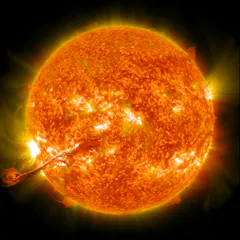
Space weather can affect satellites in a number of different ways, from frying electronics to increasing drag in the atmosphere.

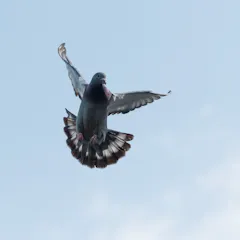
Migrating birds use both their view of the stars and their internal magnetic compasses to find their way over thousands of miles.
In nature, one group of bacteria produces magnetic particles to orient themselves along Earth’s magnetic field lines.
Top contributors
-

Associate Professor in Theoretical Geophysics, University of Leeds
-
Associate Professor, RMIT University
-
Postdoctoral Scholar, Oregon State University
-
Professor of Animal Behaviour, Bangor University
-
Researcher in Physics and Astronomy, Dartmouth College
-
ARC Future Fellow, Physics, University of Newcastle
-
Professor of Geophysics, University of Rochester
-
Associate Professor of Geophysics, University of Leeds
-
RMIT University
-
Associate Professor of Geophysics, University of Leeds
-
Postdoctoral Associate in Earth and Environmental Sciences, University of Cape Town
-
Professor in Earth Sciences, Nanyang Technological University, Singapore, and Emeritus Professor of Mineral Physics, University of Cambridge
-
Professor of Marine Biology and Aquaculture, The University of Melbourne
-
Senior Lecturer (Astronomy), University of Southern Queensland
-
Pro Vice-Chancellor Flagship Initiatives, Swinburne University of Technology