
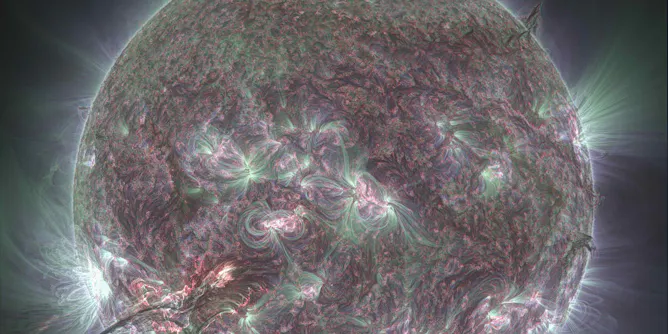
Scientists spend years preparing for the two-minute window of a total solar eclipse.
Articles on Solar flare
Displaying 21 - 40 of 41 articles
It’s true that here on Earth, if you want to burn something you need oxygen. But the Sun is different. It is not burning with the same kind of flame you would have on Earth if you burned a candle.
When dozens of US mines planted in waters off the Vietnam coast detonated almost simultaneously in 1972, all eyes turned to the Sun for an explanation.
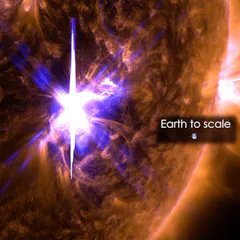
At a time in the sun’s cycle when space weather experts expect less solar activity, our star is going bonkers with solar flares and coronal mass ejections. What effects will Earth feel?
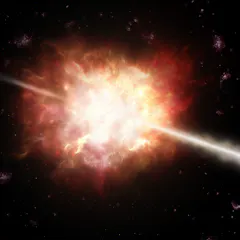
If we survive for another 7.59 billion years, our planet will spiral into the outer layers of the dying sun and melt away forever.
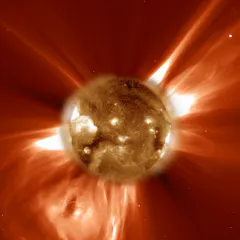
There’s a disturbing history of solar flares taking out the technology we depend on. As tech becomes more and more vital, knowing what is happening in space is growing ever more crucial.
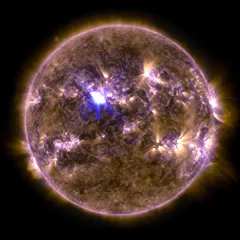
Our growing dependency on satellites for all forms of communication has made the problem of space weather even more acute.
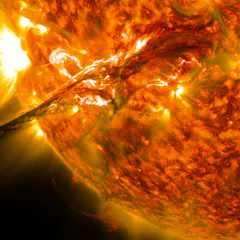
Life on Earth may have started with a bit of sunshine and showers, followed with a light breeze of laughing gas and a sprinkle of hydrogen cyanide.
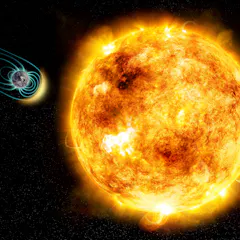
In the search for life on other planets in the universe we need to find the right kind of star, and it needs to have the right kind of space weather.
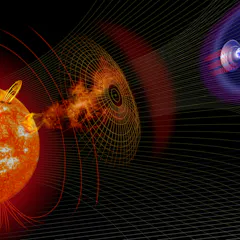
Researchers have found out how to predict solar flares up to ten times faster than previous methods.
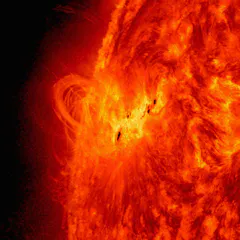
It’s the windiest place in the entire solar system – and these storms can be felt here on Earth.
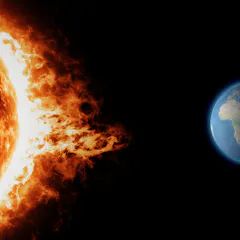
Astrophysicists found out after the January 2014 solar flare that their predictions of solar weather were not very accurate. Here’s the fix (kind of).
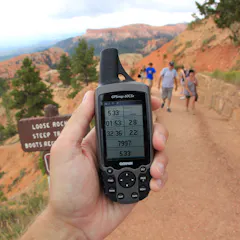
It’s well known that severe space weather events – which are quite rare – can have a negative impact on our use of Global Positioning System (GPS) enabled devices. But our research, published in Geophysical…
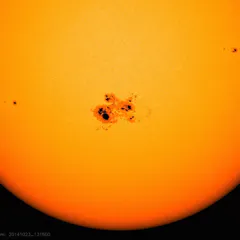
The largest sunspot seen in 24 years is rotating back to face the Earth, and it looks to have grown even bigger. Last month, the solar active region known as AR12192 (also known as AR2192 to some of its…
During the early hours of this morning (3:42am AEST) our sun released a strong solar flare. It follows right on the heels of a more moderate flare that was released from the same region of the sun on Tuesday…
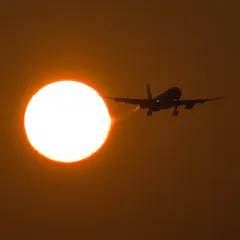
Space weather impacts many modern-day technologies. But one of the most concerning – and least reported – space weather effects is the increased radiation exposure to passengers on commercial long-distance…
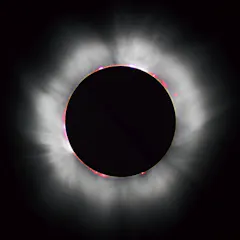
Water ice is the most abundant solid material in the universe. Much of it was created as the byproduct of star formation, but not all. John Bradley of Lawrence Livermore National Laboratory and his team…
Less than 10 % of global warming during the 20th century was due to changes in solar activity, new research has found. It…
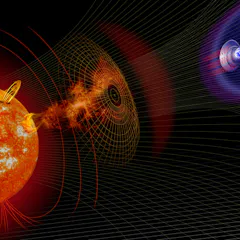
You may have read the sun’s magnetic field is heading for a change in field polarity - meaning it will flip upside down - and could have ripple effects throughout the entire solar system. So what does…
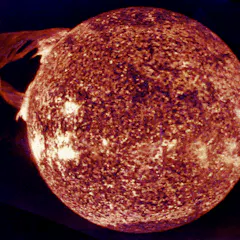
In 1859, from August 28 to September 2, we were given an important lesson about how vulnerable we are to the Sun’s power. The Carrington Event, named for the amateur astronomer who recorded it, Richard…
Top contributors
-

Associate Professor, RMIT University
-
Researcher in Astrophysics, Smithsonian Institution
-
Astrophysicist, Smithsonian Astrophysical Observatory, Smithsonian Institution
-
Assistant Research Scientist in Climate and Space Sciences and Engineering, University of Michigan
-
Research Scientist, Laboratory for Atmospheric and Space Physics, University of Colorado Boulder
-
Researcher in Astrophysics, Smithsonian Institution
-
Associate Professor of Space Systems, West Virginia University
-
Professor of Solar Physics, Monash University
-
Research professor, University of Colorado Boulder
-
John Curtin Distinguished Professor (Radio Astronomy), Curtin University
-
Senior Curator (Astronomy), Museums Victoria Research Institute; The University of Melbourne
-
Senior Lecturer (Astronomy), University of Southern Queensland
-
Professor, Department of Computer Science, University of Surrey
-
Research Officer, RMIT University
-
UKRI Future Leader Fellow & Associate Professor, Northumbria University, Newcastle