

Research in psychology and cognitive science suggests there are ways to fight back against this and reclaim your attention.
Articles on Social media
Displaying 141 - 160 of 2571 articles

A lawsuit against Meta and Google avoided the issue of liability for content and focused on allegations that social media platforms themselves are harmful by design.

More control is a good thing – but be wary of privacy risks and ensure your media ‘diet’ is still balanced.

Social media platforms are marketing machines designed to extract value from experience itself.

A definition of happiness must include unhappiness and chance if it’s to have real meaning.

Political content on social media finds you even if you’re not looking for it, and it tends to do so through a sensationalized and emotionally charged lens.

Despite the rise of fleeting social media recipes, the cookbook is a touchstone of reliability, a cultural archive and even a guilty pleasure.

Recovery and diet content appear side by side in social media feeds, shaping what vulnerable users see.

It’s difficult to measure what is lost when an opinion is never voiced and impossible to catalogue the arguments that never form because a speaker calculates the risk and decides silence is safer.

Ofcom and the EU have launched investigations into the chatbot.

Elon Musk’s social media platform is boosting conservative content – and it’s having long-lasting effects on how users see the world.

Big tech companies argue their platforms are communication tools not traps, and that addiction is a mischaracterisation of high engagement.

A quieter approach to getting the message across can help luxury restaurants maintain their mystique.

A simulation shows that social media bots powered by today’s AI can infiltrate human networks on social media and influence what people believe.

Details are still emerging, but we can’t blame screentime for all teenage mental health issues.

To escape endless scrolling, email and news alerts, more people are turning to older tech to regain control of their lives.
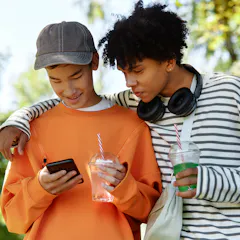
Young people learn online, but are cautious about sharing their own views.

Go on, drink hot water if it makes you feel good. But don’t expect it to have magical properties beyond staying hydrated.

Responsible journalists verify and fact-check information. That can create a lag, leading the audience to believe they’re not just slow but wrong.

The violence we’re witnessing on our phones impacts us on both on an individual and societal scale. This grief needs to be processed.
Top contributors
-

Professor, Digital Media Research Centre, Queensland University of Technology
-
Professor of Information Systems, Michigan State University
-
Professor of Information Sciences & Director, Social Change Enabling Impact Platform, RMIT University
-
Researcher, Digital Wellbeing, Western Sydney University
-
Director of UWA Centre for Software Practice, The University of Western Australia
-
Professorial Fellow, University of Canberra
-
Professor of Internet Studies, Curtin University
-
Researcher at Microsoft Research, Cambridge UK. Previously, The University of Queensland
-
Research Fellow in Public Health, The University of Queensland
-
Professor of Formal Philosophy / Director of Center for Information and Bubble Studies, University of Copenhagen
-
Professor of Digital Communication, Director of QUT Digital Media Research Centre, Queensland University of Technology
-
Associate Professor of Visual Communication & Digital Media, RMIT University
-
Professor of Informatics and Computer Science, Indiana University
-
Senior Research Fellow, Centre for Advancing Journalism, The University of Melbourne
-
Assistant Data Analyst, Queensland University of Technology