
Performances could return sooner than planned if cities are ready to adapt.
Articles on Social distancing
Displaying 41 - 60 of 300 articles
What if you passed COVID-19 to someone else? For those living with that guilt, the thought could be devastating.

Research shows multiple social and cognitive benefits of playing video games.
The COVID-19 case spike in the summer of 2020 and earlier attempts to rely on personal responsibility, like wearing seat belts, showed that mandates make a difference.
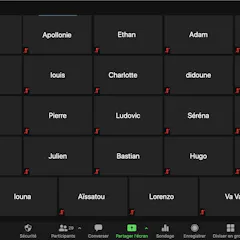
How to invite students to participate in classes and experiment when the computer becomes the main classroom?
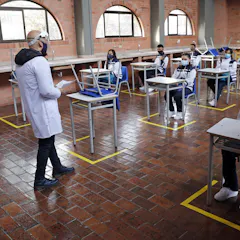
When people start to hear that global case numbers are improving, there’s a tendency to relax — and that’s risky.

For single people, finding at least one partner has been hard enough. But for those used to juggling multiple relationships, the pandemic has forced them to rethink dating altogether.

As the COVID-19 pandemic, restrictions and quarantines continues into their second year, more people are experiencing an acute form of COVID-boredom.

A study examined the psychological and social experiences of over 600 women with babies between birth and 12 weeks during the first UK lockdown.
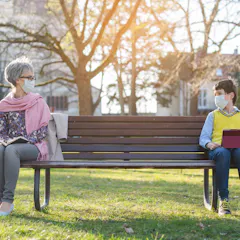
Our lives consist of a complex and dense web of interactions that ultimately make physical and social distancing attempts impossible. And this has always been the case in human society.

As the scale of the pandemic revealed itself in March, one small town in Newfoundland created a community-led meals-on-wheels to support its seniors.
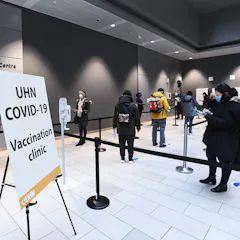
Rollout of COVID-19 vaccines has begun. But getting the jab doesn’t mean abandoning masks, distancing and handwashing. Here’s why the current preventive measures must continue post-vaccine.
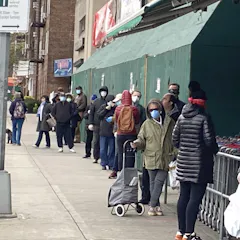
A social scientist argues that in the absence of strong government action, people took it upon themselves to work out conduct to stem the spread of virus.

The restrictions put in place during the COVID-19 pandemic have led to a boom in online fitness opportunities. Here’s what to look for in online classes.

Older adults – despite their awareness of increased risk of COVID-19 – are not reporting more feelings of anxiety, anger or stress than younger age groups.

During the early stages of the pandemic, people adapted to changing situations by making new and different choices. But how did they make these decisions? Motivation theory can explain the process.
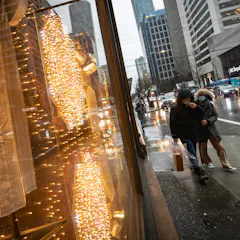
During the COVID-19 pandemic, social distancing has become more than a safety regulation for those working in retail — it’s a sign of respect and an acknowledgement that they’re people too.

The second (and third) wave of the pandemic continues as the end-of-year holiday season approaches. Here are strategies to fight Zoom fatigue while staying virtually close to your loved ones.
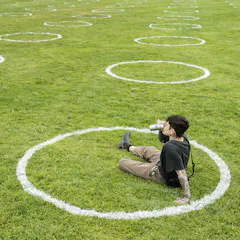
As the pandemic wears on, some people struggle to keep adhering to restrictions and social distancing guidelines. There are psychological reasons for caution fatigue, and ways to overcome it.

Media depictions of youth during the pandemic are distorting the actual experiences, practices and attitudes of young adults during COVID-19, as well as the pandemic’s impact on them.
Top contributors
-

Scientia Professor of Economics, UNSW
-
Associate Professor, Epidemiology, Deakin University
-
Associate Professor of Health Policy and Management, Texas A&M University
-
Assistant Research Scientist, University of Michigan
-
Regents and Distinguished Professor of Environmental and Occupational Health, Texas A&M University
-
Associate Dean for Research and Professor of Health Policy and Management, Texas A&M University
-
Research Fellow, Center for Philosophy and History of Science, Boston University
-
Professor, Département des sciences de l'activité physique, Université du Québec à Montréal (UQAM)
-
Assistant Professor of Epidemiology and Biostatistics, University of Nevada, Las Vegas
-
Research Fellow, BehaviourWorks Australia, Monash Sustainable Development Institute, Monash University
-
Professor of Economics and Psychology, Carnegie Mellon University
-
Associate Professor, Sydney School of Public Health, University of Sydney
-
Assistant Professor of Biology, Providence College
-
Associate Professor in Environmental Engineering, UCL
-
Professor of Public Health, University of Otago