
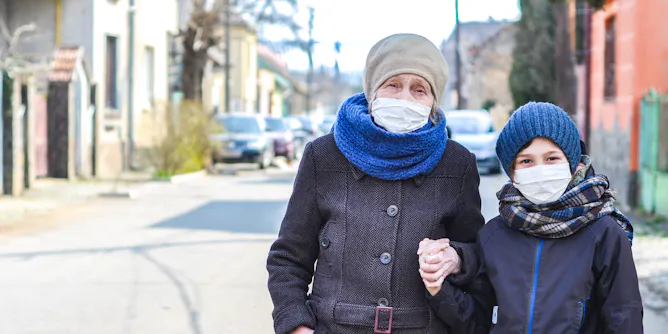
To reduce ageist perceptions of older people, we should encourage collectivist norms and the importance of acting for the common good.
Articles on physical distancing
Displaying 1 - 20 of 35 articles

Decreases in respiratory infections during the pandemic suggest there may be a continued role for the selective, non-mandated use of measures like masks and social distancing even post-COVID-19.

Understanding consent is key to avoiding ambiguous and socially awkward encounters and reducing the potential to cause harm. There are lessons in Shakespeare’s ‘King Lear’.

As children return to face-to-face learning, schools will need to adopt multiple strategies to overcome their longstanding problem of overcrowding.

It is important to remember in this time of crisis that the need for social connection is vital.

Red squirrels are solitary by nature, but research has found that they benefit from familiarity with other squirrels.

Our lives consist of a complex and dense web of interactions that ultimately make physical and social distancing attempts impossible. And this has always been the case in human society.

During the COVID-19 pandemic, social distancing has become more than a safety regulation for those working in retail — it’s a sign of respect and an acknowledgement that they’re people too.
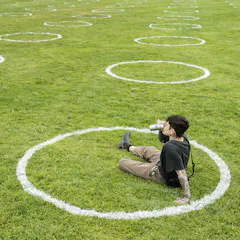
As the pandemic wears on, some people struggle to keep adhering to restrictions and social distancing guidelines. There are psychological reasons for caution fatigue, and ways to overcome it.
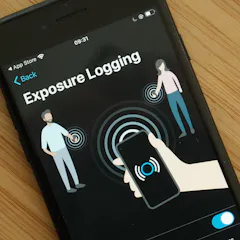
Digital contact tracing apps can successfully contribute to the management of viral outbreaks. These apps can even be designed to protect privacy rights and to work across borders.
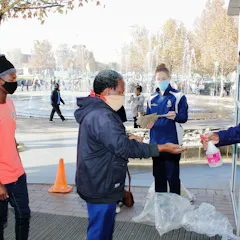
As lockdown restrictions are relaxed, it is key to continue high-impact non-pharmaceutical interventions that will not impede economic activity, but limit the spread of COVID-19.
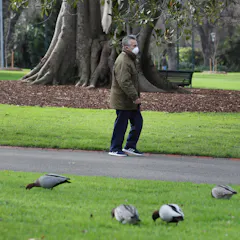
Melbourne’s stage 4 lockdown forbids residents travelling more than 5km from home during their daily hour of exercise. Fine for those in leafy suburbs, but not for those with less greenery nearby.
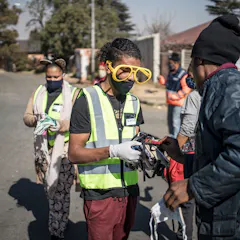
Changing social norms in a short amount of time is difficult, and a one-size-fits all policy is unlikely to have the desired effect.

Policy-makers and public health officials would be wise to consider a modern, data-driven approach and incentives to encourage people to adhere to safety measures in the COVID-19 era.

The coronavirus pandemic affected many aspects of everyday life — including our sex lives. But erotic technologies are gaining wider acceptance as we look for ways to fulfill our desires for intimacy.

After months of isolation, beaches could see a rising number of rescues and drownings.

Despite clear air as a result of the pandemic reducing human activities, our emissions still soar.

South Africa’s testing and tracing has not been at a level needed to suppress the spread of COVID-19. It must now focus on containing opportunities for super-spreading and transmissions.

Distancing rules will make life very difficult for smaller bars, cafes and restaurants. Our streets can be modified quickly to help save an important part of the life of cities and their economies.
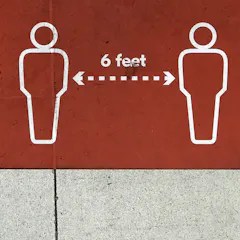
Right now, physical distancing is the most important preventive strategy we have against COVID-19. So why is it so hard for us to do what’s right?
Top contributors
-

Senior Lecturer, Department of Economics, University of the Western Cape
-
Senior researcher and Health Economist, Health Economics and Epidemiology Research Office, Wits Health Consortium, University of the Witwatersrand
-
Professor, UNSW Beach Safety Research Group, School of Biological, Earth & Environmental Sciences, UNSW
-
Professor of Philosophy, University of the Witwatersrand
-
PhD Candidate, Division of Epidemiology, Dalla Lana School of Public Health, University of Toronto
-
Professor, Cumming School of Medicine, University of Calgary
-
Postdoctoral Research Associate of Animal Behaviour, University of Exeter
-
Postdoctoral Research Fellow in Animal Behaviour, University of Exeter
-
Associate Professor, Anthropology, University of Toronto
-
Associate Professor and Distinguished Faculty Fellow of Marketing, Queen's University, Ontario
-
Matthew Flinders Professor of Global Ecology and Node Leader in the ARC Centre of Excellence for Indigenous and Environmental Histories and Futures, Flinders University
-
Research Fellow, City Futures Research Centre, UNSW
-
Chercheur affilié à l'Observatoire international sur les impacts sociétaux de l’intelligence artificielle et du numérique (OBVIA), Université Laval
-
Research Scientist, Cooperative Institute for Research in Environmental Sciences, University of Colorado Boulder
-
Assistant Professor, Marketing, Queen's University, Ontario