
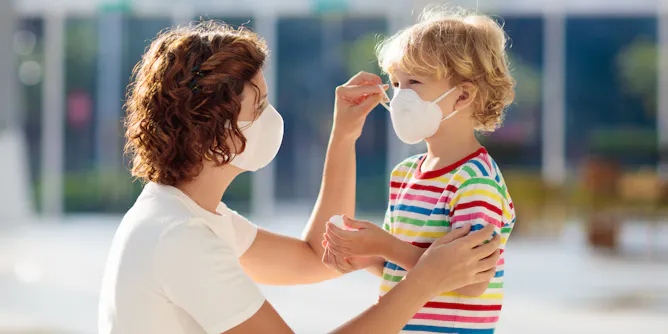
People of all ages need to work together to help keep society functional.
Articles on Social distancing
Displaying 281 - 300 of 300 articles

There are plenty of ways to keep your mind and body active and healthy during the outbreak.

Why 1.5 metres? Is it our best estimate or is there solid evidence behind it?

It’s based on a combination of mathematical modelling, computer simulation and historical data from other pandemics.

We need a frank public conversation about the full economic costs versus benefits of social distancing.

To guard against coronavirus, NZ should consider a short “pulse” (a few weeks) of intense social distancing, including bringing forward school holidays and temporary closures of most businesses.
As the coronavirus spreads far and wide, a political philosopher argues that it is a time to understand that the idea of individual happiness does not work without thinking of the larger good.

The COVID-19 pandemic is forcing people to study and work online. It’s also sparked a need for news and information. That’s a challenge for the 24 million Americans who lack broadband internet access.

With travel halted and universities and research institutions shutting down, scientists are having trouble keeping their research running. Here’s why that matters outside the lab.

Telstra and Optus have already made arrangements to support customers with extra, free data during the COVID-19 pandemic. But what is the NBN doing?
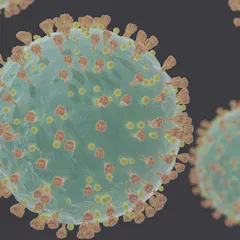
There is no evidence that the coronavirus has evolved into a deadlier strain. It is almost certainly less lethal than initially reported, but that might mean there are more cases than we realised.

Humans are innately social, so periods of enforced quarantine or isolation will be a challenge. But there are some things we can do to ensure being isolated doesn’t translate to feeling lonely.

Canadians have a reputation for compassion; in the current COVID-19 pandemic, this means helping each other by staying away.
Physically isolating yourself can feel psychologically isolating too. But there are ways to maintain connections in these crazy coronavirus times.
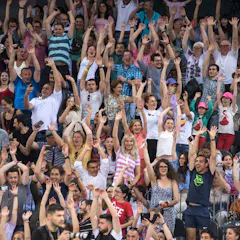
Non-essential mass gatherings of 500 people or more are banned from today. Here’s why that’s a good idea.
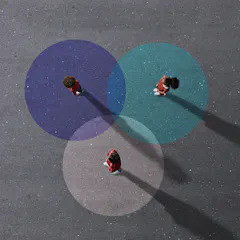
With no vaccines or treatments, the fight against coronavirus comes down to this behavioral technique. A physician explains how it works.

Best-case estimates suggest 40 million American adults may come down with COVID-19. But an epidemiologist explains why now is not the time to just give up.
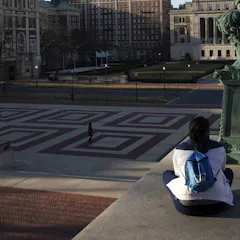
For higher ed, this is a crisis of unknown proportions.

As the novel coronavirus spreads, an expert offers ways the elderly can stay safe while staying connected.

At least temporarily, a kiss is no longer just a kiss. It could pass coronavirus. Even the French have suggested a ban on their traditional greeting. An expert explains why this is necessary.
Top contributors
-

Scientia Professor of Economics, UNSW
-
Associate Professor, Epidemiology, Deakin University
-
Associate Professor of Health Policy and Management, Texas A&M University
-
Assistant Research Scientist, University of Michigan
-
Regents and Distinguished Professor of Environmental and Occupational Health, Texas A&M University
-
Associate Dean for Research and Professor of Health Policy and Management, Texas A&M University
-
Research Fellow, Center for Philosophy and History of Science, Boston University
-
Professor, Département des sciences de l'activité physique, Université du Québec à Montréal (UQAM)
-
Assistant Professor of Epidemiology and Biostatistics, University of Nevada, Las Vegas
-
Research Fellow, BehaviourWorks Australia, Monash Sustainable Development Institute, Monash University
-
Professor of Economics and Psychology, Carnegie Mellon University
-
Associate Professor, Sydney School of Public Health, University of Sydney
-
Assistant Professor of Biology, Providence College
-
Associate Professor in Environmental Engineering, UCL
-
Professor of Public Health, University of Otago