
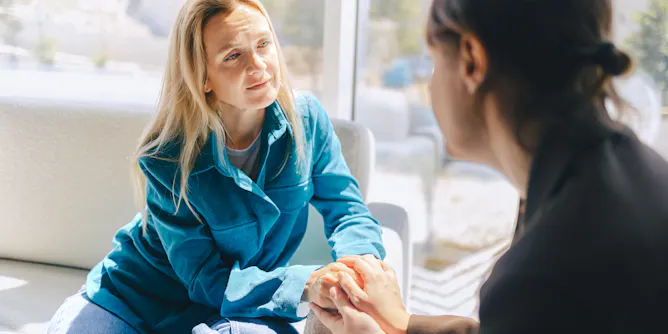
The most comforting touch communicates care for the person receiving it – not just the intentions of the person offering it.
Articles on Social distancing
Displaying 1 - 20 of 300 articles
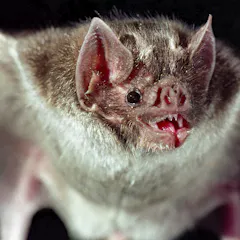
A behavioral ecologist explains the reciprocal social relationships vampire bats maintain, in sickness and in health.

As the COVID-19 pandemic fades, we may debate whether public health responses could have been better. But first we need to understand what public health errors are — and are not.
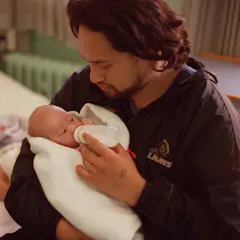
One in three infants is not immunised against pertussis. For Māori babies, more than half are at risk from the potentially deadly infection. But there are relatively simple things we can do.
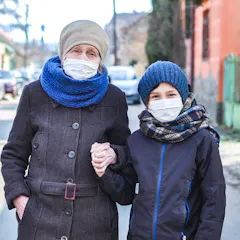
To reduce ageist perceptions of older people, we should encourage collectivist norms and the importance of acting for the common good.
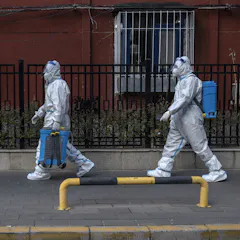
Strict lockdowns, quarantines and testing have prevented many people in China from catching COVID-19. With concerns over Chinese vaccine efficacy and uptake, China may be facing a looming COVID-19 surge.
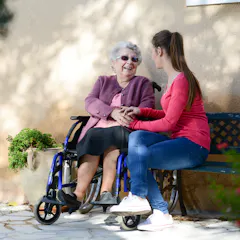
The advent of COVID vaccines has radically changed things for the better, but doesn’t mean we can fully return to our pre-pandemic lives.

Some young adults are hanging onto COVID habits – but less so than older people.
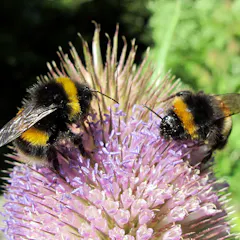
Bees offer insights into many scientific questions, from cooperating in close quarters to strategies for finding food.
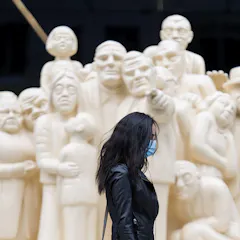
Decreases in respiratory infections during the pandemic suggest there may be a continued role for the selective, non-mandated use of measures like masks and social distancing even post-COVID-19.
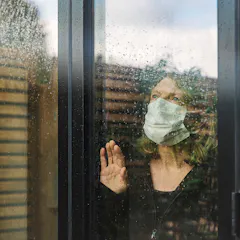
The CDC’s controversial recommendation changes are based on new studies showing that most omicron transmission takes place within five days of the onset of illness.

An expert weighs in on how colleges can lower their chances of being hit by surges of COVID-19 cases after spring break 2022.

Whether about a comet hitting the Earth or a virus infecting the world, fear-based messages often do not succeed at changing people’s behaviors.
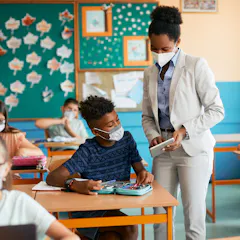
Teachers wearing wireless microphones that amplify their voices could be one solution to ensuring children can hear — and saving teachers’ voices from strain, particularly in the pandemic.
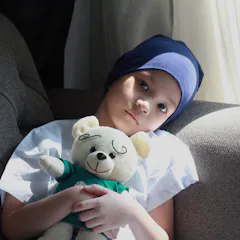
The pandemic lifestyle we are all adjusting to is the life families of children with cancer have already been living. But there have been positives, too.
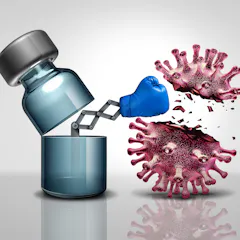
Even with a variant like Omicron that may be more transmissible than earlier variants, vaccines remain the most effective tool for protection against COVID-19 and for ending the pandemic.

A physician-bioethicist reflects on how health professionals are yet again facing painful reminders of the early months of the pandemic.

Why haven’t people gotten upset about how our social distancing signs are fostering innumeracy?

Supply chain issues, emergency science, social distancing requirements and a lot more free time offered both challenges and opportunities for research scientists.
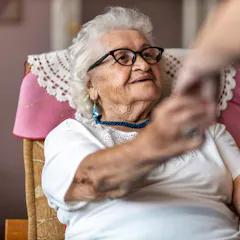
Keeping mentally, physically and socially active helps people with dementia maintain their brain and thinking. But in lockdown, when people with dementia did less, this can lead to a decline.
Top contributors
-

Scientia Professor of Economics, UNSW
-
Associate Professor, Epidemiology, Deakin University
-
Associate Professor of Health Policy and Management, Texas A&M University
-
Assistant Research Scientist, University of Michigan
-
Regents and Distinguished Professor of Environmental and Occupational Health, Texas A&M University
-
Associate Dean for Research and Professor of Health Policy and Management, Texas A&M University
-
Research Fellow, Center for Philosophy and History of Science, Boston University
-
Professor, Département des sciences de l'activité physique, Université du Québec à Montréal (UQAM)
-
Assistant Professor of Epidemiology and Biostatistics, University of Nevada, Las Vegas
-
Research Fellow, BehaviourWorks Australia, Monash Sustainable Development Institute, Monash University
-
Professor of Economics and Psychology, Carnegie Mellon University
-
Associate Professor, Sydney School of Public Health, University of Sydney
-
Assistant Professor of Biology, Providence College
-
Associate Professor in Environmental Engineering, UCL
-
Professor of Public Health, University of Otago