

Despite the exams algorithm fiasco, UK government bodies are making positive uses of the technology.
Articles on Smart cities
Displaying 21 - 40 of 108 articles
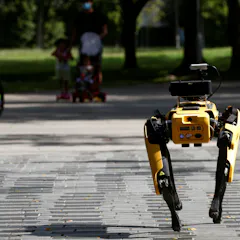
Smart city solutions have proved handy for curbing the contagion, but recent experience has also shown how much they rely on public trust. And that in turn depends on transparency and robust safeguards
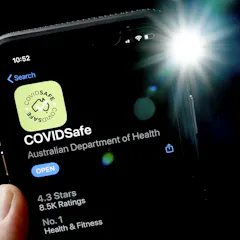
The COVIDSafe app hasn’t come out of nowhere. The promises of ‘smart city’ data collection may be seductive, but we must always weigh up what we’re being asked to give up in return.

Deep learning algorithms can help us understand if and how social distancing is taking place.
‘Smart cities’, featuring networks of automatic lights, video cameras and environmental sensors, have been hailed as an enhancement to urban life. But they are also tools of surveillance and control.

A new report assesses the smart city performance of local government areas representing 85% of Australia’s population. NSW leads the way, and all the leading performers are in the major cities.

Cities around the world are struggling to manage their mountains of waste. We can use the Internet of Things for smart waste systems that collect, sort, reuse and recycle most of what is thrown out.
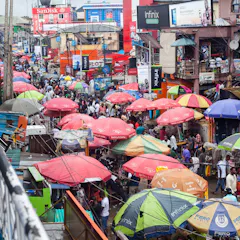
Constructing fancy ‘smart cities’ might not be the best solution for Africa’s rapidly urbanising populations.

According to a new smart cities index, the real test for smart cities is whether citizens feel the benefits.

If governments can’t get something like Quayside right, that bodes ill for Canada’s digital future. The election gives us a chance to see where the parties stand on vital data governance issues.
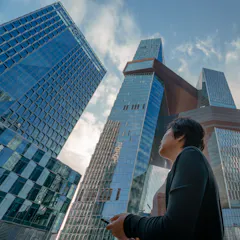
Connected technology could help the visually impaired to recognise people, places or even bank notes.

Sidewalk Labs has released its Master Innovation and Development Plan and invited the public to provide feedback.

Smart cities are more likely to be defined by quieter upgrades to existing infrastructure and new partnerships that better represent residents.

Cities need to focus on intelligent, collaborative and community-oriented approaches to smart city planning. This is important when it comes to addressing the roots of urban challenges.

Darwin is one of the aspiring ‘smart cities’ that is adopting Chinese technology that can identify and track individuals. Add changes in Australian law, and we have the makings of a surveillance state.

The history of how Alphabet Inc. and its subsidiaries manage children and data is a troubling one. How will Sidewalk Labs address concerns about minors and privacy in Toronto’s Quayside project?
Technology and data are being harnessed to increase productivity in cities, but there also need to be ‘slow moments’, when people can pause to enjoy their surroundings.
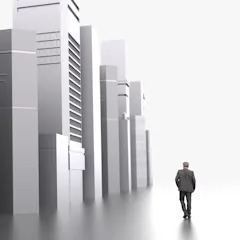
As cities aspire to be smarter, technologies are only part of the answer. No utopia on the horizon but we need hostistic answers more than ever before.

Canadian researchers have mapped smart city technologies throughout the country. The interactive map is intended to inform urban residents of the locations of technologies that may affect privacy.

What a failed megacity project in Johannesburg says about similar ambitious ideas across the continent.
Top contributors
-

Professor, Faculty of Business & Economics, University of Winnipeg
-
Vice Chancellor’s Senior Research Fellow, School of Global, Urban and Social Studies, RMIT University
-
Professor in Human Geography, UCL
-
Associate Professor of Political Science, Brock University
-
Professor of Strategic Design, Queensland University of Technology
-
Associate Professor, University of Canberra, Stockholm Environment Institute
-
Professor of Urban Studies and Planning, Queensland University of Technology
-
Associate Professor, School of Built Environment, UNSW
-
Director, Melbourne Sustainable Society Institute, The University of Melbourne
-
Associate Professor and Director of the Australian Smart Cities Consortium, Adelaide University
-
Associate Professor of Urban Planning, The University of Melbourne
-
Senior Lecturer in Industrial Design, UNSW
-
Professor Sustainability and Urban Governance, RMIT University
-
Leader, Centre for Risk and Community Safety, RMIT University
-
Professor of Spatial Science, University of Leeds