

What steps is the state government taking to bring Brisbane closer to being a smart city while managing rapid growth? And what differences can city residents expect to see for themselves?
Articles on Smart city
Displaying all articles

We have the technology to make it easier for older Australians to pursue active ageing in their own communities. The smart city just needs their input to make it work for them.

We are now at the start of the sixth great wave in economic disruption, driven by renewables, electomobilty and smart-city technologies.
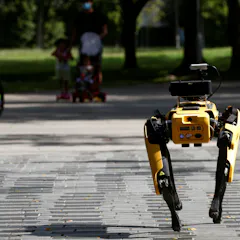
Smart city solutions have proved handy for curbing the contagion, but recent experience has also shown how much they rely on public trust. And that in turn depends on transparency and robust safeguards
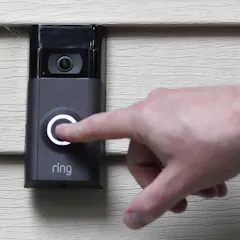
Amazon says it’s the “new neighbourhood watch” but Ring may just be another technology that gives police too much data and lets neighbourhoods double down on their biases.

According to a new smart cities index, the real test for smart cities is whether citizens feel the benefits.

Regulating Sidewalk Labs proposed developments poses new challenges for assigning responsibility and oversight.

A report based on public consultations conducted by Sidewalk Labs has still not answered many pressing concerns about privacy and consent in Toronto’s Quayside development.
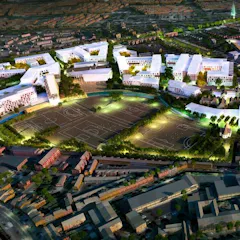
Smart cities are more likely to be defined by quieter upgrades to existing infrastructure and new partnerships that better represent residents.

Technology and data are being harnessed to increase productivity in cities, but there also need to be ‘slow moments’, when people can pause to enjoy their surroundings.

Smart city planning raises concerns with citizens regarding privacy and the use of their data.

How smart are our cities now? In Queensland, a study of all 78 local government areas reveals major gaps between the ten leading the way in becoming smart cities and the rest of the state.

In a country where 26% of the population has access to mobile internet, India’s working class women are finding other ways to fight the patriarchy.

As cities become ‘smarter’, they need more and more objects fitted with technology. We need to think about designing these objects to accommodate computers, which often break down and create e-waste.

Smart technology can help the environment, preserve biodiversity and protect sensitive areas, such as national parks.

Cities are adapting to the needs of driverless cars. Here’s how.
To be a smart city is to know what your people want and need. And smart city leaders make sure residents can tell them by using technology to maintain a constant two-way flow of information.

As cities get smarter, we need to examine carefully who gets our data and what it is used for.
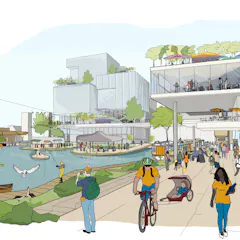
When building a smart city, it’s vital that governments and citizens know up-front who will control the collected data.
Top contributors
-

Associate Professor, Criminology, Department of Social Science, York University, Canada
-
Lecturer and Programme Leader, BA International Tourism and Events Management, Glasgow Caledonian University
-
Associate Professor of Urban Planning, Monash University
-
Lecturer in Architecture, The University of Western Australia
-
Associate Professor in Information Technology, FORE School of Management
-
Postdoctoral Research Associate, King's College London
-
Professor of Healthy Ageing, Australian Catholic University
-
Professor of Urban Studies and Planning, Queensland University of Technology
-
Associate Professor, Melbourne Medical School, The University of Melbourne; Alan Turing Institute
-
University Fellow, University of Salford
-
Investigadora Científica, Centro de Ciencias Humanas y Sociales (CCHS - CSIC)
-
Professor of Finance, International Institute for Management Development (IMD)
-
Associate Professor of Political Science, Brock University
-
Visiting Researcher, University of Toronto
-
Associate Professor, Online Pedagogy & Workplace Learning, Faculty of Education, University of Windsor