
Australia has lagged behind some other countries in its investment in smart cities, but in retrospect that may not have been such a bad thing.
Articles on Smart cities
Displaying 81 - 100 of 108 articles

Smart cities do more than develop products to increase productivity and prosperity. Mayors, CEOs and leaders engage entire communities in shaping the future of cities.

Public spaces are becoming new arenas for people power – and it’s all down to how you use your smart phone.
A project in the Western Himalaya has highlighted some valuable lessons for the future.

Design will make the difference between smart city projects offering great promise or actually reinforcing or even widening the existing gaps in unequal ways their cities serve residents.
Like a 5D movie on speed, the city today defies conventional boundaries. This raises new questions about what we imagine to be ‘the city’ – and how we as a democratic community can shape it.
City-centric thinking arguably obscures connections between ‘humans’ and ‘nature’, and ‘urban’ and ‘rural’ or ‘wild’. Growing evidence of the depths of these links is testing the concept of ‘urban’.

Value capture is touted as a way to fund infrastructure, but what actually is it?
The 2016 articulation of an urban agenda assumes building more highways, railways and trams will produce better, more productive cities that somehow give everyone a job.
It’s easy to get excited about smart city technology – but we need to think through the human consequences.

The rhetoric of ‘smart cities’ is dominated by the economic, with little reference to the natural world and its plight. Truly smart and resilient cities need to be more in tune with the planet.
Governments too often hinder change, when instead they should aim to foster an organic innovation ecosystem. This is more about bottom-up innovation than top-down schemas.
Australia’s Smart Cities Plan largely conveys a limited role for people: they live, work and consume. This neglects the rich body of work calling for better human engagement in smart cities.

In an age of data-driven urban science, we need to remember how Jane Jacobs gave voice to the multiple languages, meanings, experiences and knowledge systems of a vibrant city.

Cities are home to many different people who will not always agree. We need to learn to embrace public debate as an ongoing, constructive process for working through diverse views and values.
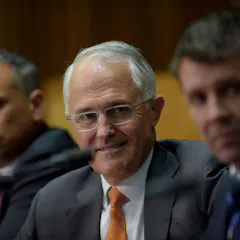
The Turnbull government’s cities policy is the latest incarnation of ‘the-Commonwealth-knows-best’ approach, with little regard for whether urban issues are best resolved at the metropolitan level.
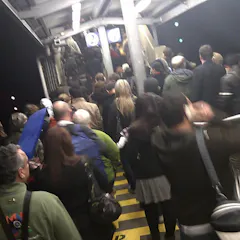
Using elements of game play, we can create incentives for people to change how and when they make various transport choices in ways that enable the whole system to work better.
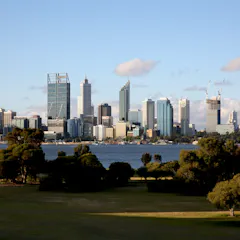
With a strategic plan adopted, it not only shows where development should be avoided but clears the way for development in other areas. So Perth needs to get it right.
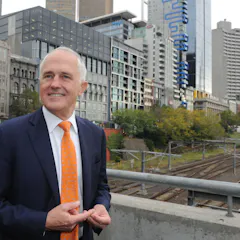
The budget paints a picture of higher debt, little relief for growing cities crying out for infrastructure investment, and no detail of how City Deals might work to fix this.
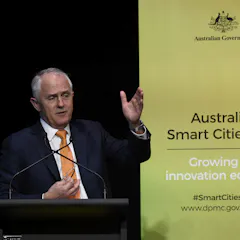
The discussion paper makes all the right noises, but the proof of the policy will be in the detail of partnership arrangements and implementation structures, and in how new money is used.
Top contributors
-

Professor, Faculty of Business & Economics, University of Winnipeg
-
Vice Chancellor’s Senior Research Fellow, School of Global, Urban and Social Studies, RMIT University
-
Professor in Human Geography, UCL
-
Associate Professor of Political Science, Brock University
-
Professor of Strategic Design, Queensland University of Technology
-
Associate Professor, University of Canberra, Stockholm Environment Institute
-
Professor of Urban Studies and Planning, Queensland University of Technology
-
Associate Professor, School of Built Environment, UNSW
-
Director, Melbourne Sustainable Society Institute, The University of Melbourne
-
Associate Professor and Director of the Australian Smart Cities Consortium, Adelaide University
-
Associate Professor of Urban Planning, The University of Melbourne
-
Senior Lecturer in Industrial Design, UNSW
-
Professor Sustainability and Urban Governance, RMIT University
-
Leader, Centre for Risk and Community Safety, RMIT University
-
Professor of Spatial Science, University of Leeds